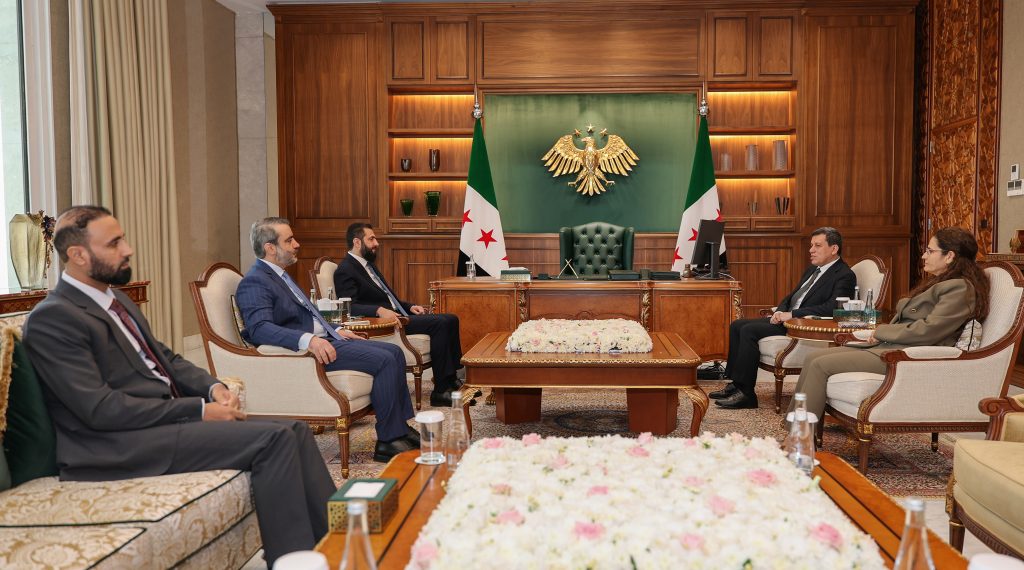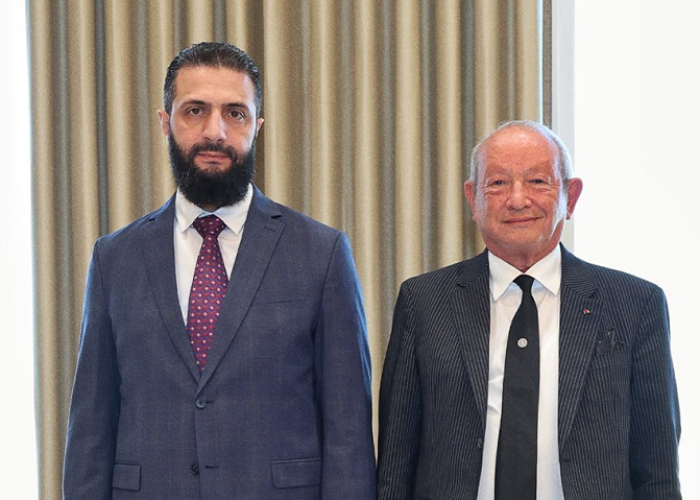
Egyptian billionaire Naguib Sawiris met with Syrian President Ahmed Al-Sharaa at the People’s Palace on Thursday, in a visit widely interpreted as a sign of growing regional confidence in Syria’s emerging investment landscape. The meeting is the latest in a series of high-profile engagements by the new Syrian administration as it seeks to revive the country’s economy and attract Arab capital into key reconstruction sectors.
Sawiris’s arrival follows a similar visit two months earlier by Egyptian tycoon Hassan Allam, who held extensive talks in Damascus on opportunities in real estate development, construction, and infrastructure rehabilitation.
Strategic Dimensions: Investment as a Reconstruction Engine
After his reception at the palace, Sawiris held detailed discussions with Minister of Public Works and Housing Mustafa Abdel Razzaq to examine potential commercial ventures in housing and urban development. Sawiris expressed strong interest in entering the Syrian market, highlighting his group’s global experience in large-scale real estate projects. He outlined a vision that includes launching major housing developments for diverse social segments, supporting the training of local institutional cadres, and transferring administrative and technical expertise to public agencies.
Minister Abdel Razzaq emphasised that Syria’s immediate priorities include addressing the severe housing shortage and restarting long-stalled infrastructure projects. He noted that the government is eager to adopt successful international investment models as part of its broader reconstruction strategy.
Analytical Reading: What Sawiris’s Visit Reveals
Economists view Sawiris’s visit as part of a deliberate effort by Damascus to restore investor confidence and signal that Syria is reopening for business. The presence of heavyweight regional investors such as Sawiris and Allam suggests a calculated attempt to break years of economic stagnation and reposition Syria as a viable destination for long-term capital.
The focus on housing, infrastructure, and institutional capacity-building reflects several emerging policy trends within the new administration. Infrastructure is being positioned as a gateway for economic revival, with the housing sector serving as a showcase for Syria’s post-war transition. Public-private partnerships are being redefined, with the state seeking to treat Arab investors as strategic partners rather than mere financiers. At the same time, the emphasis on training and knowledge transfer underscores the government’s recognition that reconstruction requires not only capital but also the modernization of public-sector capabilities.
As Damascus navigates its current economic challenges, it is increasingly turning to prominent Arab investors to help chart an economic exit strategy and lay the foundations for sustainable national recovery.
This article was translated and edited by The Syrian Observer. The Syrian Observer has not verified the content of this story. Responsibility for the information and views set out in this article lies entirely with the author.