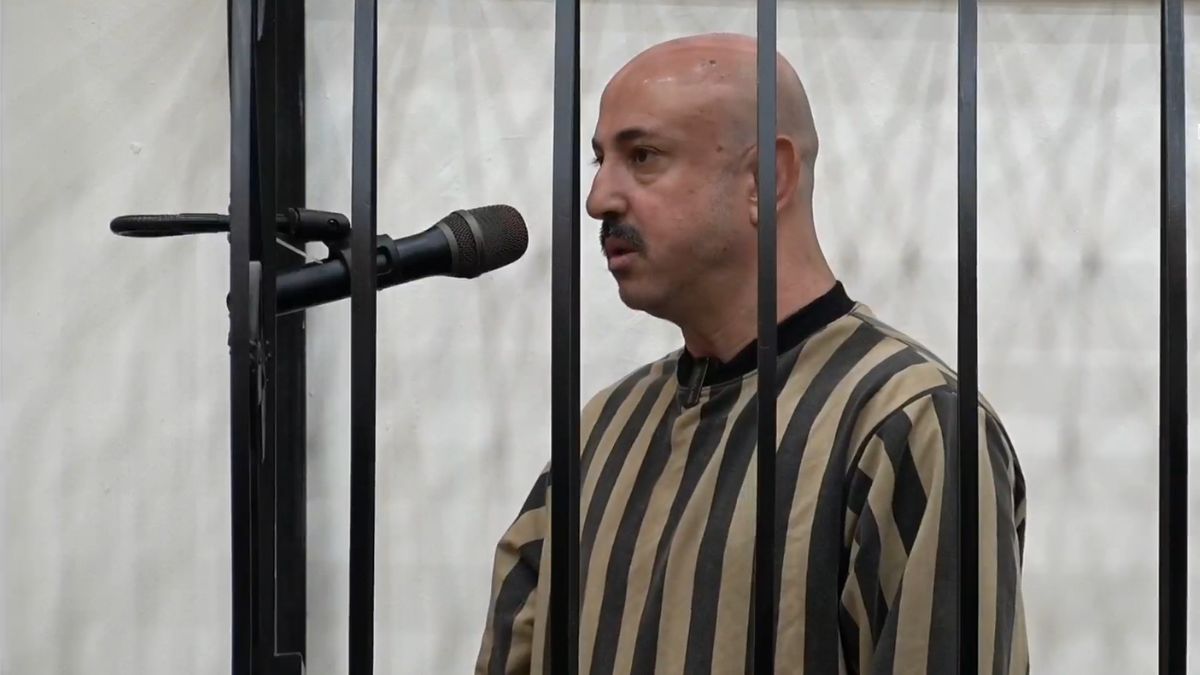
Wasim al-Assad, a cousin of ousted Syrian President Bashar al-Assad, appeared before the Fourth Criminal Court at the Palace of Justice in Damascus today, opening a landmark trial within Syria’s newly established transitional justice system. The proceedings mark the first formal step in a case alleging war crimes and crimes against humanity committed during the country’s 14-year conflict.
The prosecution is grounded in the Syrian Penal Code as well as international conventions governing war crimes and crimes against humanity. The trial follows the Ministry of Justice’s recent announcement designating specialized transitional justice chambers across all provincial courts to accelerate accountability efforts and respond to mounting public demands.
Indictment and Allegations
Presiding Judge Fakhr al-Din al-Uryan opened the session by reading the formal indictment, which lays out an extensive catalogue of charges tied to events dating back to the 2011 uprising.
According to prosecutors, Wasim al-Assad was instructed in early 2011 by Brigadier General Ghiath Dalla—then a senior commander in the Fourth Armored Division, led by Maher al-Assad under the former regime—to establish and oversee irregular militia groups. The indictment alleges that he directly supervised, armed, financed, and provided logistical support to these units, which initially numbered around 30 fighters.
Under his direction and with direct backing from the Fourth Division, these militias allegedly took part in major military operations against civilian areas in Eastern Ghouta, particularly the town of al-Mleiha. Their role, prosecutors say, was to “hold and secure ground” after intensive aerial and artillery bombardment.
The charges include:
- Forming and Funding Paramilitaries: Creating, arming, and financing irregular armed groups operating outside the state’s formal military structure.
- Attacks on Civilian Populations: Participating in large-scale operations targeting densely populated civilian areas and contributing to mass casualties.
- Crimes Against Humanity: Orchestrating a widespread and systematic attack on a civilian population, constituting crimes against humanity under Article 7 of the Rome Statute and violations of the Fourth Geneva Convention.
- Incitement and Sectarian Agitation: Encouraging violence by labeling civilians as terrorists and fueling sectarian tensions.
- Financial Extortion and Illicit Enrichment: Exploiting his family’s former political power to extort detainees’ families, accumulate illicit wealth, and engage in narcotics trafficking and smuggling.
- Domestic Criminal Offenses: Committing premeditated murder and incitement to murder under the 1949 Syrian Penal Code, including responsibility for the killing of a civilian in Jaramana.
The indictment stresses that due to the gravity of the alleged war crimes and crimes against humanity, the charges are not subject to statutes of limitation and cannot be nullified by any past or future amnesty decrees.
Prosecution’s Case and Defense Response
Public Prosecutor Judge Omar Mahmoud al-Radhi argued that the militias formed under Wasim al-Assad’s authority functioned as auxiliary forces deeply embedded within the former regime’s military apparatus—specifically the Fourth Division and the Republican Guard—tasked with consolidating territorial control after major offensives.
When invited to respond, the defendant denied the central allegations. He pleaded not guilty, asserting that a man named Jamal al-Hassan was responsible for forming the militia groups and that his own involvement was limited to introducing al-Hassan to Brigadier General Dalla.
Witness Protection and Closed Proceedings
Shortly after the defendant’s statement, the Ministry of Justice abruptly cut the live broadcast of the hearing, which had been streamed on its official Facebook page. The trial then proceeded behind closed doors.
In a statement, the Ministry said the broadcast was halted in accordance with witness protection protocols to safeguard the confidentiality of testimony and ensure the safety of all participants. It emphasized that judicial procedures remain fully underway.
The court is expected to reconvene in the coming days to examine additional evidence and hear further arguments from both sides before issuing a verdict.
This article was translated and edited by The Syrian Observer. The Syrian Observer has not verified the content of this story. Responsibility for the information and views set out in this article lies entirely with the author.