On the street a basket of basic products costs 14 salaries
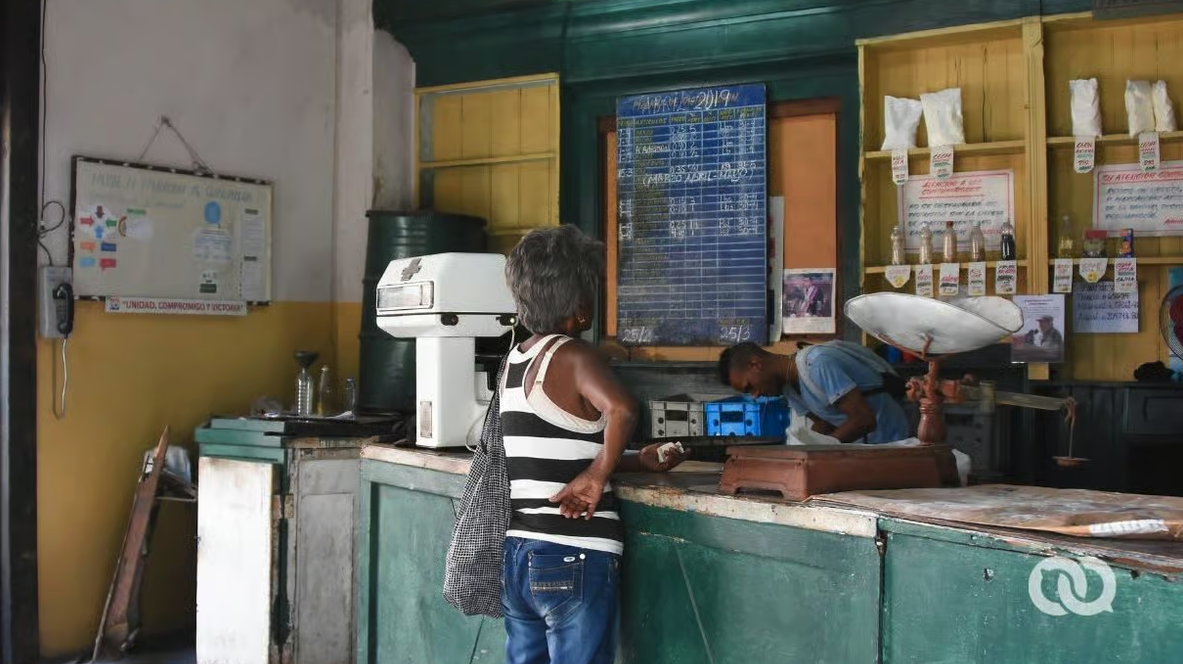
A neighborhood ration store. File Photo: El Toque
By Raul Medina Orama (El Toque)
HAVANA TIMES – The ration book that Cuban families receive for the State-controlled distribution of basic subsidized goods will, in the immediate future, be available only to retirees, people with chronic illnesses, and those considered especially “vulnerable” by the authorities, according to announcements made by the government on June 17 and 18, 2026.
The official narrative emphasizes “eliminating subsidies for products and transforming them into subsidies for people,” a principle that is not new among Cuba’s leadership—Raul Castro defended this policy at the Sixth Congress of the Communist Party of Cuba in 2011—and which was reiterated as one of the “pillars” in the program to reform the economy without democratizing the country.
Miguel Diaz-Canel, appointed by Castro in 2018 to succeed him as head of state, said during the closing session of the Extraordinary Plenum of the Communist Party last week that “the basic basket will be guaranteed to retirees, families with chronically ill children, and vulnerable people,” further deepening the state’s retreat from universal welfare toward what it calls “targeted social protection.”
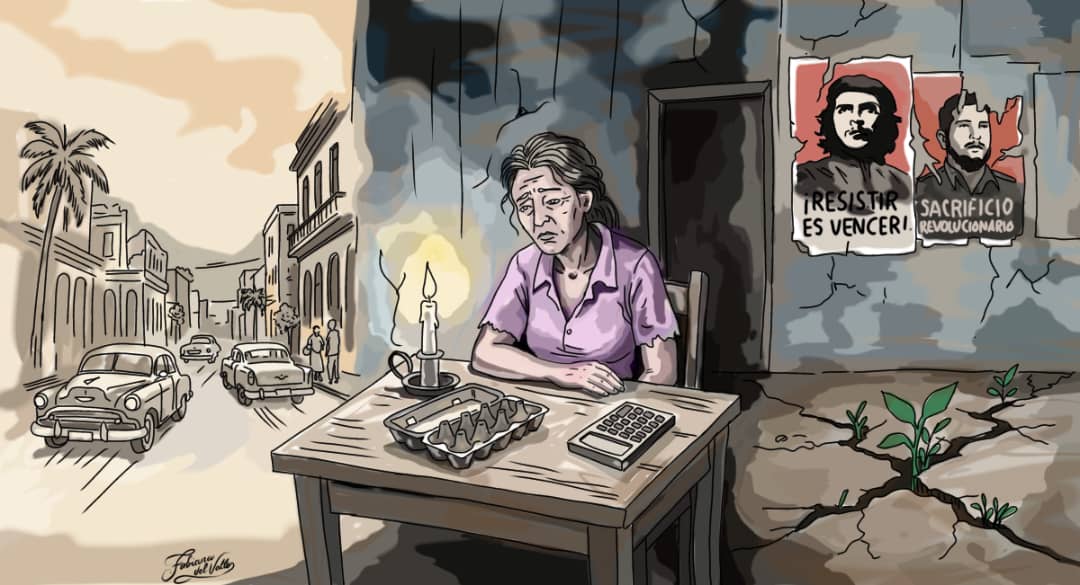
Although the variety, quantity, and frequency of products distributed through the ration book have declined over the last five years—the system has existed since the 1960s and is considered a symbol of Cuba’s precarious “socialism”—most families still rely on it to somewhat offset the cost of food and subsidized goods in a context of severe shortages and inflation.
The official discourse frames the decision as part of a structural adjustment strategy. During the Communist Party assembly, Díaz-Canel insisted that “true social justice cannot be sustained through artificial prices” and defended the transition from “subsidizing products to subsidizing people.”
Prime Minister Manuel Marrero, speaking before the National Assembly, explained that the sequence of subsidy reforms would be as follows:
• Products and services that affect the entire economy (fuel, electricity, freight and passenger transportation, and water rates), transferring real costs into wholesale and retail prices because they impact production and services.
• Then other products.
In addition, Marrero promised to “create a Social Protection Fund, as a prerequisite for these transformations, financed by part of the savings generated through the elimination of product subsidies.”
Official communication about the reforms remains vague and contradictory. The procedures and timelines for implementing the announced measures are still unclear. In a process of economic transformation aimed at selective privatization without clearly defined rules—accelerated by pressure from the United States—social assistance appears to be an afterthought.
Responding to Diaz-Canel’s pledge to guarantee the basic food basket to vulnerable groups, economist Mauricio de Miranda Parrondo questioned the regime’s ability to fulfill that promise:
“Where will the resources come from in an economy sunk in its deepest crisis? What basic basket are they talking about? The one internationally used to measure basic needs, or the now non-existent rations that disappeared through suffocation?”
Outside Communist Party offices, the daily reality of Cubans tells a different story. At least 96,060 pesos (138 USD) per month is needed to purchase basic goods and services—understood as the essential products and services required for a dignified life, not merely the much smaller state-defined basket. This is according to a recent estimate by economist Javier Perez Capdevila, and equivalent to 14 times the average salary in the country, which many do not earn.
In an article published in May 2026, Perez Capdevila noted that only a minority of Cubans have access to the equivalent of three US dollars per day, which places most below the poverty threshold [according to the World Bank standard].”
Given this reality, the measure defended by Diaz-Canel leaves a large segment of the population excluded.
The statements regarding the rationed items are part of a broader package of measures announced by Prime Minister Marrero. These include the digitalization and “transparency” of social assistance through the SOBERANÍA platform, which will centralize the registration of “vulnerable families” and monitor them in real time, as well as the restructuring of state assistance mechanisms.
The plan also envisions requiring “all economic actors (state-owned and private, domestic and foreign)” to participate, “as part of their social responsibility at the community level,” in supporting soup kitchens, community dining centers, and facilities for children without parental care, in addition to agreements that facilitate pension payments and strengthen municipal social work programs.
Sociologist Elaine Acosta, executive director of the Observatory on Aging, Care, and Rights “Cuido 60,” told elTOQUE in a previous article that:
“The State has been unable to promote adequate and sustainable compensatory social policies capable of reversing the negative impacts of the multiple crises, which affect the vulnerable sectors of Cuban society the most, but also affect society as a whole.”
According to Prime Minister Manuel Marrero in July 2025, at least 182,000 Cuban families—about 310,000 people—were receiving social assistance because they were classified as being in a “vulnerable situation.”
However, many more Cubans, according to economist Perez Capdevila, would be living in extreme poverty than those officially recognized as “vulnerable” and therefore should be eligible for basic products subsidies.
Acosta said the authorities are responding to this situation with “isolated measures that cannot resolve Cuba’s social protection crisis.” The regime, she said, “is walking away from a responsibility without assuming the consequences.”
First published in Spanish by El Toque and translated and published in English by Havana Times.
Read more from Cuba here at Havana Times.