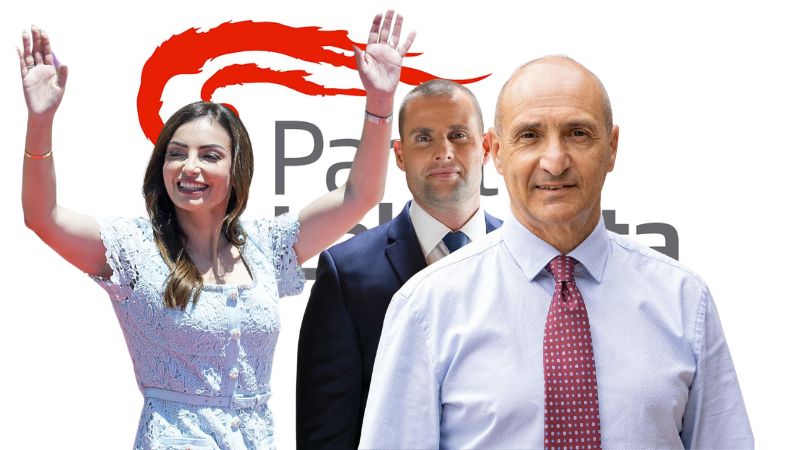
Prime Minister Robert Abela has bowed to mounting internal pressure and appointed both Chris Fearne and Rosianne Cutajar to ministerial positions in his new government, despite concerns within Labour ranks that their return will further damage the party’s credibility.
Sources close to the Office of the Prime Minister told The Shift that Abela had initially attempted to keep both MPs on the government backbench, aware of the political fallout their promotion could trigger. However, after days of negotiations and pressure from influential factions within the Labour Party, the prime minister was forced to give in.
Fearne, who resigned as deputy prime minister and health minister in 2024 after being charged in connection with the fraudulent hospitals concession, was appointed foreign minister.
The former deputy prime minister is currently awaiting trial after a court ruled that sufficient evidence exists for him to face charges linked to the Vitals and Steward hospitals deal. Fearne has consistently denied wrongdoing.
His return to cabinet is particularly sensitive given that his resignation was based on the principle that ministers facing serious criminal proceedings should not remain in office. Sources said Abela was reluctant to reverse that position but faced sustained pressure from Fearne and his supporters, who argued that a ministerial appointment had been promised if Labour secured another electoral mandate.
Rosianne Cutajar will also return to government and was even given a promotion to Minister despite her negative political baggage.
According to sources, Abela initially offered her a parliamentary secretary role. Cutajar rejected the proposal and insisted on a full ministerial appointment. The prime minister eventually agreed and assigned her responsibility for equality; a portfolio regarded within government circles as having limited executive influence.
Cutajar’s return is widely viewed as a concession to Labour factions aligned with disgraced former prime minister Joseph Muscat and deputy leader Alex Agius Saliba.
Her political career has been marked by controversy. She was previously forced out of government following findings by the Commissioner for Standards in Public Life that she breached ethics rules over a property transaction involving Yorgen Fenech, the businessman accused of complicity in the assassination of journalist Daphne Caruana Galizia.
The appointments form part of the largest ever cabinet in Malta’s history.
Deputy Prime Minister Ian Borg is to take over the health ministry, one of the most influential positions in government. The move representents a major expansion of Borg’s political influence and consolidate his position as one of the administration’s most powerful figures.
Meanwhile, Jo Etienne Abela has been shifted from health to tourism despite having no known experience in the sector and being known as a non-performer.
Jonathan Attard is to assume responsibility for planning, taking over one of the government’s most politically sensitive portfolios. His move follows criticism of the Planning Authority’s performance and growing public concern over development policies.
Senior ministers Clyde Caruana and Silvio Schembri are to retain their current responsibilities, reflecting the prime minister’s confidence in their performance.
Minister Miriam Dalli is to remain in cabinet despite her poor delivery. However, she has lost several responsibilities previously falling under her ministry, retaining primarily the environmental and energy.
The cabinet negotiations have exposed continuing tensions within Labour despite the party’s electoral victory.
The full cabinet consists of:
- Ian Borg – Deputy Prime Minister and Minister for Health
- Owen Bonnici – Housing and Lands
- Michael Falzon – Social Policy and Family
- Anton Refalo – Agriculture, Fisheries and Food
- Silvio Schembri – Economy, Technology and Strategic Projects
- Julia Farrugia – Inclusion and Volunteering
- Clint Camilleri – Gozo
- Byron Camilleri – Education and Sport
- Miriam Dalli – Energy, Environment and Grand Harbour Regeneration
- Clyde Caruana – Finance
- Clifton Grima – Justice, Research and Innovation
- Jonathan Attard – Planning, Infrastructure and Employment
- Jo Etienne Abela – Tourism
- Chris Bonett – Sustainable Mobility
- Chris Fearne – Foreign and European Affairs
- Alison Zerafa Civelli – Local Government and Public Works
- Keith Azzopardi Tanti – European Funds, Social Dialogue and Consumer Protection
- Glenn Bedingfield – Home Affairs and Security
- Malcolm Paul Agius Galea – Arts, Culture and National Heritage
- Omar Farrugia – Youth, Wellbeing and Electoral Programme Implementation
- Rosianne Cutajar – Equality and Civil Rights
Parliamentary Secretaries:
- Deo Debattista – Active Ageing
- Alicia Bugeja Said – Animal Welfare