Will Ukraine join the European Union (EU) ahead of the queue, while Serbia and the wider region continue waiting at the door? If Austria and Greece have their way – no.
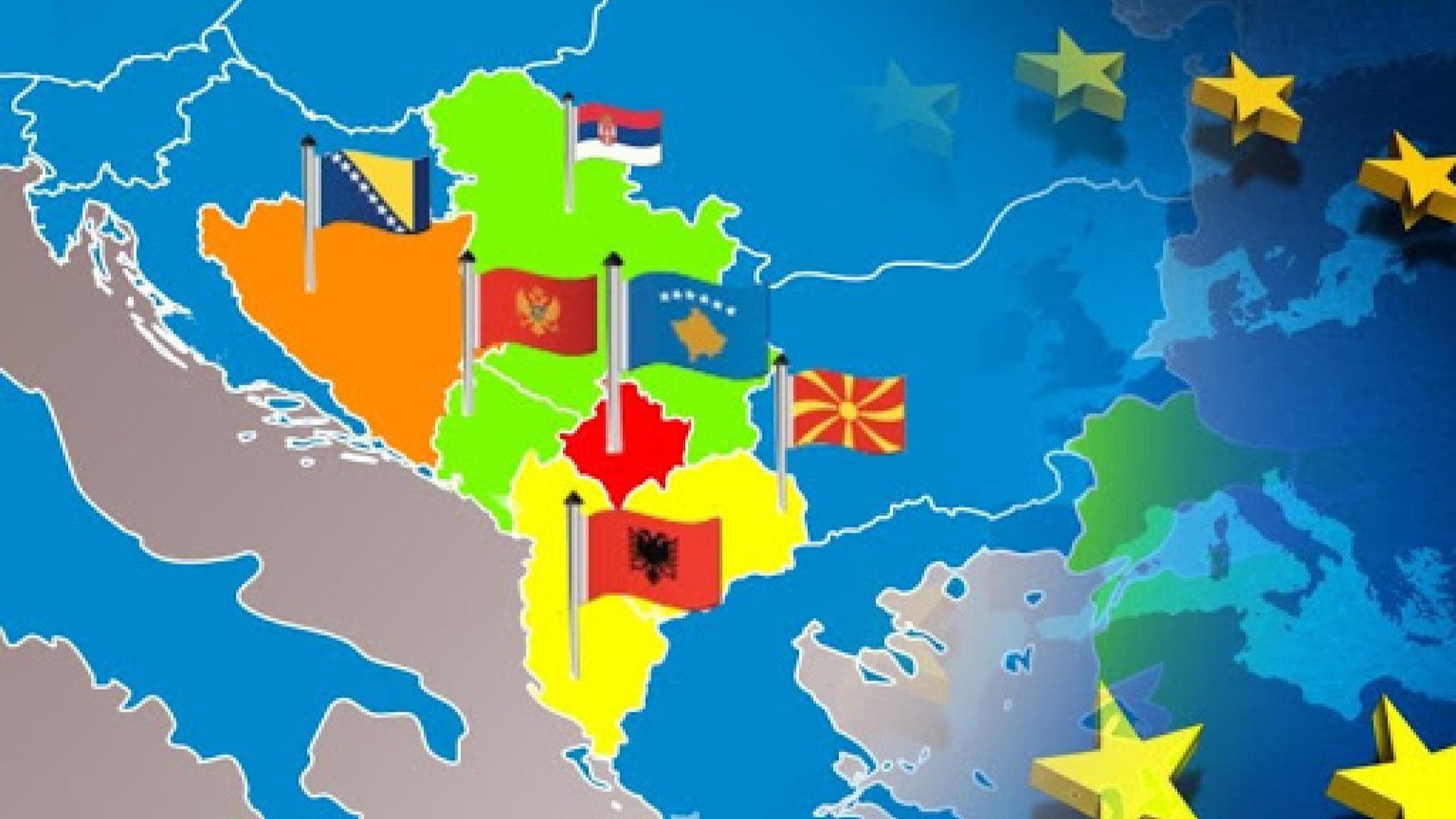
Together with several other EU member states, they have come to the defence of the Western Balkan countries, insisting that the region must neither be neglected nor pushed into the background in favour of Ukraine when discussing enlargement.
As reported by Večernji list, the position that there should be no “queue-jumping” was recently voiced at an official ministerial meeting in Brussels by Austria’s Minister for Europe, Claudia Bauer.
“The same rules and conditions must apply to all candidates. We always maintain this special focus on the countries of the Western Balkans,” Bauer said, adding:
“For some, there appears to be a fast lane, where certain countries are already halfway into the EU, while others have had to work towards membership for decades,” she criticised.
A similarly firm stance in support of the region’s accession to the EU is also coming from Greece.
“Greece supports the accession process of Ukraine and Moldova… however, it is important that progress on their accession paths does not come at the expense of the Western Balkans, whose European perspective was clearly recognised as far back as the Thessaloniki Agenda of 2003,” Večernji list reported, citing an EU diplomatic source.
However, the road from that agenda to actual EU membership has proved a long one. In the meantime, only Slovenia and Croatia have successfully joined the “club of the chosen”. Serbia, Montenegro, Albania and North Macedonia are still waiting at the EU’s doorstep.
Ukraine moved ahead of them in the queue following Russia’s invasion, and Igor Novaković of the ISAC Fund told Blic that the current situation within the EU shows that a debate is under way about how enlargement should proceed.
“In principle, we do not know what will happen in the coming period; everything we are hearing are clearly calls for debate within the EU. Politically speaking, although there is speculation that in the event of enlargement, Iceland and Montenegro could become members, there are also political obstacles, primarily the issue of the presidential elections in France,” Novaković noted.
“The main fear – The question of the veto”
He points out that two major issues are complicating the discussion over whether genuine enlargement should happen:
- The main concern is whether enlargement should proceed before resolving the issue of veto powers within the EU. There are fears that a new member state could come under the influence of another member state, or pursue its own independent policies in the manner of Hungary.
- There is also the issue of Ukraine, since in early February, US President Donald Trump insisted that the EU should make some form of concession to Ukraine, and there was even talk that it could become a full EU member within a year of a ceasefire.
“My impression is that several member states, especially those bordering Ukraine, would like the EU to become more engaged in Kyiv’s accession, while those bordering the Western Balkan states believe that both sides should be treated equally,” Novaković said.
German Chancellor Friedrich Merz is among those who have moved from debate to concrete action. On 18 May, he sent a letter to the presidents of the EU institutions proposing stronger rights for candidate countries and the introduction of an associate membership model for Ukraine. In the same letter, he proposed that the Western Balkan countries be granted observer status in all relevant EU institutions.
In the letter, which Blic published exclusively, Merz stated that the countries of the Western Balkans and Moldova should be given access to the EU single market and “closer ties with European institutions in the everyday decision-making process”.
“That would also mean something to us”
In Serbia, unlike in some EU countries, this approach has not been criticised. Following publication of the letter, Slobodan Zečević from the Institute for European Studies told Blic that the aim was first to “economically integrate the Western Balkan states into the EU, without voting rights”.
“In that way, we would enjoy all the benefits of the EU single market, but without political weight. In any case, that would still mean something to us. Even the fact that we no longer pay roaming charges and that we are part of the SEPA system is significant for us. Observer status in the EU could certainly make life easier and create the feeling that we are not excluded from Europe,” Zečević stated.
Strahinja Subotić, Programme Manager at the European Policy Centre, told Blic that the benefits of such a proposal would be numerous:
- Citizens could see that the EU genuinely wants new members and is prepared to extend a hand of cooperation to candidate countries in a way never seen before.
- It could encourage reforms because, if linked to reform conditions, it is expected that this could create a more positive climate for implementing reforms, while also allowing countries to represent their interests within EU institutions even before full membership.
- It would encourage countries to gradually build up their administrative capacities so that, by the time membership is achieved, they would be almost fully prepared to assume all the obligations that membership entails, including the ability to effectively advocate for their interests in all EU institutions.
(Blic, 29.05.2026)
https://www.blic.rs/vesti/politika/austrija-i-grcka-povukle-rucnu-bune-se-zbog-precice-ukrajini-u-eu-dok-zapadni-balkan/zkg4p7p