The Syrian Ministry of Finance issued a decision containing the executive instructions for Decree No. 69 of 2026, which concerns tax exemptions for damaged commercial, industrial, and tourism facilities.
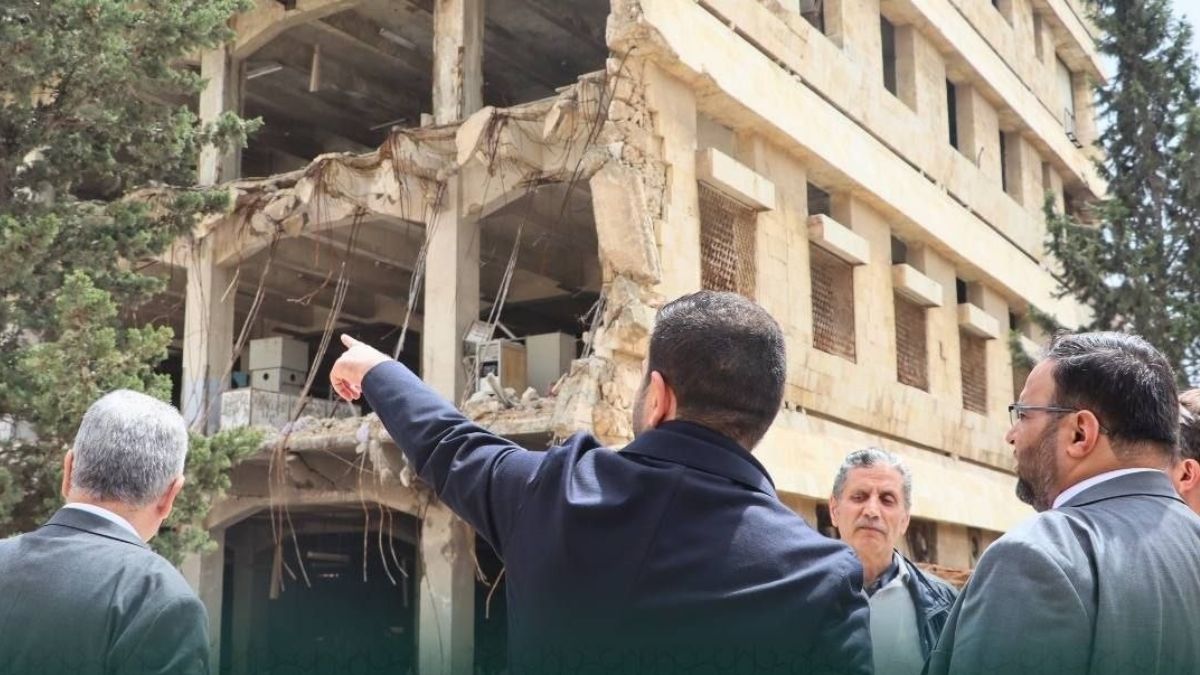
The decision, published by the ministry on its Facebook page on Monday, May 4, included tax exemptions for taxpayers who own damaged facilities as a result of the former regime’s military operations during the years of the revolution, between March 15, 2011, and December 8, 2024.
Committees will be formed to identify and assess the value of damages at finance directorates in the governorates. They will include representatives from the directorates, the Ministries of Local Administration and Environment, Economy and Industry, the Engineers Syndicate, and real estate valuation experts.
Damage Qualifying for Exemption
Damage qualifying for exemption, according to the instructions, means direct total or partial destruction affecting the facility’s fixed assets, including:
- Total or partial destruction of buildings and structures.
- Destruction of machinery, equipment, and fittings, or documented damage to them.
- Damage with a documented impact on the facility’s operational capacity, even if it is not visible in its physical structure, such as disruption to electrical systems or production networks.
A damaged facility means any commercial, industrial, tourism, or service facility whose fixed assets were affected, including facilities that repaired their damage before the exemptions decree entered into force.
Among the required supporting documents for granting the exemption, applicants must submit evidence proving the damage occurred, such as a police report, photos of the damage, damage inventory reports prepared by industrial city administrations, insurance documents if available, restoration contracts, and invoices from licensed facilities if available, for the tax year in which the damage occurred.
Deadline for Applications
Applications to benefit from the tax exemptions must be submitted within 120 days from the date these instructions are published in the Official Gazette. The Minister of Finance may extend this period by an additional 60 days for justified reasons.
The granted tax exemption is considered personally linked to the damaged taxpayer and does not transfer to others, except in the following cases:
- Inheritance, where the exemption transfers to the heirs, provided they continue the same activity of the facility.
- Merger, where the exemption transfers to the new entity resulting from the merger, but only in proportion to the share of the damaged facility in it.
- Legal transformation, if the legal form of the facility changes, where the exemption transfers provided the actual ownership remains with the original owner.
To benefit from the tax exemption, the following conditions must also be met:
- The damage percentage approved by the committee must not be less than 25%.
- The facility owner must be registered as a taxpayer with the General Commission for Taxes and Fees.
Tax Exemption Rates
The rate of exemption from income taxes and fees related to the damaged facility is determined according to the approved damage percentage as follows:
For commercial and service facilities:
- If the damage rate is from 25% to 50%, the facility is granted an exemption for one year, with the exemption amounting to 50% of net profits.
- If the damage rate is from 51% to 75%, the facility is granted an exemption for one year, at a rate of 75% of net profits.
- If the damage rate is from 76% to 100%, the facility is granted an exemption for one year, at a rate of 100% of net profits.
For industrial and tourism facilities:
- If the damage rate is from 25% to 50%, the facility is granted an exemption for two years, at a rate of 50% of net profits.
- If the damage rate is from 51% to 75%, the facility is granted an exemption for three years, at a rate of 75% of net profits.
- If the damage rate is from 76% to 100%, the facility is granted an exemption for four years, at a rate of 100% of net profits.
30,000 Facilities to Benefit from Exemptions
The Syrian Ministry of Finance said on its Facebook page that the exemptions decree aims to help owners of damaged facilities resume operations and create new job opportunities, according to the approved damage rates assessed by specialized committees at finance directorates.
More than 30,000 facilities could benefit from this decree, according to the ministry, especially in Aleppo, Rural Damascus, and other governorates.
Reviving Industry and Easing Pressure on Investors
Director of Industrial Investment Basman Mhanna told Enab Baladi in March that the decree aims to ease financial burdens on owners of commercial, industrial, and tourism facilities, encourage reconstruction, and support the sustainability of economic and service activity in these facilities instead of their closure.
He added that the decree is:
- A strong step toward reviving the industry.
- A way to ease pressure on investors.
- A stimulus for the local economy.
The decree will contribute directly to reducing the cost of restarting operations. Tax exemption, according to Mhanna, means providing financial liquidity and directing funds toward repairing machinery and infrastructure, making the reopening of factories possible instead of very costly.
Linking the exemption to the percentage of damage is also considered economic fairness, according to the director of industrial investment. A destroyed facility receives a larger exemption, while less damaged facilities receive smaller exemptions.
Mhanna noted that restarting around 30,000 facilities means increasing local production, reducing imports, and creating jobs. He explained that the decree also provides indirect support for financing, as it includes a package of measures covering debt treatment and financing facilities through the Industrial Bank.
Industrialist: Local Products Must Compete with Imports
Industrialist and head of the Natural Gas and Energy Committee at the Damascus Chamber of Industry, Mohammad Orfali, said in a previous statement to Enab Baladi that the Ministry of Finance consistently offers initiatives that strengthen confidence in the government’s financial sector.
He believes that farmers and industrialists are the two main elements in moving the economy forward, and that their success leads to increased productivity and, therefore, strengthens the national economy.
He emphasized that the greater the financial capacity of farmers and industrialists, the greater their production capacity, which directly contributes to the advancement of the Syrian economy.
Orfali added that facilities mean an economy, and any strengthening of facilities strengthens economic recovery.
Regarding the main challenges facing owners of damaged industrial facilities, Orfali pointed to the current weakness of liquidity among industrialists.
For that reason, this decision served as an incentive for them to continue working by helping them secure basic supplies, materials, and the working capital needed to resume production.
On tax exemptions, Orfali stressed the need for the Ministry of Economy, the Ministry of Finance, and the Land and Sea Ports Authority to coordinate efforts to ensure that local manufacturing is feasible and competitive with imported products.
He emphasized that the greatest threat to the Syrian economy is the large gap between the profitability of local farmers and industrialists on the one hand, and the high profitability of importers on the other.