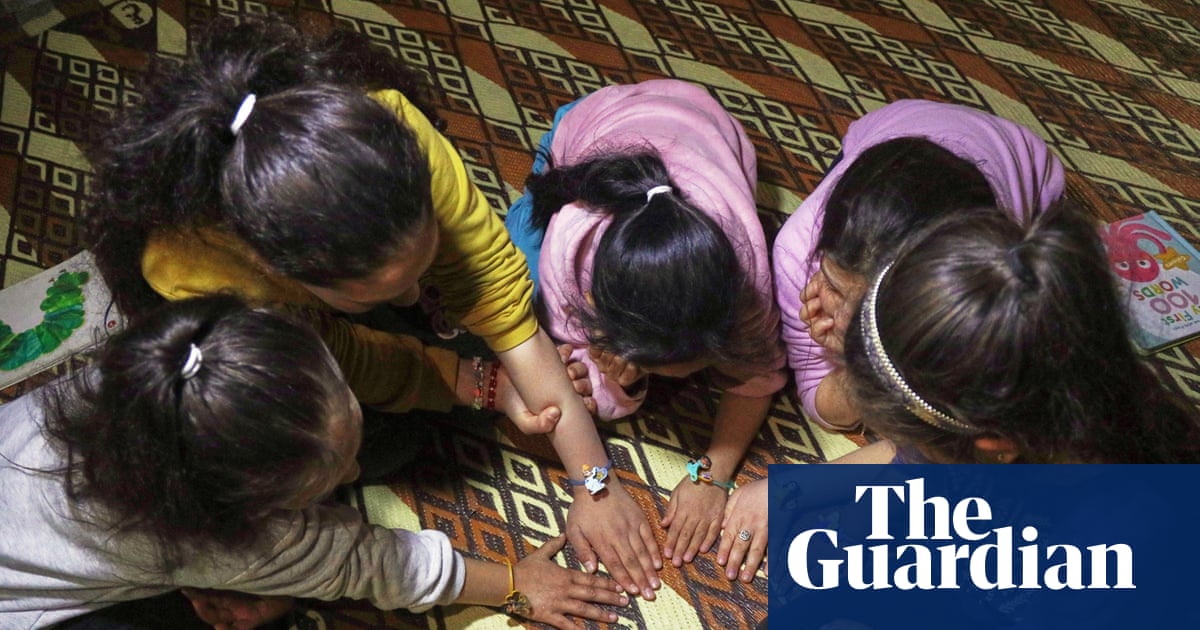
Authorities in two Australian states are preparing to resettle children returning from squalid detention camps and life under Islamic State rule, as at least some of their mothers face possible criminal charges.
Four women and nine children are expected to return to Australia on Thursday, with all of them apart from a mother and her child bound for Melbourne.
The Australian federal police said on Wednesday that some of the women would be arrested and charged, while support would be made available for the children.
Mat Tinkler, the CEO of Save the Children Australia, said this was exactly the scenario that had been advocated for since the collapse of the so-called caliphate in 2019 led to the group of 34 Australians being detained in camps in north-east Syria.
“We need to focus on what is going to happen to these women when they arrive, and we’ve heard from the AFP commissioner today about that, and we also need to focus on giving these children the space to recover, to survive, to thrive,” Tinkler told the ABC.
“Two-thirds of this cohort that we’re talking about in Syria are children.
“There’s been a lot of focus on the women and the choices they may have made but we need to focus on these children and give them a chance of resuming a normal life in Australia.”
Tinkler said the fact that other women and children had returned, and that other western nations had also successfully reintegrated their citizens, meant the “temperature should be dialled right down” in relation to the cohort.
There have been recent unconfirmed reports from Syria that evacuations of the camps have begun, increasing the likelihood that other Australian citizens may seek to return home.
The home affairs minister, Tony Burke, insisted the government had provided no assistance to the group.
Australian citizens cannot legally be prevented from returning to the country unless a formal exclusion order is in place. Burke has issued a single order to prevent one woman in Syria from returning, based on Asio advice about a national security risk.
None of the returning group are affected by such an order.
The cohort returning to Australia include children who were born in detention camps after the fall of Islamic State, a woman previously married to a notorious recruiter for the terror group, and others who insist they only travelled to the Middle East to perform aid work.
Sign up for the Breaking News Australia email
Eleven of them are members of the same family and are expected to settle in Melbourne.
The other two are a woman and her child, who are expected to settle in Sydney.
Planning for group’s return
Mike Bush, the Victorian police commissioner, said he expected his officers would play a “significant part” in monitoring any of the cohort who returned to Melbourne and were free to live in the community.
He said the AFP was leading the investigation, and said another pair of women who returned to Melbourne with their four children in October were also still being monitored.
Victorian premier, Jacinta Allan, said anyone “who has broken the law will face its full force”.
“Children will be asked to undertake countering violent extremism programs. That is appropriate.”
On Wednesday morning the government was alerted to the planned departure of a group of 13 who left al-Roj and travelled to Damascus last month. They all hold Australian passports.
Behind-the-scenes planning for the group’s return has been under way for 10 years, including a community liaison team working with affected local communities.
The New South Wales police minister, Yasmin Catley, told parliament on Wednesday that NSW police were “working closely” with the AFP.
“The NSW government and the NSW police will have a role, as they have done previously with returning brides of foreign fighters and their children,” she said.
“I assure people that, if anyone has committed an offence, they will face the full force of the law.”
Asio’s director general, Mike Burgess, said advice about the group had been provided to policing agencies. “The government understands our assessed risk,” he said.
“It’s up to them what they do when they get here. If they start to exhibit signs of concern, we and the police, through the joint counter-terrorism teams, will take action.
“I’m not concerned immediately by their return but they’ll get our attention, as you expect.”
Despite Burgess’s comments, the shadow home affairs minister, Jonathon Duniam, claimed the government had “actively failed to safeguard” Australians from a security risk.
The group began their second attempt to travel home to Australia last month after a much larger cohort was turned back by Syrian authorities in February. Syrian authorities were taking the group to Damascus, amid international pressure for countries to take back foreign fighters stuck in the camp.
The US has pushed countries including Australia to repatriate citizens who had travelled to the Middle East to join the IS caliphate but the issue has dogged successive governments.
Under Albanese, Labor had supported bringing the families home as recently as 2022 but the politics surrounding the return of the group has dramatically shifted since the December shootings at Bondi beach.
Albanese has refused to help in any way, saying the adults had “made their bed” and should suffer the consequences of their actions.
– Benita Kolovos and Penry Buckley contributed reporting to this story