In a landmark shift that underscores Syria’s transition from emergency relief to economic reintegration, the United Nations has formally ended its decade-long cross-border aid operation from Turkey. At the same time, Ankara has signaled its readiness to upgrade Syrian border infrastructure, marking a pivot toward normalized trade and regional connectivity following the collapse of the previous regime in late 2024.
The End of a Humanitarian Era
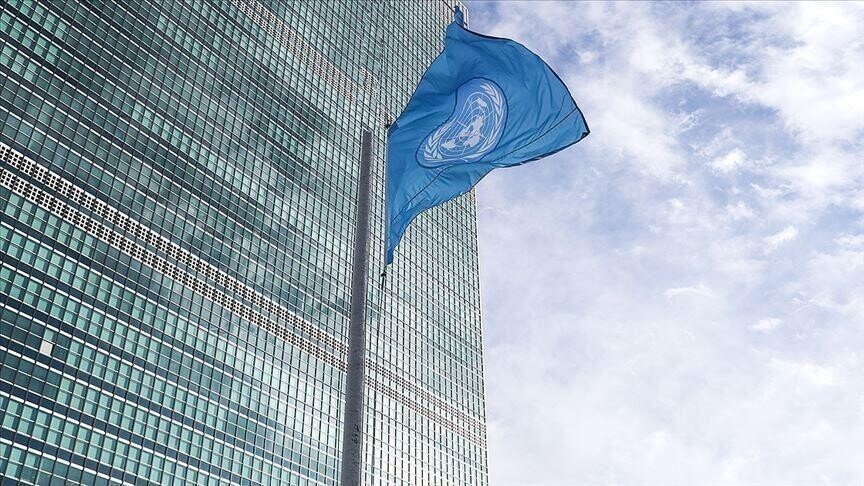
During a daily briefing in New York, UN spokesperson Stephane Dujarric announced the conclusion of the cross-border humanitarian mechanism, which for more than ten years served as a lifeline for millions in northwest Syria. He attributed the decision to the reopening of commercial crossings and the stabilization of traditional supply routes, noting that the shift reflects a broader return to pre-war patterns of trade and movement.
Over the course of the operation, more than 65,000 trucks delivered vital assistance, reaching an estimated 1.25 million people during the conflict’s most volatile years. With the mechanism now closed, aid delivery is transitioning from specialized UN corridors to standard commercial channels. Despite this logistical progress, the UN cautioned that humanitarian needs remain severe: roughly 13 million Syrians still require food assistance, and 12 million lack reliable access to clean water.
Ankara Proposes “Nusaybin–Qamishli” Development
As the UN winds down its humanitarian role, Turkey is moving to strengthen economic ties with Syria. Rifat Hisarcıklıoğlu, president of the Union of Chambers and Commodity Exchanges of Turkey (TOBB), announced that Ankara is prepared to modernize the Syrian side of the Nusaybin–Qamishli border crossing. Speaking via video link at a consultative meeting in Mardin, he said Turkey would be ready to build the opposite side of the crossing as well if requested, emphasizing that “there is no trade without stability, and no wealth without trade.”
The proposal aims to transform Nusaybin into a major transit artery linking Turkish production centers to markets in Iraq and the wider Middle East.
Economic Synergy in the Fertile Crescent
The push for infrastructure comes as the Turkish province of Mardin experiences notable industrial expansion. Local officials, including Mardin Chamber of Commerce president Hatip Çelik, highlighted the region’s growing capacity. Mardin now hosts around 250 factories specializing in agricultural products such as flour, bulgur, and pasta, and its exports have recently reached $1.17 billion. This growth aligns with the Syrian Ministry of Transport’s stated goal of reactivating “Transit Transport,” a strategy aimed at restoring Syria’s role as a logistical bridge across the Fertile Crescent.
A Shifting Landscape
Together, the UN’s withdrawal from cross-border operations and Turkey’s offer to upgrade border infrastructure reflect a new reality for Syria in 2026. The country is moving away from the emergency-driven dynamics of the past decade and toward a model centered on commercial sovereignty and long-term economic reconstruction. As trade routes reopen and regional actors reassess their engagement, Syria’s borderlands are once again emerging as strategic corridors rather than humanitarian fault lines.
This article was translated and edited by The Syrian Observer. The Syrian Observer has not verified the content of this story. Responsibility for the information and views set out in this article lies entirely with the author.