Let us read it for you. Listen now.
Your browser does not support the audio element.
WASHINGTON — The head of the Department of Veterans Affairs received kudos on Thursday from some U.S. Senate appropriators regarding his agency’s accelerated efforts to modernize how it stores patients’ healthcare information.
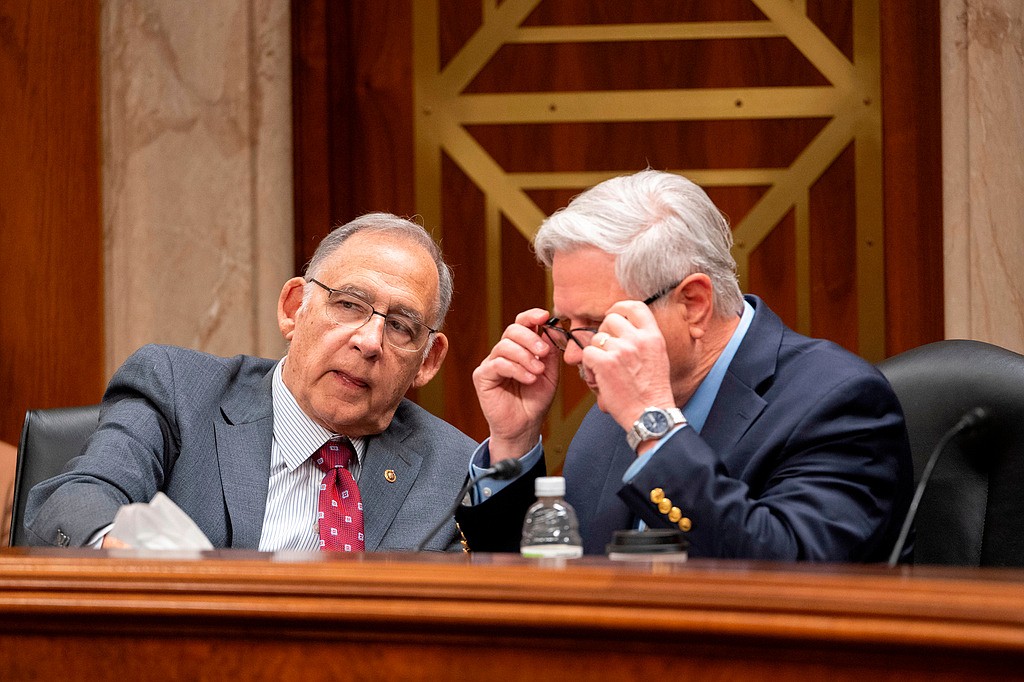
Veterans Affairs Secretary Doug Collins appeared before the Senate Appropriations Subcommittee on Military Construction and Veterans Affairs to discuss the VA’s budget proposal for the next fiscal year. Sen. John Boozman, R-Ark., leads the subpanel.
The department submitted a $488.2 billion request to lawmakers, a $34.9 billion — or 7.7% — increase from levels enacted for the current fiscal year. According to the agency’s budget submission, discretionary spending would reach $150.6 billion in fiscal 2027, a 8.9% jump from $138.3 billion this fiscal year.
The VA is seeking around $4.2 billion for its Electronic Health Care Record Modernization program. The initiative involves transitioning Veterans Affairs facilities from its existing records program to a single system shared between the VA, certified community care facilities, the Defense Department and several government agencies.
“I really appreciate you taking that on,” Boozman, of Rogers, told Collins. “It’s so important, and really will make us a lot more efficient.”
The VA’s deployment of its Electronic Health Care Record Modernization program has been slow; six facilities received the program between October 2020 and March 2024. The VA paused deployments to fix reliability issues with the program.
The agency restarted the rollout last month with installations at four Michigan facilities. Collins told senators that the program’s renewed rollout has been a success so far, noting the VA has processed 26,000 patients in Michigan in the weeks following the deployment.
“The four facilities that have went live, I commend them greatly,” he explained. “They took on what was told to them would be an impossible task because of past failures. They’ve overcome past failures and not only raised the bar; they’ve pushed the bar further.”
Sen. Gary Peters, D-Mich., voiced a similar sentiment, saying the early reports have been “very positive from the folks in Michigan.”
“I will say that I’m also cautiously optimistic that future rollouts are going to be just as successful as what we have seen so far,” Peters added.
Officials plan to continue the program’s deployment later this year with scheduled adoptions at medical centers in Ohio, Kentucky, Indiana and Alaska. Collins expressed confidence that the future rollouts will be successful.
“How I know this is working and people are getting comfortable is I’m having senior executive directors and employees at what is supposed to be next year’s facilities hearing from their colleagues, and they’re saying, ‘We’re ready to go now,'” he said.
Alex Thomas
athomas@adgnewsroom.com
Alex Thomas has served as the Washington Correspondent for the Arkansas Democrat-Gazette since November 2022. He also produces “Arkies in the Beltway,” a weekly podcast covering national politics and the Arkansans involved in public policy debates.