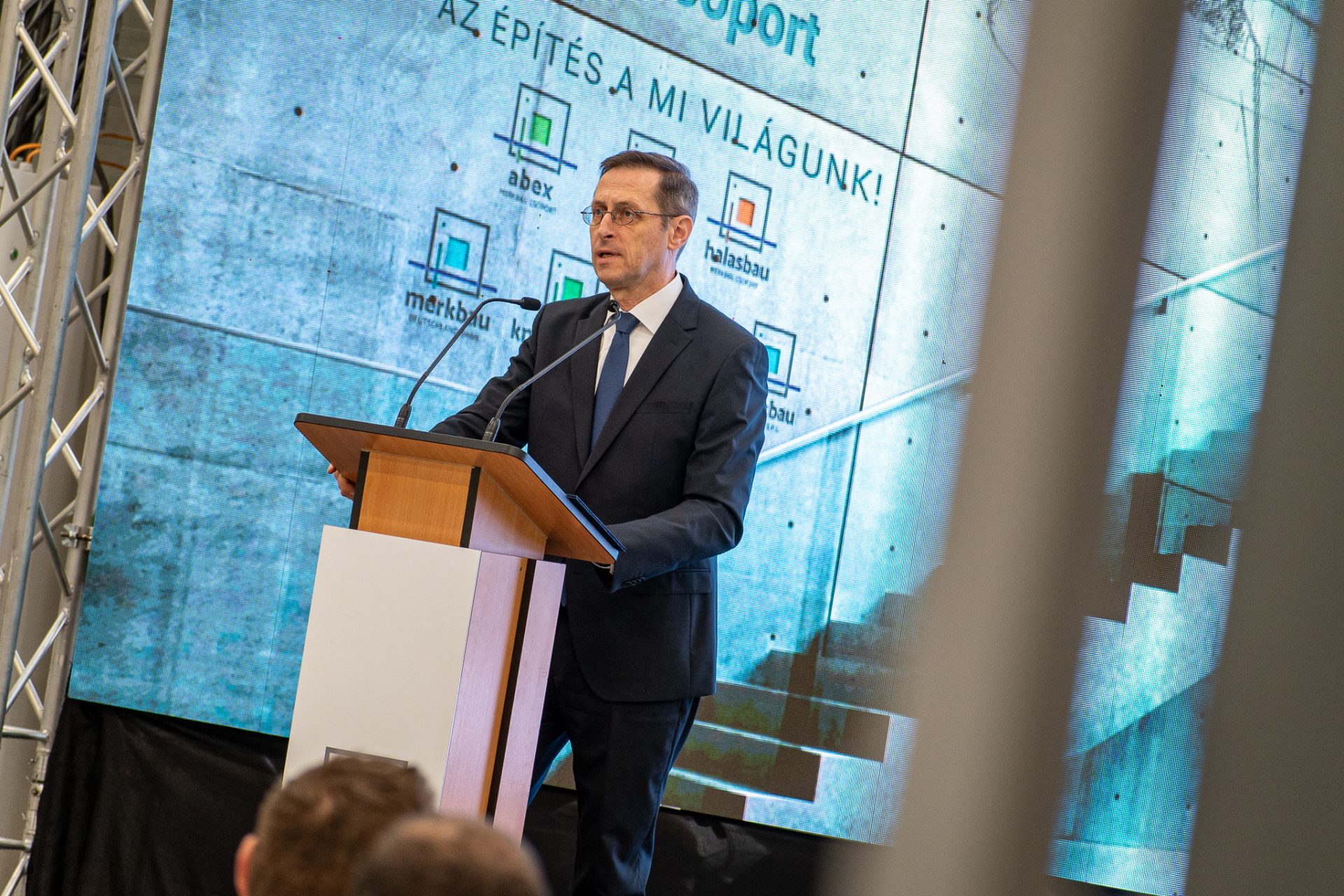
Hungary’s Monetary Council unanimously decided to keep the base interest rate unchanged, said Mihály Varga, Governor of the Hungarian National Bank (MNB), at a press conference following Tuesday’s meeting in Budapest.
According to the central bank governor, ongoing global uncertainties continue to justify a cautious, patient and prudent monetary policy. Geopolitical tensions and fiscal uncertainties both require a stability-oriented approach.
Global growth and inflation outlooks are deteriorating, and the outcome of the Iranian conflict remains uncertain, making its effects unpredictable. Energy prices remain volatile and markets unpredictable, while expensive oil and gas are increasing inflation risks, particularly in countries heavily dependent on imports. Raw material prices are also rising, and the increasing cost of fertilisers could drive further food inflation. Although global investor sentiment has improved slightly, financial markets remain highly sensitive to developments.
Varga added that domestically, risk premiums declined after the parliamentary elections, but their durability and inflationary impact still need to be assessed carefully. The strengthening of the forint is helping to curb price increases, and maintaining stability in the foreign exchange market remains essential.
He also noted that there may be risks in the state budget, but prospects can only be evaluated more accurately once the measures of the new government are known. Achieving a sustainable inflation target will require disciplined fiscal policy, while moderating expectations among households and businesses will support price stability. The central bank contributes to this by maintaining positive real interest rates, and the council will continue to make data-driven decisions.
Responding to questions, Varga said he has not yet held talks with the incoming prime minister, but has already discussed key issues with the nominee for finance minister, and aims to maintain a constructive and continuous working relationship in the future.
Regarding the introduction of the euro, he explained that the decision does not lie with the central bank, although monetary policy can support the process. He said public expectations regarding euro adoption are excessive, as recent experiences show there is no guarantee of success without thorough preparation. He added that roughly half of previous eurozone accessions can be considered successful.
Varga also stated that the Monetary Council discussed a briefing on joining the ERM-II exchange rate mechanism, which is regarded as a preparatory step toward adopting the euro. The central bank is preparing for the task, but the final decision will have to be made by the government.
He emphasised that respecting the independence of monetary policy is worthwhile, noting that market developments since the election—reflected in yields and exchange rates—have confirmed this.
In response to a journalist’s question, Varga said the central bank is examining statements made by former central bank governor András Simor, who alleged that earlier central bank leadership had pressured Erste Bank regarding his removal. He expressed hope that the investigation could be concluded within a few days and said the public would be informed of the results.
At Tuesday’s meeting, the Monetary Council left the central bank base rate unchanged at 6.25 percent, and the two edges of the interest rate corridor also remained unchanged. The overnight (O/N) deposit rate stayed at 5.25 percent, while the overnight (O/N) lending rate—the upper bound of the corridor—remained at 7.25 percent. The decision matched analysts’ expectations. The next rate-setting meeting is scheduled for May 26, 2026.
Artificial intelligence was used for the translation of parts of the original Hungarian text.