Vice President JD Vance said negotiations between the United States and Iran ended early Sunday without a deal after the Iranians refused to accept U.S. terms to not develop a nuclear weapon.The high-stakes talks in Pakistan ended after 21 hours, Vance said, with the vice president in constant communication with President Donald Trump and others in the administration.“But the simple fact is that we need to see an affirmative commitment that they will not seek a nuclear weapon, and they will not seek the tools that would enable them to quickly achieve a nuclear weapon,” Vance told reporters.The war that has killed thousands of people and shaken global markets has entered its seventh week.The U.S. delegation, led by Vance, and the Iranian delegation, led by Parliament Speaker Mohammad Bagher Qalibaf, had discussed how to advance a ceasefire already threatened by deep disagreements and Israel’s continued attacks against the Iran-backed Hezbollah in Lebanon.Trump says the US Navy will ‘immediately’ begin a blockade of the Strait of HormuzThe U.S. president posted Sunday on social media that the blockade would stop vessels from entering or leaving the strait.After U.S. officials ended peace talks with Iran in Pakistan, Trump sought to exert more strategic control over the waterway responsible for the transportation of 20% of global oil supplies — hoping to take away Iran’s key source of economic leverage in the war.“Effective immediately, the United States Navy, the Finest in the World, will begin the process of BLOCKADING any and all Ships trying to enter, or leave, the Strait of Hormuz,” Trump posted.The president added that he has “also instructed our Navy to seek and interdict every vessel in International Waters that has paid a toll to Iran. No one who pays an illegal toll will have safe passage on the high seas.”Trump stressed that Iran’s nuclear ambitions are at the core of the failure to end the war and that the U.S. is prepared to finish the war.“(A)t an appropriate moment, we are fully ‘LOCKED AND LOADED,’ and our Military will finish up the little that is left of Iran!” Trump posted.UAE oil giant rejects Iran’s right to close the Strait of HormuzThe head of Abu Dhabi’s state oil company reinforced a broad consensus in Gulf Arab states on Sunday, saying Iran has no right to close the Strait of Hormuz after negotiations in Pakistan failed to secure an agreement to reopen it.Sultan Al Jaber posted on X that “any attempt to do so is not a regional issue; it is the disruption of a global economic lifeline and a direct threat to the energy, food and health security of every nation.”He called it a dangerous precedent.The Abu Dhabi National Oil Company, known as ADNOC, is among the oil exporters that has been hit hard by the war. It declared force majeure in March, telling buyers the company couldn’t fulfill its obligations. Oil and gas make up 15% of the United Arab Emirates’ gross domestic product.Iranian official says key demands include war reparations and controlling Strait of HormuzIran’s First Vice President Reza Aref said Tehran sought U.S. recognition of its control of transit through the Strait of Hormuz in the collapsed Islamabad talks.Iran having “authority in the Strait of Hormuz” and pursuing compensation for the damage caused by U.S. and Israeli strikes were “the rights of the (Iranian) people,” he said.“This is our firm commitment to a strong Iran,” Aref wrote on social media.Iran’s chief negotiator in Pakistan blames the US for failing to reach a dealIn a series of posts on X, Parliament Speaker Mohammad Bagher Qalibaf said the Iranian delegation provided “forward-looking initiatives” during the 21-hour talks but the Americans could not gain Iran’s trust.He said now is the time for the U.S. “to decide whether it can gain our trust or not.”He didn’t elaborate. But Iranian state media reported earlier that major points of disagreement included Iran’s nuclear program and transit through the Strait of Hormuz.Iran sets ‘red lines’ including compensation for strikesIran doubled down on parts of its earlier proposal, with its delegation telling Iranian state television it had presented some of the plan’s ideas as “red lines” in meetings with Sharif. Those included compensation for damage caused by U.S.-Israeli strikes that launched the war on Feb. 28 and the release of Iran’s frozen assets.The war has killed at least 3,000 people in Iran, 1,953 in Lebanon, 23 in Israel and more than a dozen in Gulf Arab states, and caused lasting damage to infrastructure in half a dozen Middle Eastern countries. Iran’s chokehold on the vital Strait of Hormuz has largely cut off the Persian Gulf and its oil and gas exports from the global economy, sending energy prices soaring.Reflecting the high stakes, officials from the region said Chinese, Egyptian, Saudi and Qatari officials were in Islamabad to indirectly facilitate the talks. The officials spoke on condition of anonymity to discuss the sensitive matter.In Tehran, residents told The Associated Press they were skeptical yet hopeful about the talks after weeks of airstrikes left destruction across their country of some 93 million people. Some said the path to recovery would be long.“Peace alone is not enough for our country, because we’ve been hit very hard, there have been huge costs,” 62-year-old Amir Razzai Far said.Meanwhile, Israel pressed ahead with strikes in Lebanon after saying there is no ceasefire there. Iran and Pakistan have disagreed. The Lebanese state-run news agency reported at least three people killed. Iran and the United States outlined competing proposals ahead of the talks.Iran’s 10-point proposal called for a guaranteed end to the war and sought control over the Strait of Hormuz. It included ending fighting against Iran’s “regional allies,” explicitly calling for a halt to Israeli strikes on Hezbollah.The United States’ 15-point proposal includes restricting Iran’s nuclear program and reopening the strait.Israel and Lebanon will have direct negotiationsNegotiations between Israel and Lebanon are expected to begin Tuesday in Washington, Lebanese President Joseph Aoun’s office said Friday, after Israel’s surprise announcement authorizing talks despite the countries’ lack of official relations.But thousands in Lebanon protested the planned negotiations, and Prime Minister Nawaf Salam said he had postponed a planned trip to Washington “in light of the current internal circumstances.” It was not immediately clear what that meant for the talks.Israel wants the Lebanese government to assume responsibility for disarming Hezbollah, much like was envisaged in a November 2024 ceasefire. But it is unclear whether Lebanon’s army can confiscate weapons from the militant group, which has survived efforts to curb its strength for decades.Israel’s insistence that the ceasefire in Iran does not include a pause in its fighting with Hezbollah has threatened to sink the deal. The militant group joined the war in support of Iran in the opening days. Israel followed up with airstrikes and a ground invasion.The day the Iran ceasefire deal was announced, Israel pounded Beirut with airstrikes, killing more than 300 people in the deadliest day in Lebanon since the war began, according to the country’s Health Ministry.Energy pressures growThe spot price of Brent crude, the international standard for oil prices, was above $94 on Saturday, up more than 30% since the war started.And new pressures emerged in Europe for travelers.The head of Airports Council International-Europe, Olivier Jankovec, warned the European Union that a “systemic jet fuel shortage” could come within three weeks because of the blockage of the Strait of Hormuz.Jankovec said in a letter obtained by the AP that the crunch could impact the summer travel season and “significantly harm the European economy.”___Metz reported from Jerusalem, Castillo from Beijing and Magdy from Cairo. Associated Press writer Josh Boak contributed.
ISLAMABAD —
Vice President JD Vance said negotiations between the United States and Iran ended early Sunday without a deal after the Iranians refused to accept U.S. terms to not develop a nuclear weapon.
The high-stakes talks in Pakistan ended after 21 hours, Vance said, with the vice president in constant communication with President Donald Trump and others in the administration.
“But the simple fact is that we need to see an affirmative commitment that they will not seek a nuclear weapon, and they will not seek the tools that would enable them to quickly achieve a nuclear weapon,” Vance told reporters.
The war that has killed thousands of people and shaken global markets has entered its seventh week.
The U.S. delegation, led by Vance, and the Iranian delegation, led by Parliament Speaker Mohammad Bagher Qalibaf, had discussed how to advance a ceasefire already threatened by deep disagreements and Israel’s continued attacks against the Iran-backed Hezbollah in Lebanon.
Trump says the US Navy will ‘immediately’ begin a blockade of the Strait of Hormuz
The U.S. president posted Sunday on social media that the blockade would stop vessels from entering or leaving the strait.
After U.S. officials ended peace talks with Iran in Pakistan, Trump sought to exert more strategic control over the waterway responsible for the transportation of 20% of global oil supplies — hoping to take away Iran’s key source of economic leverage in the war.
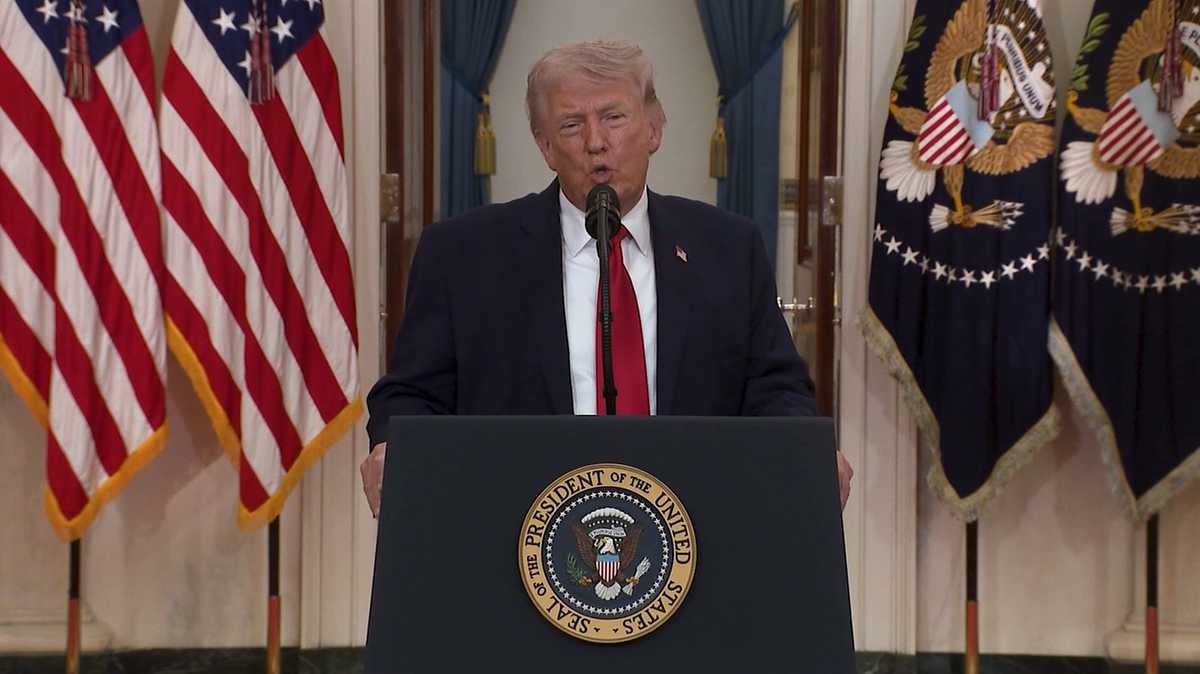
“Effective immediately, the United States Navy, the Finest in the World, will begin the process of BLOCKADING any and all Ships trying to enter, or leave, the Strait of Hormuz,” Trump posted.
The president added that he has “also instructed our Navy to seek and interdict every vessel in International Waters that has paid a toll to Iran. No one who pays an illegal toll will have safe passage on the high seas.”
Trump stressed that Iran’s nuclear ambitions are at the core of the failure to end the war and that the U.S. is prepared to finish the war.
“(A)t an appropriate moment, we are fully ‘LOCKED AND LOADED,’ and our Military will finish up the little that is left of Iran!” Trump posted.
UAE oil giant rejects Iran’s right to close the Strait of Hormuz
The head of Abu Dhabi’s state oil company reinforced a broad consensus in Gulf Arab states on Sunday, saying Iran has no right to close the Strait of Hormuz after negotiations in Pakistan failed to secure an agreement to reopen it.
Sultan Al Jaber posted on X that “any attempt to do so is not a regional issue; it is the disruption of a global economic lifeline and a direct threat to the energy, food and health security of every nation.”
He called it a dangerous precedent.
The Abu Dhabi National Oil Company, known as ADNOC, is among the oil exporters that has been hit hard by the war. It declared force majeure in March, telling buyers the company couldn’t fulfill its obligations. Oil and gas make up 15% of the United Arab Emirates’ gross domestic product.
Iranian official says key demands include war reparations and controlling Strait of Hormuz
Iran’s First Vice President Reza Aref said Tehran sought U.S. recognition of its control of transit through the Strait of Hormuz in the collapsed Islamabad talks.
Iran having “authority in the Strait of Hormuz” and pursuing compensation for the damage caused by U.S. and Israeli strikes were “the rights of the (Iranian) people,” he said.
“This is our firm commitment to a strong Iran,” Aref wrote on social media.
Iran’s chief negotiator in Pakistan blames the US for failing to reach a deal
In a series of posts on X, Parliament Speaker Mohammad Bagher Qalibaf said the Iranian delegation provided “forward-looking initiatives” during the 21-hour talks but the Americans could not gain Iran’s trust.
He said now is the time for the U.S. “to decide whether it can gain our trust or not.”
He didn’t elaborate. But Iranian state media reported earlier that major points of disagreement included Iran’s nuclear program and transit through the Strait of Hormuz.
Iran sets ‘red lines’ including compensation for strikes
Iran doubled down on parts of its earlier proposal, with its delegation telling Iranian state television it had presented some of the plan’s ideas as “red lines” in meetings with Sharif. Those included compensation for damage caused by U.S.-Israeli strikes that launched the war on Feb. 28 and the release of Iran’s frozen assets.
The war has killed at least 3,000 people in Iran, 1,953 in Lebanon, 23 in Israel and more than a dozen in Gulf Arab states, and caused lasting damage to infrastructure in half a dozen Middle Eastern countries. Iran’s chokehold on the vital Strait of Hormuz has largely cut off the Persian Gulf and its oil and gas exports from the global economy, sending energy prices soaring.
Reflecting the high stakes, officials from the region said Chinese, Egyptian, Saudi and Qatari officials were in Islamabad to indirectly facilitate the talks. The officials spoke on condition of anonymity to discuss the sensitive matter.
In Tehran, residents told The Associated Press they were skeptical yet hopeful about the talks after weeks of airstrikes left destruction across their country of some 93 million people. Some said the path to recovery would be long.
“Peace alone is not enough for our country, because we’ve been hit very hard, there have been huge costs,” 62-year-old Amir Razzai Far said.
Meanwhile, Israel pressed ahead with strikes in Lebanon after saying there is no ceasefire there. Iran and Pakistan have disagreed. The Lebanese state-run news agency reported at least three people killed.
Iran and the United States outlined competing proposals ahead of the talks.
Iran’s 10-point proposal called for a guaranteed end to the war and sought control over the Strait of Hormuz. It included ending fighting against Iran’s “regional allies,” explicitly calling for a halt to Israeli strikes on Hezbollah.
The United States’ 15-point proposal includes restricting Iran’s nuclear program and reopening the strait.
Israel and Lebanon will have direct negotiations
Negotiations between Israel and Lebanon are expected to begin Tuesday in Washington, Lebanese President Joseph Aoun’s office said Friday, after Israel’s surprise announcement authorizing talks despite the countries’ lack of official relations.
But thousands in Lebanon protested the planned negotiations, and Prime Minister Nawaf Salam said he had postponed a planned trip to Washington “in light of the current internal circumstances.” It was not immediately clear what that meant for the talks.
Israel wants the Lebanese government to assume responsibility for disarming Hezbollah, much like was envisaged in a November 2024 ceasefire. But it is unclear whether Lebanon’s army can confiscate weapons from the militant group, which has survived efforts to curb its strength for decades.
Israel’s insistence that the ceasefire in Iran does not include a pause in its fighting with Hezbollah has threatened to sink the deal. The militant group joined the war in support of Iran in the opening days. Israel followed up with airstrikes and a ground invasion.
The day the Iran ceasefire deal was announced, Israel pounded Beirut with airstrikes, killing more than 300 people in the deadliest day in Lebanon since the war began, according to the country’s Health Ministry.
Energy pressures grow
The spot price of Brent crude, the international standard for oil prices, was above $94 on Saturday, up more than 30% since the war started.
And new pressures emerged in Europe for travelers.
The head of Airports Council International-Europe, Olivier Jankovec, warned the European Union that a “systemic jet fuel shortage” could come within three weeks because of the blockage of the Strait of Hormuz.
Jankovec said in a letter obtained by the AP that the crunch could impact the summer travel season and “significantly harm the European economy.”
___
Metz reported from Jerusalem, Castillo from Beijing and Magdy from Cairo. Associated Press writer Josh Boak contributed.