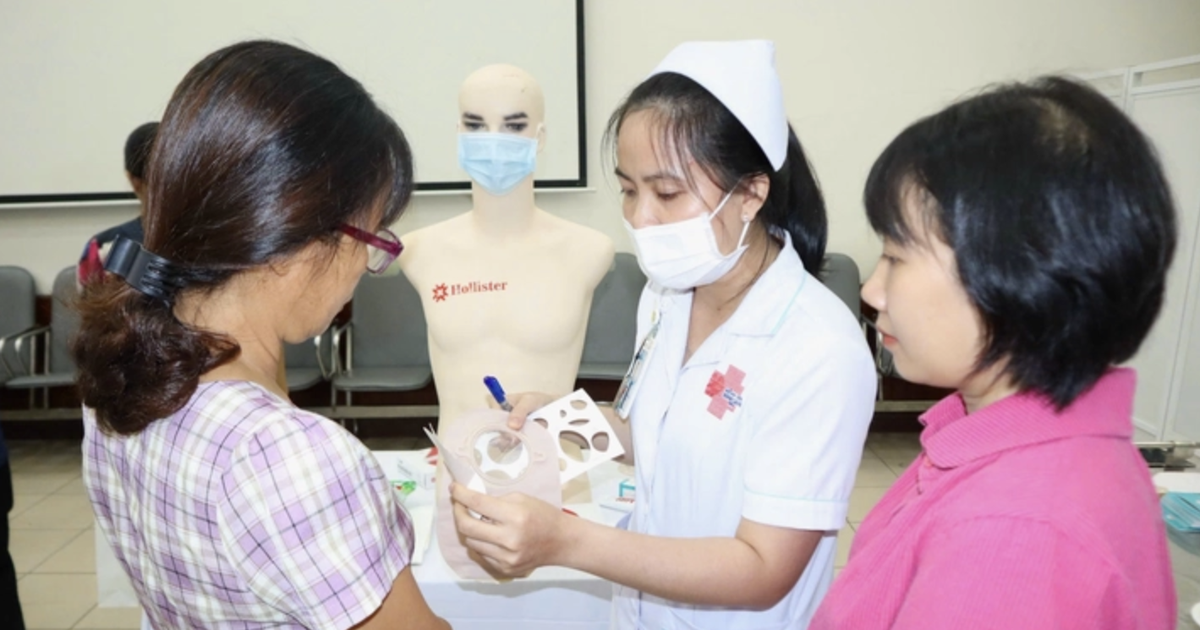
A doctor explains ostomy care to a colorectal cancer patient and her relative in Vietnam. Photo: Nhung Tran
Dr. An issued the warning on Saturday during a regular meeting of the hospital’s ostomy club, focusing on care and nutrition for colorectal cancer patients living with an ostomy.
He noted that the disease is now among the five most common cancers in Vietnam, accounting for about one in every 10 newly diagnosed cancer cases.
He emphasized that colorectal cancer rates have been rising nationwide, driven in part by changes in modern lifestyles and dietary habits.
In Ho Chi Minh City, the nearly-70-percent rise in the incidence rate over the past two decades has coincided with urban lifestyle changes, including lower vegetable consumption and higher intake of red meat and processed foods, Dr. An noted.
Meanwhile, nearly half of colorectal cancer cases could be prevented through better public awareness and timely screening, he said.
One of the biggest challenges in early detection is that many people mistake symptoms of colorectal cancer for hemorrhoids.
Many patients assume rectal bleeding is caused by hemorrhoids and therefore delay seeking medical attention, the doctor warned.
“Colorectal cancer is a common disease that is becoming more prevalent amid changes in modern lifestyles. People are consuming more fast food, greasy foods and grilled foods, while also smoking and drinking alcohol more frequently,” Dr. An explained.
Colorectal cancer does not develop overnight, as the process of cancer development can take 10-15 years, beginning with small polyps that form inside the colon.
These polyps usually cause no symptoms at first, meaning patients may not realize they have them, but over time, some can develop into colorectal cancer.
Therefore, colonoscopy plays an important role in detecting and removing precancerous lesions before they develop into cancer, he said.
Dr. An pointed out five warning signs that people should not ignore.
They include rectal bleeding that persists for more than two weeks, even if blood appears only on toilet paper; unusual changes in bowel habits, such as alternating constipation and diarrhea; unusually thin stools resembling a pencil; persistent abdominal discomfort that has no apparent cause and does not improve with medication; and unexplained weight loss accompanied by fatigue, pale skin, or weakness.
When colorectal cancer has progressed to the point where surgery is required, doctors may need to create an ostomy — an opening in the abdominal wall that brings part of the intestine to the surface of the abdomen, allowing waste to pass into a specialized bag.
An ostomy can be temporary and reversed after one to six months once the intestinal connection has healed, or permanent if a tumor is located too low in the rectum and requires removal of the entire anal sphincter.
People living with an ostomy can still swim, travel, wear the clothes they like, work, and participate in social activities, doctors said.