For the past two and a half decades of chavismo, all the world had heard about Venezuela was the story of a place slowly descending into a deeper, uglier version of its own hell: violence, protests, famine, hyperinflation, stolen elections. A nation and its society faced a detachment from their identity and who they really were.
Simultaneously, a similar identity crisis was taking place: South America’s baseball nation, all of a sudden, was trying to prove itself as yet another football (soccer) country. You could argue that, at the same time, we were trying to become two things we had never been: futboleros y socialistas.
Sports have always been our most honest mirror. As 2025 turned into 2026, and our political crisis finally took a turn for the better, it was our old identity of beisboleros that came back to center stage.
A 2025 full of heartbreak
Up until the bitter end, Venezuela had an actual shot of making it to their first football World Cup in history. They sat on the 7th place of the Conmebol Qualifiers, which meant access to the Interconfederations Playoffs to determine the final two berths for the Mexico-USA-Canada Mundial.
In a sport where Venezuela has historically been South America’s permanent footnote, that alone felt like a breakthrough.
Then came September 9, 2025 in Maturín.
Colombia arrived qualified and theoretically with nothing to play for. Telasco Segovia opened the scoring inside three minutes for La Vinotinto. The visitors equalized, but Josef Martínez restored the lead after a Colombian goalkeeping error. For stretches of that night, Venezuela had the playoff spot in hand. The Monumental stadium in Maturín was loud in a way it hadn’t been since Chile bit the bullet of a historic 3-0 defeat. What followed was a kind of collapse that feels almost cosmically designed to remind a country of its place.
Luis Javier Suárez scored four goals in 25 minutes and over 4,500 kilometers away, in El Alto, Bolivia beat Brazil 1-0. This was enough to push Venezuela off the table entirely. The final score back in Maturín: 3-6. The final position: eighth.
Venezuelan football grew late through the 20th century as an aspirational identity: younger, more cosmopolitan, tied to the latest migration waves of Europeans and South Americans.
Venezuela remains the only South American nation never to appear at a men’s World Cup, even with the expanded 48 team format creating additional slots. The football team’s head coach, Fernando ‘Bocha’ Batista, quickly disappeared in the post-match press conference. He refused to be held accountable before Venezuelan reporters that never dared to question his team’s tactics and behavior.
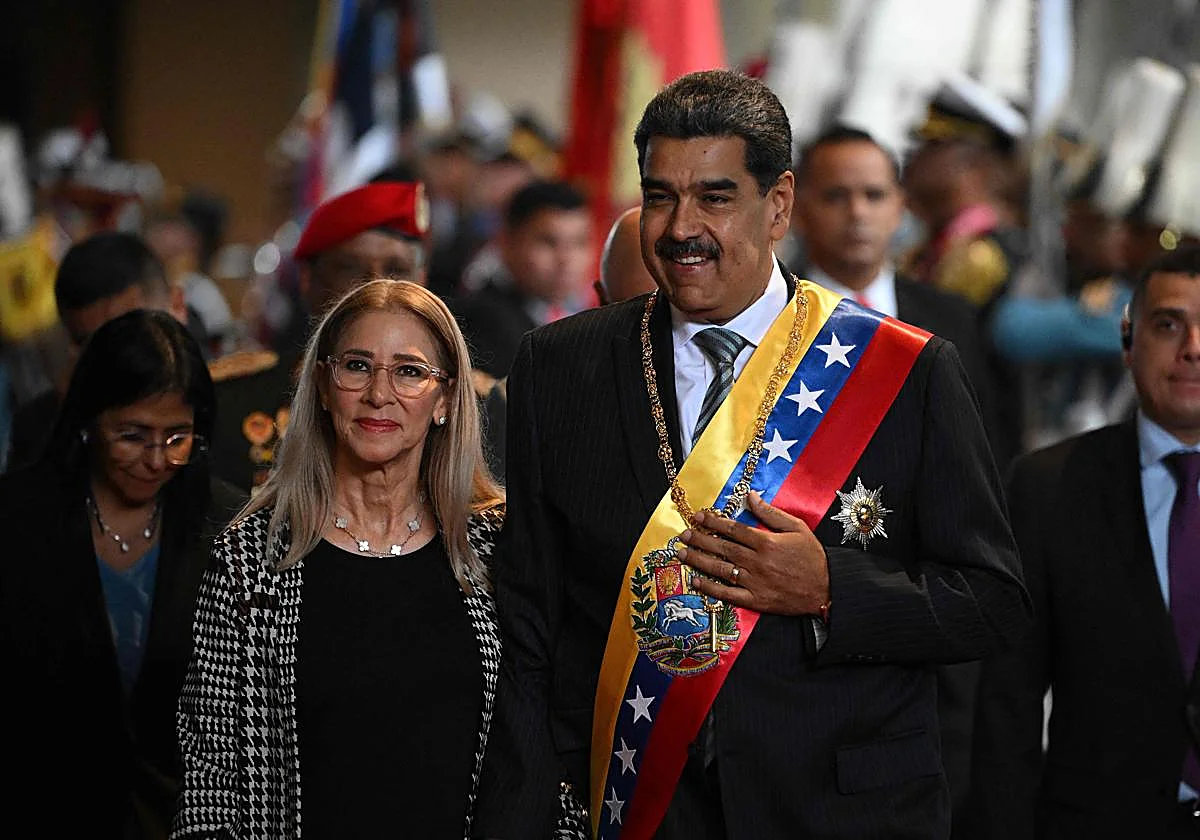
The political tone was characteristically Venezuelan in its bluntness. Within 24 hours, Maduro called for a restructuring of the technical staff, and Batista and his entire back room staff were dismissed.
The language was that of a military command applied to sport: doctrine, line of combat, reorganization. The deeper diagnosis offered an alternative story to tell as well. A country happy to fight for a new spot in the World Cup, content with a mediocre campaign as celebrating near misses rather than demanding the institutional foundations that would make such campaigns obsolete.
Yet again, football in Venezuela arrived at the edge of history and flinched.
Good things come to those who wait
Here is where the story turns. Because while football was processing its grief through the end of the year, something else was quietly gathering force.
Venezuela’s baseball team had already been building toward the 2026 World Baseball Classic playing out of Pool D in Miami against the Dominican Republic, Israel, the Netherlands and Nicaragua.
And when the tournament began in March, La Vinotinto—a nickname also shared with their football equivalent and not a minor detail—did not flinch.
They beat the Netherlands 6-2 in the tournament opener, routed Israel 11-3 and held off Nicaragua 4-0, before a contest to the last out against the Dominican Republic that ended in 7-5 for the other Caribbean side.
Then came the quarterfinal: Japan, the defending champions, with Shohei Ohtani.
The game started with two of the most extraordinary leadoff home runs in WBC history. Acuña Jr. put Venezuela up in the second pitch, Ohtani answering with his own solo homer in the bottom of the first inning. It was the first time the starting runs on both sides came from home runs.
The last two National League MVPs in Major League Baseball were setting up a game for the ages.
Baseball gave Venezuela something unique: it set the cultural tone. Venezuela was more caribeño than Andean or South American.
Japan took over in the third. A three-run homer gave the defending champions a 5-2 lead and, with LA Dodgers’ Yoshinobu Yamamoto on the pitching mound, as well as a deep bullpen behind him, things seemed gloomy for la Vinotinto.
What happened next was the kind of plot twist baseball does better than any other sport. Ronald Acuña Jr.’s cousin, Maikel García, homered in the fifth inning to put Venezuela back in the game: 5-4 read the score board.
Maikel had already brought our protagonists back to life against the Dominican Republic a game earlier, ratifying his status of “grit master” gained during Tiburones de La Guaira’s first championship campaign in 37 years, in 2024. His then manager, Ozzie Guillén, called him “the best baseball player Venezuela has” after that feat.
What followed García’s coup de grace was Wilyer Abreu’s magnum opus. With one powerful swing, Wilyer sent the ball soaring on to the second tier of the stands, 409 feet away from the home plate. Along with that absolute bomb, three runs that flipped the game in Venezuela’s favor. 7-5.
One more run and a superb outing of the South American side’s bullpen, retiring 13 consecutive Japanese batters later, the upset of the tournament was consummated: reigning champions lost 8-5 to the Arepa Power Boys.
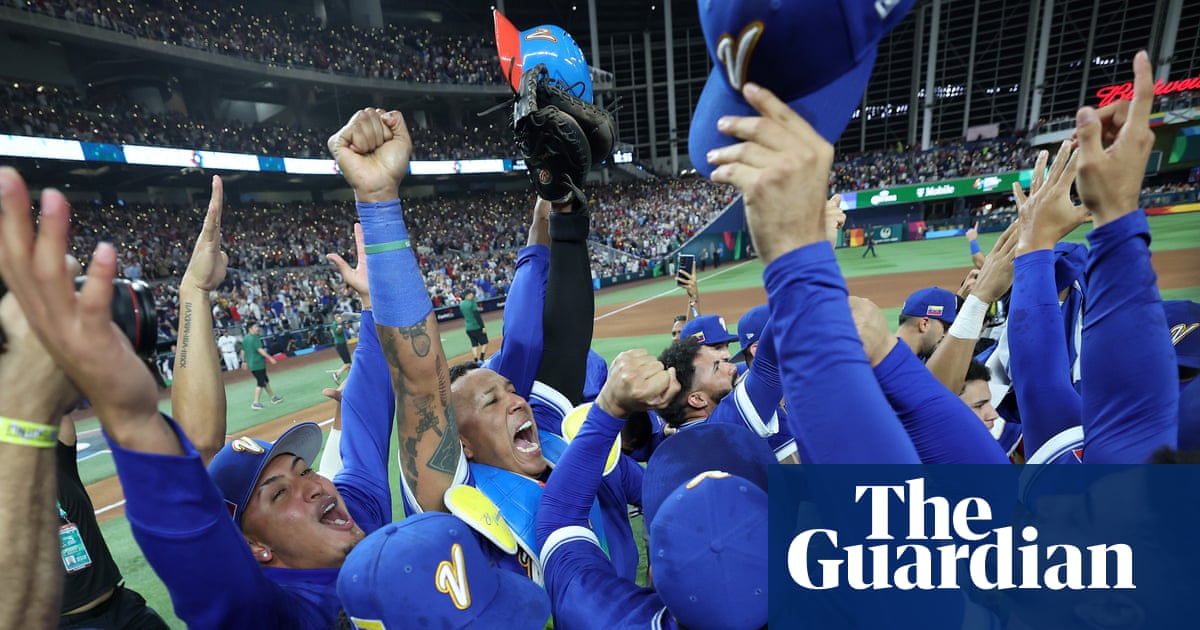
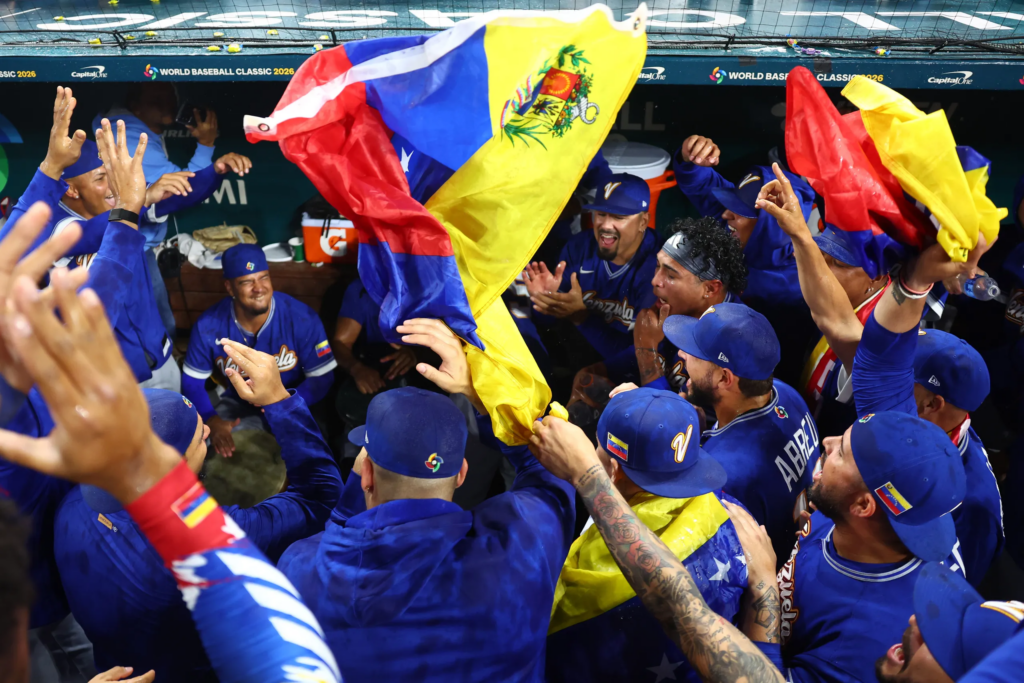
Tambor music began roaring in the stands, the hallways and the dugout. Venezuela estaba de fiesta.
No such thing as coincidences
It would be easy to read this as just a sports story. Two balls, two different outcomes, one country’s emotional calendar in 2025-26. But sports in Venezuela are never just sports.
Baseball’s hold on Venezuelan identity goes back to the 1930s, when the sport transformed from an elite urban pastime into a nationwide cultural force. It emerged during a period of sustained political tension as common ground, a shared language that transcended class and region.
The defining moment took place in a country closely tied to modern day Venezuelan politics: Cuba. In 1941, the Venezuelan national team beat the heavily favored host nation at the Amateur World Series. The triumph was such an achievement, it sparked the foundation of the Venezuelan professional baseball league. Then Venezuelan president Isaías Medina Angarita declared a national holiday, celebrations erupted across cities and towns alike.
Los Héroes del ‘41 were born to be immortalized.
That’s how Venezuela’s baseball legacy was born: not just a game won, but an entire nation recognizing itself in a sporting achievement. Outperforming expectations on the world stage, carrying a flag nobody took seriously until they had to.
Football, even though arriving decades before la pelota caliente did, grew late through the 20th century as an aspirational identity: younger, more cosmopolitan, tied to the latest migration waves of Europeans and South Americans.
And yet the baseball talent never stopped flourishing: Acuña Jr, Altuve, Cabrera, Arráez, Santana, Abreu… also the names that have lit up Miami this month are the children and grandchildren of a baseball culture that the country’s political chaos couldn’t fully extinguish.
Baseball had given Venezuela something unique: It set the cultural tone. Venezuela was more caribeño than Andean or South American.
While football was Venezuela trying to look like its continental neighbors, baseball was Venezuela being itself.
The last two decades of chavismo and its aftermath did something culturally important: they disrupted the baseball infrastructure. The LVBP weakened, the number of MLB-affiliated academies declined from 21 in 2002 to only six in 2010.
The diaspora took players abroad, not for opportunity, but for survival. Football, with its lower requirements (a ball and a bit of flat space) filled some of the vacuum.
And yet the baseball talent never stopped flourishing: Acuña Jr, Altuve, Cabrera, Arráez, Santana, Abreu… also the names that have lit up Miami this month are the children and grandchildren of a baseball culture that the country’s political chaos couldn’t fully extinguish. It just scattered them across the world. The 2026 World Baseball Classic is where they come home.
Back with a bang
There is something structurally symmetrical about the 2025-2026 Venezuelan sport year. Football, the newer national obsession, offered the ultimate dream of vindication, the global stage, El Mundial, and couldn’t deliver. Baseball, the older soul of the country, quietly went about its business and is delivering something it had owed itself for decades.
Because that win against Japan also means Venezuela is automatically qualified for the 2028 Summer Olympic Games, the first time the Tricolor Nacional will compete for Olympic gold.
It also brought in Miami, one of the strongholds of Venezuelan migration, a nation feeling like itself again.
This isn’t a story about baseball being better than football. It is a story about identity and what happens when a country, after years of fracture, finds its way back to the thing that always made them unique. Dominicans play baseball because that’s what they do. Cuba plays baseball because it always has. Venezuela plays baseball because, back in 1941, it decided this was who it was going to be, a country in charge of its destiny.
85 years later, in Miami, against the defending world champions, they did it again.
The Héroes del ‘41 would recognize the shape and scale of this story. So does the country watching back home, as well as the eight million Venezuelan spread across the world. The ones that, after everything, can feel proud again.
The final chapter
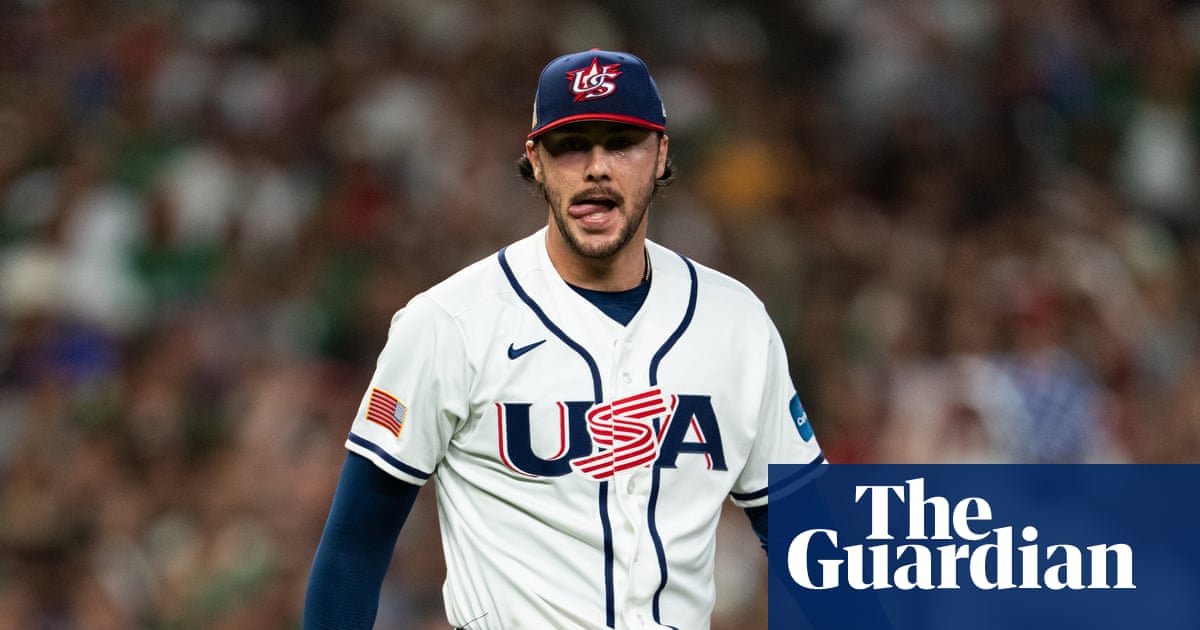
As only fate could have it, yet another comeback win—this time against Italy—placed Venezuela in the final game of the 2026 WBC, against no other than the home of baseball, the United States.
To say that the geopolitical context is at the forefront of this match-up is underselling it.
Not three months ago, US soldiers extracted Nicolás Maduro from his holdout in Fuerte Tiuna, Caracas. Tonight, Venezuelans and estadounidenses meet to decide whether this is baseball or béisbol, and which starred flag will be raised as the tournament’s champion.
Miami, an American city home to hundreds of thousands of Venezuelan migrants, is an apt venue for arguably the fixture with the biggest side story this Clásico Mundial could offer.
President Donald Trump has already added more fuel to the fire by reviving the “51st state” topic while praising Venezuela’s pelota caliente skills.
Eighty-five years later, we’re on the brink of history once again. Just like in 1941, flinching seems to be off the table.