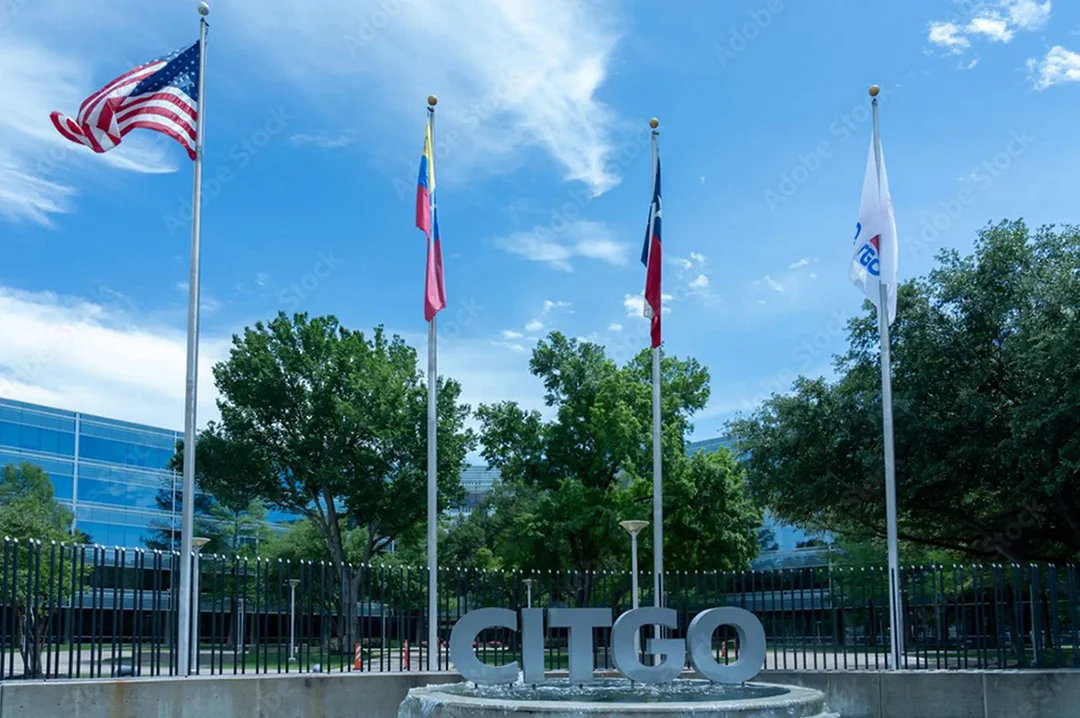
Vulture fund Elliott Management is closer to sealing the acquisition of Venezuela’s CITGO via a court-mandated auction. (Archive)
Caracas, November 17, 2025 (venezuelanalysis.com) – Delaware District Judge Leonard P. Stark dismissed efforts to challenge the ongoing auction of CITGO, clearing a major legal hurdle ahead of the forced sale of Venezuela’s most important foreign asset.
Stark denied motions Thursday to disqualify himself, the court-appointed “Special Master” Robert B. Pincus, and the sale process advisory firms. The legal requests were put forward by Gold Reserve, which also had a demand for a stay of the ongoing proceedings rejected.
Gold Reserve has sought to challenge the court’s choice of Amber Energy, an affiliate of vulture fund Elliott Management, as the winner of the CITGO auction. Pincus had originally picked the US $7.9 billion proposal from Dalinar Energy, a Gold Reserve subsidiary, before changing his decision and recommending Amber’s $5.9 billion bid.
While it had a lower value, Amber’s proposal was favored due to a greater certainty of closing. It set aside $2.1 billion to settle with holders of the defaulted PDVSA 2020 bond, for which half of CITGO was pledged as collateral. A New York judge recently upheld the validity of the PDVSA 2020 bonds.
The mining company had defended its pursuit of wide-reaching disqualifications after accusing the court’s advising firms, Weil, Gotshal & Manges, and Evercore, of receiving $170 million in fees from Elliott affiliates and PDVSA 2020 bondholders. Gold Reserve’s lawyers claimed that the alleged conflict of interest tainted the auction’s fairness.
In his ruling, Stark dismissed the motions as “procedurally defective” and “based on waived arguments.”
In a press statement, Gold Reserve expressed its disagreement with the judgment and vowed to “seek all appropriate appellate remedies.”
Stark is expected to rule on objections to the chosen Amber Energy bid before the end of November. If the offer receives its final approval, the takeover of CITGO could happen in the first half of 2026.
In 2022, the Delaware court launched the auction of shares belonging to PDV Holding, a subsidiary of Venezuelan state oil firm PDVSA CITGO’s parent company, to allow a number of multinational corporations to collect on international arbitration awards against the Caribbean country.
The protracted legal battle is the most significant effort from creditors to claim compensation for assets nationalized by the Hugo Chávez government in the 2000s.
The sale proceeds will pay creditors on a “first-come, first-served” basis. Crystallex ($1.0 billion), Tidewater ($80 million), ConocoPhillips ($1.3 billion) and O-I Glass ($700 million) are top of the list. Canadian miner Crystallex initiated proceedings in 2018 thanks to an “alter ego” ruling that made PDVSA liable for Venezuela’s debts.
With CITGO managed by the US-backed opposition, subsequent alter ego verdicts led other corporations to tag claims to the auction. Former self-proclaimed “interim president” Juan Guaidó and associates drew accusations of malfeasance and conflicts of interest after their actions ballooned the company’s liabilities to $20.6 billion.
For its part, the Nicolás Maduro government has labeled the court-led sale of CITGO as “the theft of the century” and vowed to challenge the loss of the South American nation’s most prized foreign asset.
With its value estimated around $13 billion, CITGO owns refineries in Illinois, Louisiana and Texas with a combined processing capacity of 769,000 barrels per day (bpd). The firm’s portfolio likewise includes a pipeline network and over 4,000 service stations, mostly on the US East Coast.
Edited by José Luis Granados Ceja in Mexico City, Mexico.