Photo: Matias Delacroix / AP
When, after crossing Caracas, we were greeted by the chaos of motorcycles and cars waiting their turn to pass through the streets of La Guaira, we thought it was a sign of things to come. The heat and dust made us think of some remote place in the Middle East. The remains of what, seven days before, had been the city’s waterfront lay before the Caribbean Sea. The sound of ambulances accompanied us to Caraballeda, where we were headed to supply a small makeshift hospital in the old McDonald’s.
We took turns passing with cargo trucks and rescuers returning home covered in dust, still wearing masks. The deeper we went into the city, the stronger the smell of decomposing bodies we had heard about. It became more intense when we turned off José María España Avenue and entered the small residential streets lined with collapsed houses and buildings. I saw no sign that anyone was searching for survivors at that moment.
My two friends and I had traveled there in an old white pickup truck. We carried medical supplies, clothing, dozens of hammers, and a few shovels. We left Valencia convinced that we could help remove rubble. Once we arrived, we realized that our tools were no match for tons of concrete. No shovel or hammer could move the enormous beams under which fathers and sons, grandparents, brothers, and friends from La Guaira remained trapped.
Ángel Matute, the volunteer who set up the hospital inside the McDonald’s store.
At 6:00 pm on July 1st, we saw the McDonald’s logo at the top of the avenue and knew we had reached our destination. For us, people from Carabobo state, Vargas state (as we still call it, even though Maduro changed its name to La Guaira) was something new. We had never been there except to use the Maiquetía airport.
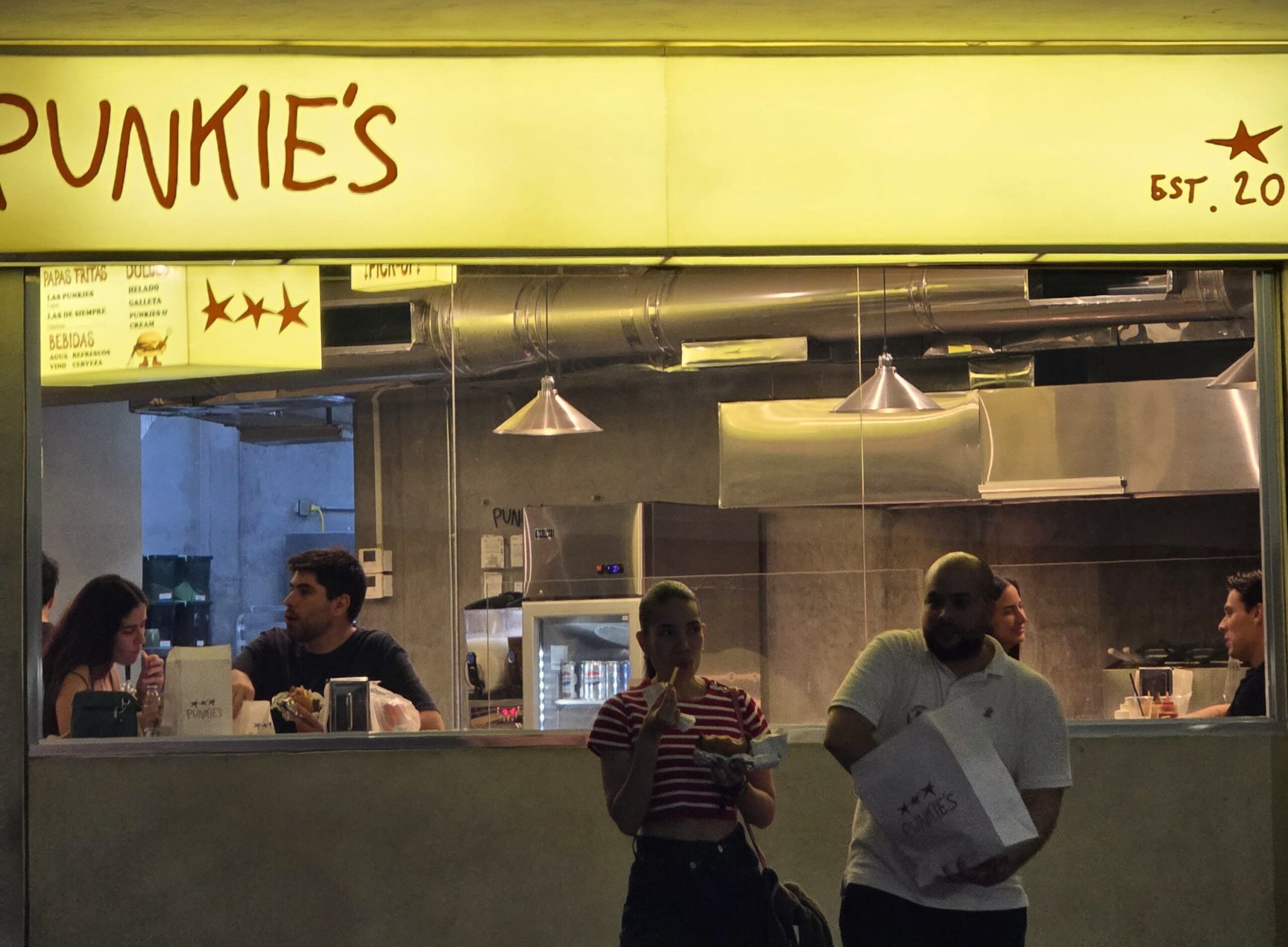
At the McDonald’s, we met Ángel Matute, a volunteer from Barquisimeto who had traveled to La Guaira just a day after the earthquake. While we unloaded the boxes we brought from various collection points in Valencia, dozens of young doctors were working behind the counter of the ancient restaurant. They had transformed that McDonald’s into a field hospital.
“Everything I saw was horrible and has affected me mentally, but even so, I don’t want to stop helping because I know that all the people here are waiting to receive help…”
The doctors moved with the precision required in an operating room, but amidst unlit fryers, hamburger boxes, and soda machines that had ceased to function. Syringes, backpacks, and masks filled the kitchen. The tables where people had once eaten were now used by the volunteer doctors, who arrived covered in dust to rest before heading out again to the places where bodies were being recovered.
“Brother, when I arrived in the city, the entire McDonald’s was looted and empty; I spoke with a policeman about using the facility as a shelter, and he told me that if I did, he wouldn’t arrest me,” Ángel told me. As a joke to relieve stress, we called it a war hospital. But the nickname was perfect, because what was happening there resembled a place devastated by bombs and gunfire more than by an earthquake.
“I arrived on Thursday from Barquisimeto and I didn’t expect to find what’s here,” Ángel told me through tears. Upon arriving, he had to recover a human torso. “Everything I saw was horrible and has affected me mentally, but even so, I don’t want to stop helping because I know that all the people here are waiting to receive help, just as I would if I were in their place.”
Waiting for the bodies
At 10:30 pm, after leaving things in the makeshift storage room inside the McDonald’s cleaning closet, I went for a walk among the neighbors who were sleeping on the streets, in the rain and on the sidewalk. It took me less than two minutes to realize that about twenty meters away, hidden by the darkness, were the ruins of a building.
As I approached, I could read its name: Breña Sol Residences. Only the entrance was still standing. Yalezka Gutiérrez was waiting by the door. Her mother Mayra, 65, lived on the first floor.
“I was outside my house in the Los Corales neighborhood when the earthquake struck,” Yalezka told me. “The first thing I thought of was my two daughters, one six years old and the other fourteen. I had left them alone while I bought some things at a nearby store. I ran to where they were, but the earthquake threw me to the ground. When I finally got there, they had managed to get out. I had no cell service to contact my mother, so I decided to cross the San Julián River and get here. I was hoping to find her, but when I arrived, the neighbors told me that she hadn’t made it out. Now I’m waiting to recover her body.”
In La Guaira, time stopped being measured after the earthquake. It began to be counted from the last time each family spoke with those who were still under the rubble.
A few meters away, Anthony and his brother Adán were waiting. Their godfather remained trapped under the rubble of the same building. Anthony, an army soldier who was on leave in Caracas when the earthquake struck, arrived in La Guaira as soon as he could.
“I came to look for my godfather,” Anthony said, “but the building was gone. I crawled through a gap in the rubble and found a white sofa, the same one he had in his living room. It was covered in blood that dripped from the debris. I’m going to stay here until I manage to get my family out.”
His grandmother, “La Nona,” who lived in a building across the avenue, was also trapped. There was no way to find her without the heavy machinery that was working, according to relatives waiting beside the rubble, on twenty other structures in the same area. Anthony opened a bottle of water that some volunteers had just given him from a truck loaded with food and supplies. The water in the area was contaminated, and this was the only way to stay hydrated. But not even the bottled water escaped the atmosphere: the smell of decay seemed to seep into every sip, leaving a strange and persistent sweetness that accompanied everyone from the first minute in La Guaira.
Inside the ruins
After four hours of wandering the streets, I returned to McDonald’s. While he was talking to me, at 3:30 in the morning, Jesús Molina’s phone rang. He lives in Bucaramanga, Colombia, and crossed the border as soon as he heard about the earthquake. For a week, he had been sleeping on the floor of the McDonald’s with a group of students in their twenties. No one asked what had happened. They put on their helmets, grabbed the 3M 6200 gas masks that many Venezuelans had used in the protests to protect themselves from tear gas, and headed toward the OPP 33 building. I decided to go with them.
When we arrived, firefighters and rescue workers were trying to break through the earth and concrete to recover a body. We crawled through an opening barely wide enough for us to get through. Even with the mask and helmet I’d put on in an instant when one of those volunteer rescuers dropped them into my hands before we left, the smell was still overwhelming. A wooden door, wedged between the building’s beams, blocked the only way in. After several attempts, we managed to move it.
The OPP 33 building where we attempted to recover a body.
On the other side, a slab of concrete was crushing the body of a victim. We couldn’t see it completely, but a thin trickle of blood was seeping from a crack in the concrete. We started pounding on the slab to create space. Then the building gave way just a few centimeters: the noise of the structure and the approaching roof told us so. The silence lasted an instant. No one said a word. We looked up, checked that the structure was still standing, and continued working. After two and a half hours of effort, we allowed another team of rescuers to join what we were doing there; they would be responsible for extracting the body of the person we had found.
But I also understood that tragedies aren’t faced only with grand gestures. They are confronted by hundreds of people doing what little they can.
We returned to McDonald’s, which had become our home for two days and a night, and I went back to Breña Sol. Anthony was still sitting there. The crane still hadn’t reached that building or the other side of the avenue where his grandmother was still trapped. I said goodbye, and he barely raised his hand. He wasn’t in a hurry. He had been waiting for days and was willing to stay as long as it took. In La Guaira, time stopped being measured after the earthquake. It began to be counted from the last time each family spoke with those who were still under the rubble.
My friends and I loaded the few things we had brought back into our old white pickup truck: our dusty clothes and a few bottles of water. We started the journey back to Valencia with the feeling of carrying almost the same amount of luggage. In La Guaira, I left behind conversations with people whose names I barely managed to recall, hugs with volunteers I met amidst mountains of concrete, and the certainty that, in the midst of tragedy, strangers can become a team.
Children playing at the Tanaguarenas 1 medical camp.
Along the way, I wondered several times if we had truly helped. It’s difficult to measure the value of a few more hands removing rubble or a sleepless night when the disaster seems endless. Perhaps our contribution was small compared to the magnitude of what had happened. But I also understood that tragedies aren’t faced only with grand gestures. They are confronted by hundreds of people doing what little they can.
I returned home exhausted and with my clothes covered in a dust that disappeared after a few washes. There are other things, however, that still remain: the faces of those searching for a loved one, the sound of the tools hammering on concrete and the silent solidarity of those who arrived seeking nothing in return. The road ended that afternoon. Inside, I am still there.