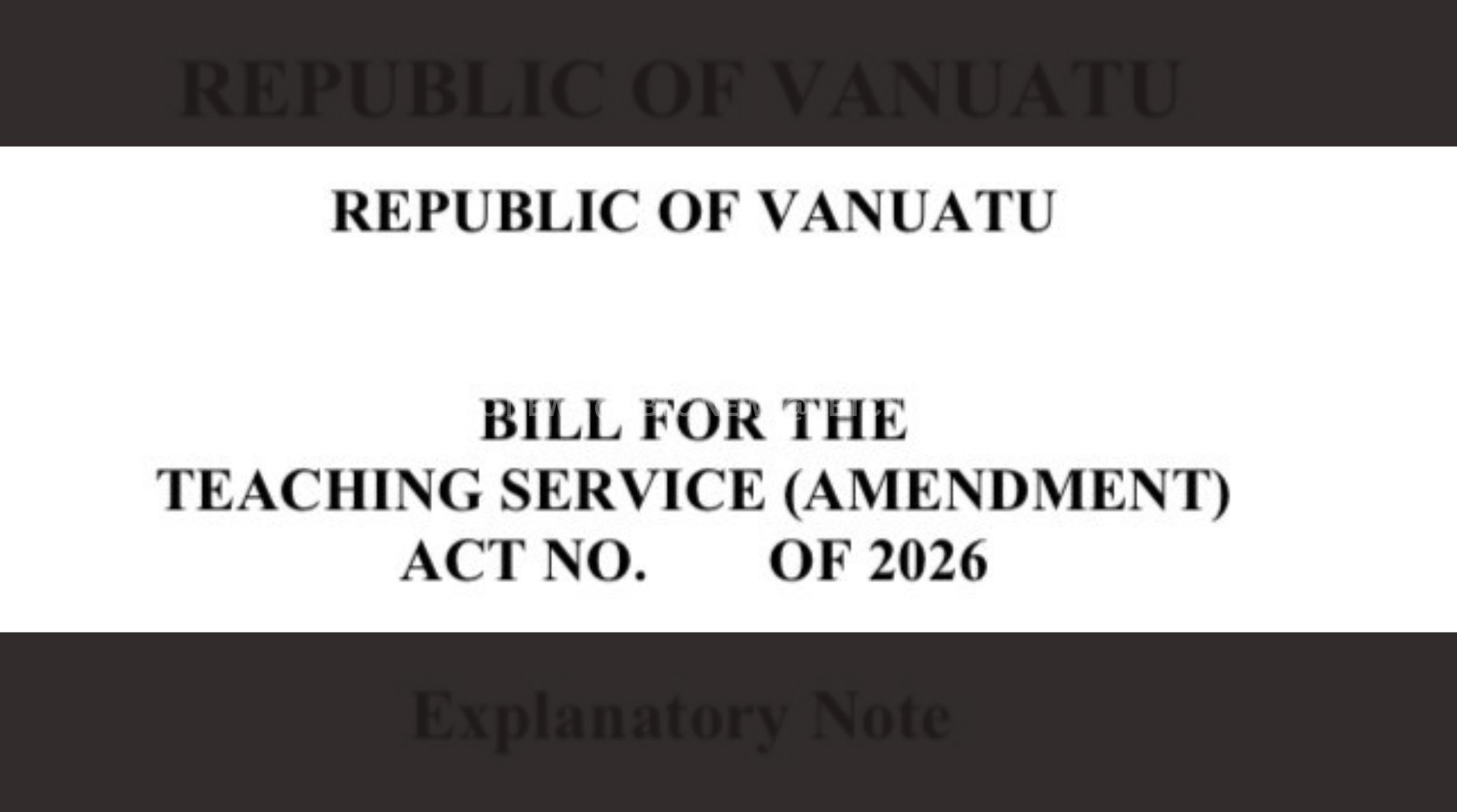
The Vanuatu Government is proposing amendments to the Teaching Service Act 2013 to clarify the roles and responsibilities of the Ministry of Education and the Teaching Service Commission (TSC), amid ongoing questions about cooperation and leadership within the education sector.
The proposed changes are expected to be considered by Parliament during its First Extraordinary Session, which begins on October 19.
The government says the amendments are intended to address areas where clearer responsibilities and administrative processes are needed to support the effective management of the education sector.
Clarifying roles and responsibilities
The proposed amendments aim to establish a clearer understanding of the respective responsibilities of the Ministry of Education and the TSC.
The issue has drawn public attention in recent weeks and months, with questions raised about how the two institutions work together and the impact this may have on education and children’s learning.
The government believes changes to the law could help improve cooperation between the institutions.
Proposed changes to the Teaching Service
The amendments identify several areas for improvement, including the appointment process and vacancies for members of the Teaching Service Commission.
They also seek to strengthen the administration and structure of the Teaching Service and expand its scope to recognise teachers with disabilities working across education institutions.
Other proposed changes concern the administration of the Teaching Service Secretariat, including the appointment of its secretary and other staff.
The amendments would also seek to restore an effective system for registering teachers and maintaining their information.
Impact on children’s learning remains to be seen
The proposed changes come as the education sector faces questions about how effectively its authorities work together to support teaching and learning.
Whether the amendments will improve coordination between the Ministry of Education and the TSC, and help prevent issues that disrupt children’s learning, remains to be seen.
The proposals must first be considered by Parliament. Their impact will depend on whether they are passed and how the changes are implemented.
The government says it believes the amendments will play an important role in strengthening cooperation between the two institutions.