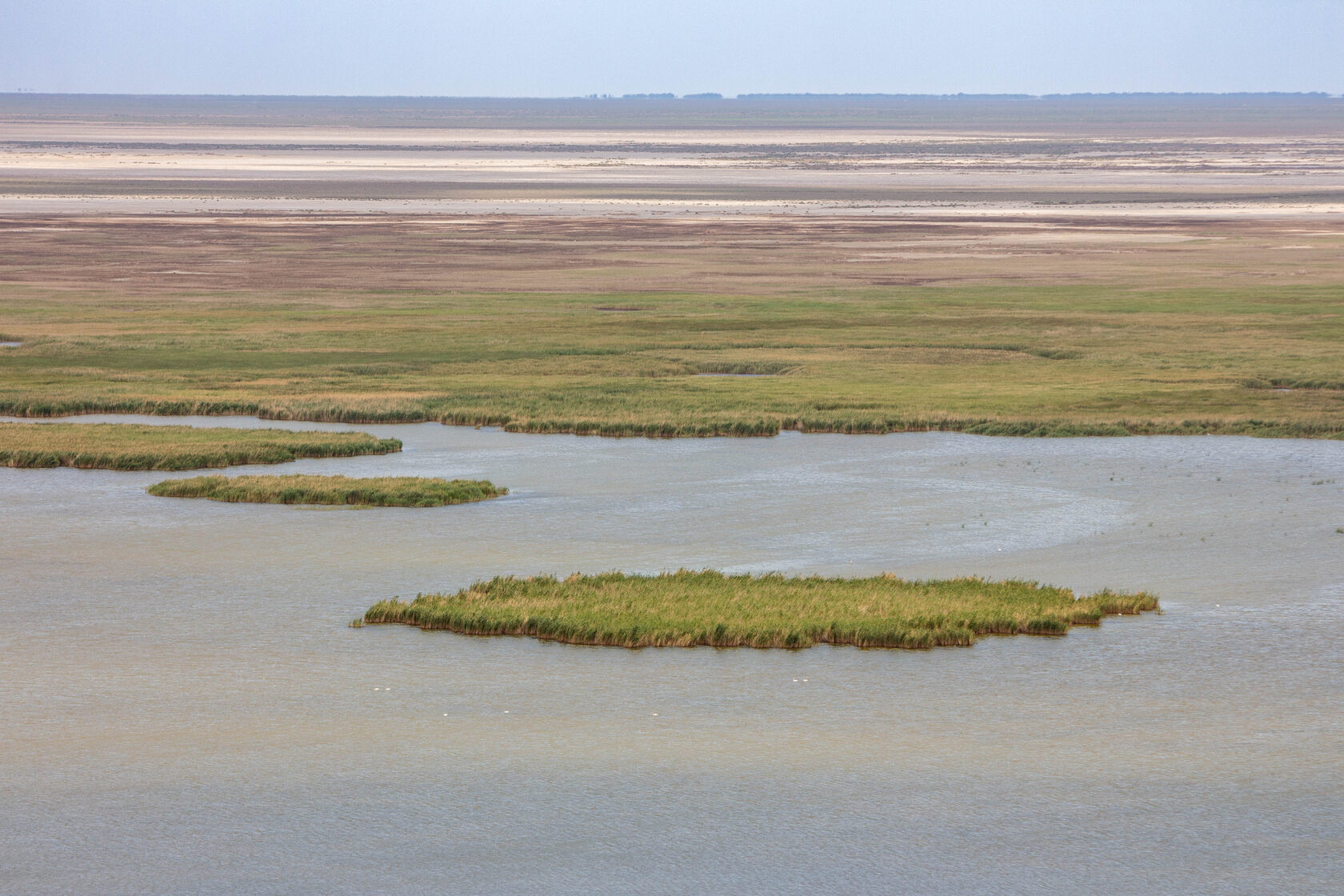
The reserve’s core vulnerability, however, is the same as Dengizkul’s: a shortage of water. Tugay forest requires regular moisture, particularly in July and August, when turanga releases its seeds and the soil must be damp for them to germinate. Specialists say that natural floods have long ceased to reach deep into the forest.
In recent years, the Amu Darya has often dropped below the groundwater table. In some places, the river has begun to function as a collector, drawing moisture in rather than releasing it. In places where floods once sustained the forest, pumping stations now do the work. And the same question arises again. Should a guaranteed portion of river flow be directed not only to agriculture but to the preservation of natural ecosystems?
We leave the reserve at sunset, when the heat finally breaks and the deer, according to the inspectors, come out to graze at the forest edge. They never showed themselves in Kyzylkum. Our next destination is the Khorezm region, where we will find them not only in a breeding center, but in the wild, among the local tugai forests.