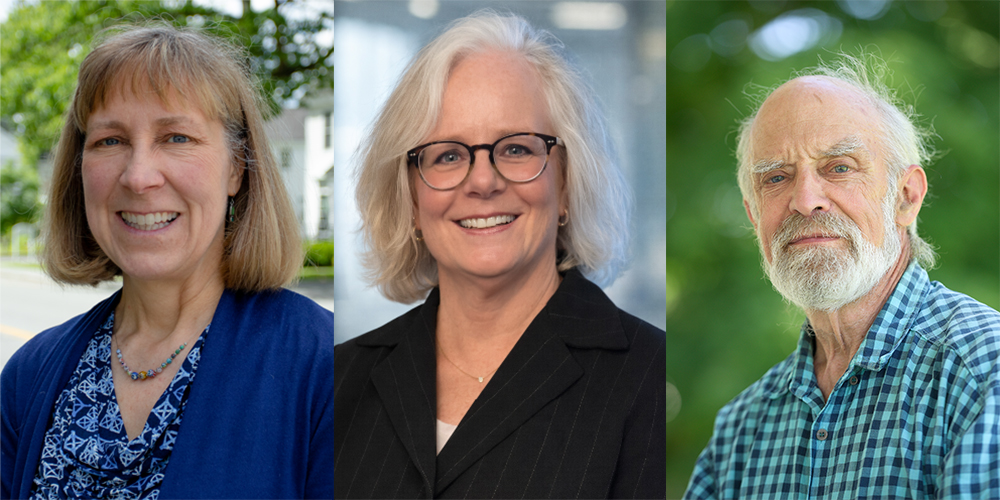
Three Democrats are competing for two seats in the Vermont House’s Windsor-Orange-2 District this year: incumbent Rep. Jim Masland of Thetford, and newcomers Dee Gish and Lauren Morando Rhim. With no Republicans on the ballot, the Aug. 11 primary will effectively decide who represents Norwich, Sharon, Strafford and Thetford in Montpelier.
Masland said he opted to run again because the legislature left important issues unsettled. He says he prefers to revise and improve bills as they make their way through the Committee on Ways and Means rather than propose his own.
“I’m more helpful leading from the middle rather than being out front with a banner,” said Masland.
Gish, a former finance director, is running in her second House election, hoping to seize the opportunity as Rebecca Holcombe (D-Norwich) has opted not to run again.
Morando Rhim is entering state politics for the first time, but cites experience on the Norwich School Board.
Dee Gish
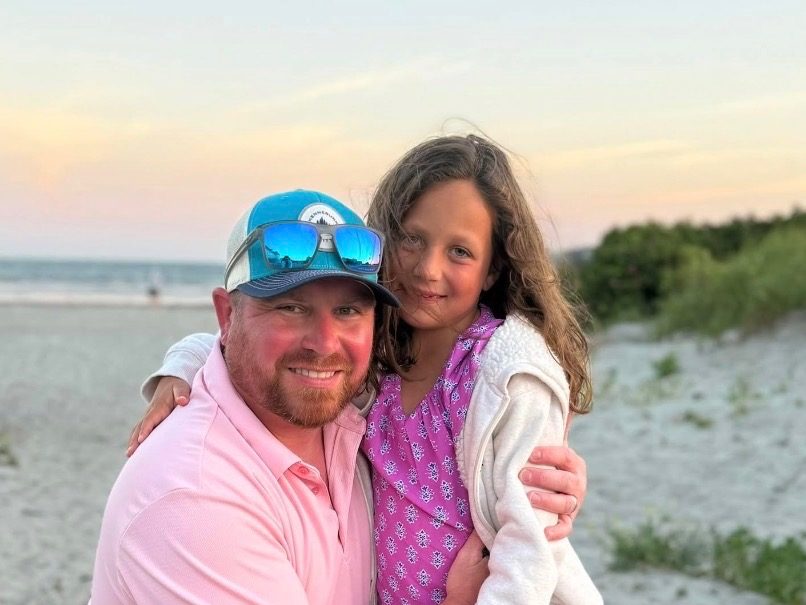
Dee Gish, 59, of Sharon, is a candidate in Vermont’s Windsor-Orange 2 House primary. Photo courtesy Dee Gish Credit: MF Sacca
Gish, a 59-year-old Sharon resident, joined the race, she said, because she cares about the issues most pertinent to local Vermonters, including climate change and affordability, she said July 29 by phone.
“I have two young adult children that I want to be able to live and stay and thrive in Vermont,” said Gish.
A few days after Holoombe announced her decision not to run this year, Gish entered the race, having already run in the 2022 election for the same spot.
Gish feels her financial background in budget, audit and grant processes can be of use, especially amid budget reductions. She has served on regional planning commissions as finance manager for several years, including for Two Rivers Ottauquechee, Central Vermont and Memorial County.
She pointed out that a lack of affordable housing coupled with high interest rates and building costs creates difficulties for young adults in the state. She hopes to incentivize year-long residency instead of second homeownership and short-term renting.
As for Act 170, Gish feels shared services help reduce costs, particularly in administration and special education, but impacted communities need a say in the process. She added that if the state fails to support local schools, those towns will become vacation destinations with an increase in second homes.
“I don’t think that our property tax conundrum is going to be solved with school mergers alone,” said Gish.
She hopes to start by recapturing income from tax breaks on wealthy earners and redistributing it toward needed services.
Jim Masland
Rep. Jim Masland, D-Thetford, photographed in Norwich, Vt., on Tuesday, Aug. 4, 2026, is running for his 15th term in the Vermont House. “It is highly likely that this will be my last term, but we left a lot of important stuff on the table at the end of last term,” he said. He hopes to serve one last time rounding out 30 years in the body. JAMES M. PATTERSON / Valley News Credit: Valley News – James M. Patterson
For Masland, 77, his time as a House representative has been a long road, he said July 30 by phone.
Since he first got elected in 1998, property tax issues have changed, and there’s a new appreciation for the nuances of environmental protection, he said.
His primary reason for seeking reelection is that there’s always room for improvement in the next session, and the core issues in Vermont remain ongoing.
“Nothing’s finished, nothing’s done,” said Masland, who lives in Thetford.
This year, Masland put his name on several bills to express support, including for efforts to develop a universal primary care program; to protect consumer data; to ensure cell phone-free schools; and to amend the prohibitions against discrimination in public accommodations and housing.
Great progress has been made on several funding fronts, he said, including for Act 181, which imposes a 3.4% property transfer tax on second homes.
To Masland, the primary focus of constituents seems to be property tax issues and educational governance and structure.
A decrease in school-age children has had wider effects, said Masland, particularly on tax rates, the size and scale of small communities and community involvement.
While he feels consolidation is necessary, Masland is against forcing school mergers because it perpetuates a bad result, with increased budgets falling at a local level, adding to property taxes and transportation costs.
“Forcing mergers does not save money, frequently ends up with increased costs and animosity.”
In the 2024 general election, Masland received 4,089 votes, or about 33% of the total votes against three opponents.
Lauren Morando Rhim
Lauren Morando Rhim, 60, of Norwich, is a candidate in Vermont’s Windsor-Orange 2 House primary. Photo courtesy Lauren Morando Rhim
Morando Rhim, 60, has been tracking the conversation around school redistricting, though her concerns span beyond schools into the cost of living and health care.
“But education was the hook that got me interested in looking at the much bigger issues,” Morando Rhim said July 31 by phone.
Morando Rhim has served on the Norwich School Board and founded the Center for Learner Equity, a non-profit committed to ensuring students with disabilities have access to resources. She brings knowledge of education, finance, and policy, she said.
Morando Rhim has two primary concerns: affordability and quality of schools, and one underlying concern: the environment, she said.
When it comes to development, Morando Rhim feels there are many ways to bring in money, but that it shouldn’t be at the loss of Vermont’s rural character. With a drop in the population, viable units remain vacant.
“Our housing problem is as much about how many houses we have as how we’re using the houses we have,” Morando Rhim said.
Morando Rhim feels one immediate step is making sure that second homeowners pay their fair share, as the non-homestead tax rate can be lower.
On the education front, Morando Rhim pointed out that Vermont received notice from the U.S. Department of Education that its special education services across the state have needed intervention over the past five years.
“I’m much more concerned about performance and outcomes and setting our kids up for success,” said Morando Rhim. “And so I think the decision should be based on the instructional opportunities for kids, not just based on finance, and that was my concern with the forced mergers.”