After years of lobbying Congress for help, the NCAA has been offered the “Protect College Sports Act” as a means to clean up its mess.
But to the surprise of no one familiar with political horse-trading, the proposed legislation, which provides the NCAA power to enforce rules regarding athlete pay and eligibility, hasn’t satisfied all parties.
Several schools, including LSU, have come out in opposition to the bill in its current form. Some institutions have detailed their objections more than others.
Alabama and Auburn penned a letter on July 6, saying the bill meant to “stabilize” college athletics would do the opposite because its antitrust exemption isn’t strong enough to ward off lawsuits and override a patchwork of state laws.
LSU, on the other hand, joined a current handful of SEC schools in publicly opposing the bill Monday but did so without explaining why.
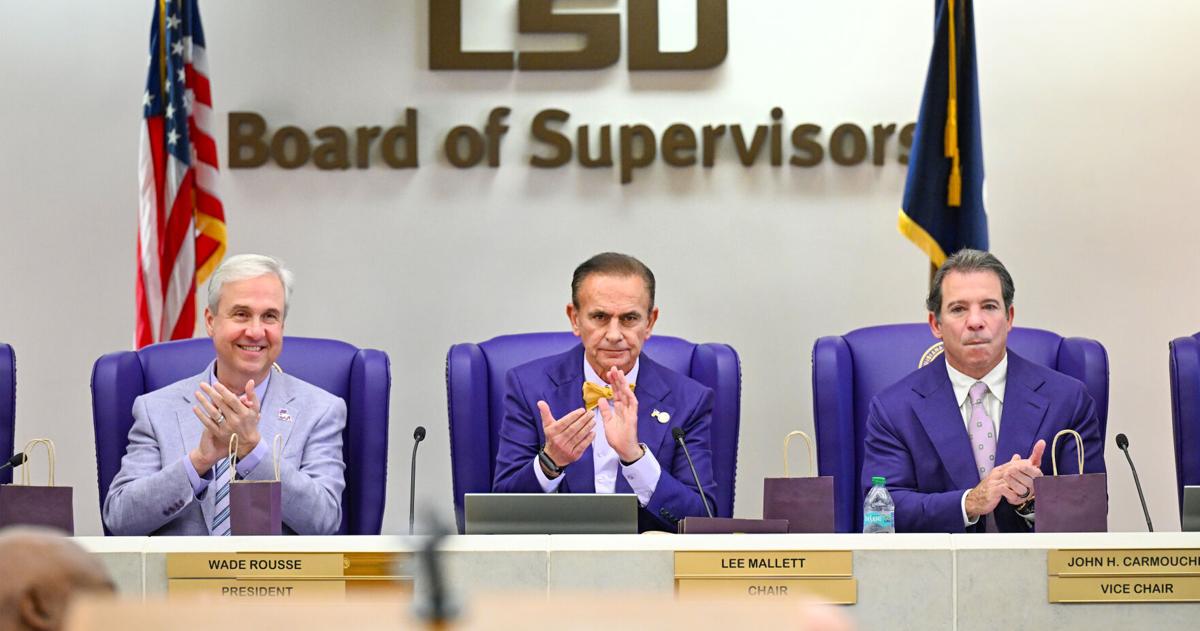
“While we appreciate all of the efforts surrounding the Protect College Sports Act, we believe key issues remain with the legislation,” said a letter co-signed by LSU president Dr. Wade Rousse and board of supervisors chair Lee Mallett.
The Advocate contacted Rousse’s office on Tuesday. A spokesperson said the bill continues to undergo changes and the university would have no comment beyond what’s written in the letter. Mallett did not reply to an email requesting comment either.
While LSU’s list of “key issues” remains unexplained, the university’s opposition underscores a tension between the NCAA’s power players.
In early June, the SEC and Big Ten released a joint statement saying both support a “sustainable national framework” but that the bill presented by Sen. Maria Cantwell (D-Washington) and Sen. Ted Cruz (R-Texas) left “critical issues unresolved.”
Along with concerns about the strength of act’s antitrust exemption, the SEC and Big Ten objected to a shift of “ongoing rulemaking” to Congress. There were also concerns about how the bill would change the House settlement’s revenue-sharing framework.
In turn, Cantwell blasted the “Power 2” for consolidating power via conference realignment.
“The politics of these commissioners moving around deck chairs and making millions of dollars themselves and not thinking about the broad interest to solve these problems has led us to this point,” Cantwell said during a hearing of the Senate Commerce Committee in June. “It’s time to listen to some other people.”
Cantwell’s bill prohibits conferences earning $700 million or more from adding new members, essentially halting realignment. That has led to more immediate discussion about expansion before a law is passed.
The bill also amends the Sports Broadcasting Act, allowing colleges to pool their media rights, like the NFL, which would theoretically leverage more money from networks. But the resulting payouts could shrink the revenue gap between the Big Ten, SEC and the rest.
The average SEC school, for example, received just over $72 million in broadcast revenues in 2025, while the ACC average was $47 million this past year.
While the SEC and Big Ten don’t appear anxious to surrender their financial advantage, there are other points of contention. Auburn and Alabama’s letter argued that a pooling of media rights would advance the interest of private equity, which “stand to profit from a redistribution of media-rights revenue” if they invest in college sports programs.
There is also a worry athletes will ultimately make less money, because there is language in the 47-page bill stating that athletes can’t strike deals with entities closely “associated” with a school, such as a booster-funded collected or corporate sponsor, if those payments circumvent a school’s yearly revenue-sharing cap.
As of now, schools can share up to $21.3 million with athletes during the 2026-27 school year but promotional deals with businesses, oftentimes facilitated by the school itself, don’t count toward the limit.
For instance, LSU has worked with its multimedia rights holder, PlayFly, and its apparel sponsor, Nike, to steer millions of dollars to athletes. Nike just announced a roster for its Blue Ribbon Elite Football campaign and LSU’s 11 athletes were the most of any school.
Most of the rumored $40 million invested in LSU’s football roster this season came from third-party deals like these, not direct revenue sharing with the school.
Again, LSU’s leaders haven’t specified which provisions in the bill are most worrisome to them, but it’s not difficult to theorize why they currently stand against it.
Thus, the horse-trading continues.
“We look forward to working with the House, the Senate, and our fellow institutions in the Southeastern Conference to make the needed improvements to the legislation,” LSU’s letter concluded.
“We are hopeful that together, we can support a bill that will truly help ensure college athletics is preserved for our students and all higher education institutions.”