A small Hawai‘i importer’s perspective.
I was recently surprised to learn how many people do not understand who actually pays for tariffs.
There is a common belief that tariffs are paid by foreign countries. In reality, tariffs are paid by American importers, businesses like mine, at the moment our shipment arrives at a U.S. port.
If the importer cannot pay the tariff immediately, the goods are not released. They can be held, penalized, or even sent back to the shipper. There is no grace period. There is no installment plan. Payment is required before the product can legally enter the country.
Ideas showcases stories, opinion and analysis about Hawaiʻi, from the state’s sharpest thinkers, to stretch our collective thinking about a problem or an issue. Email news@civilbeat.org to submit an idea or an essay.
That is the starting point of this conversation.
What Is A Tariff?
A tariff is a tax imposed by the U.S. government on goods imported from other countries. It is calculated as a percentage of the value of the shipment.
For example, if a shipment is valued at $100,000 and a 20% tariff is imposed, the importer must pay $20,000 to U.S. Customs before the goods are released.
That $20,000 is not paid by the manufacturer overseas. It is not paid by the shipping company. It is paid by the U.S. importer.
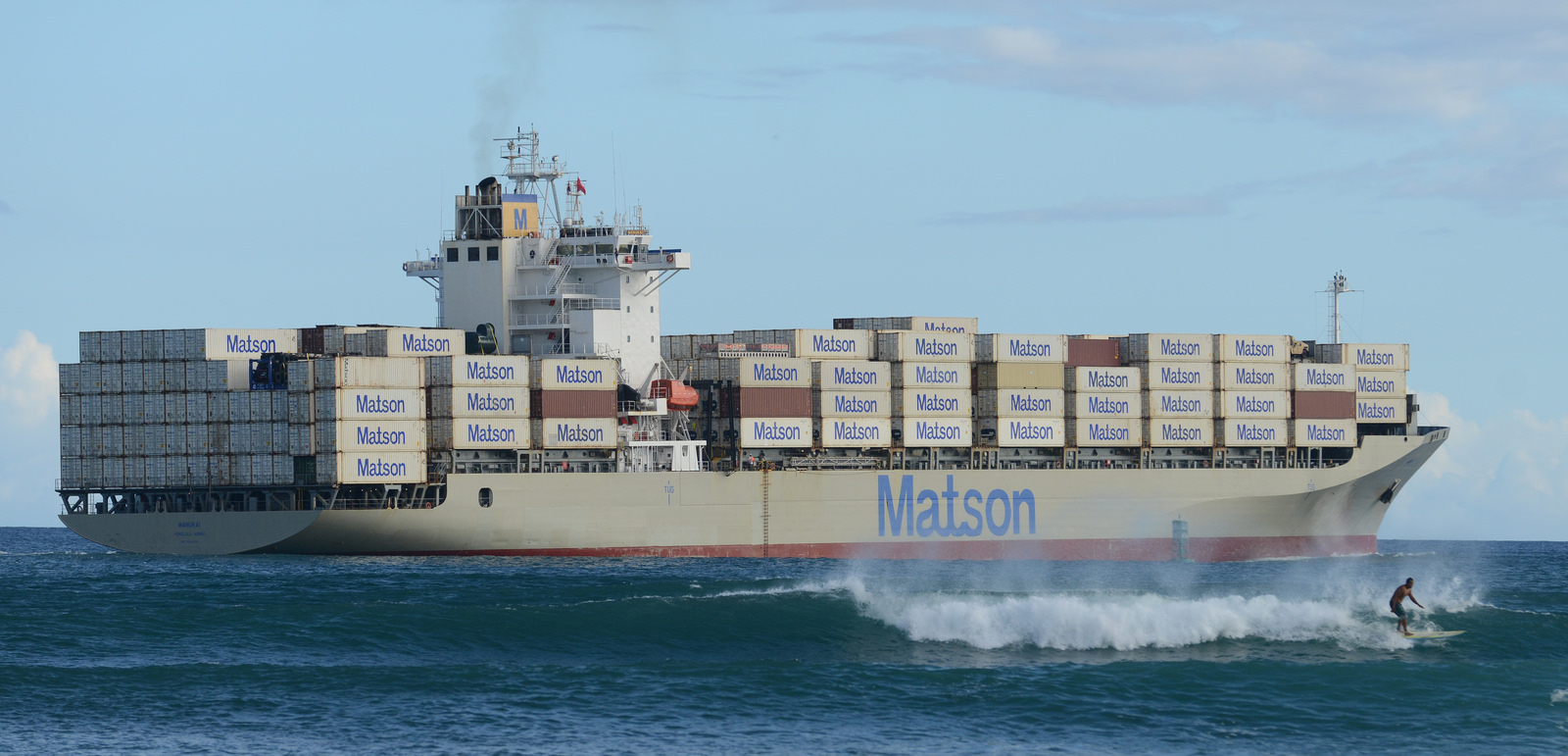
Hawaiʻi depends heavily on imported goods and so is especially vulnerable to tariffs. Pictured is a Matson shipping facility at Sand Island on Oʻahu. (Cory Lum/Civil Beat/2021)
The Hawai‘i Reality
I own and operate Mana-Su LLC, a Hawai‘i-based health and wellness company (HealthyManaSu.com).
We import:
- bottles, caps, labels, and cartons from Hong Kong;
- health vinegar in bulk from Okinawa, Japan; and
- assemble everything in Honolulu under the brand Mana-Su.
These are not luxury goods. They are the essential components that allow us to create and distribute our finished products here in Hawai‘i.
When tariffs began fluctuating, sometimes rising, sometimes changing with little notice, small businesses like ours were placed in an impossible position: Do we purchase now to secure inventory and stay in business, even if tariffs are high? Or do we wait, hoping tariffs will drop, risking product shortages?
If we wait and tariffs remain high, we lose shelf space to competitors. If tariffs drop and we rush to purchase, supply may no longer be available.
Large mainland corporations often have capital reserves and buying power to absorb these shocks. Small Hawai‘i businesses do not. For us, the impact can be devastating.
The Cash Flow Trap
Tariffs create immediate cash flow strain.
When a shipment arrives, the tariff must be paid in full. That means thousands, sometimes tens of thousands, of dollars must be available instantly. For small businesses operating on thin margins, especially in Hawai‘i where nearly everything is imported, this can be crippling.
Locally made products are often assembled here, but the raw materials, packaging, ingredients, components, come from abroad. When tariffs increase, our costs increase overnight.
We face another difficult decision: Do we raise our prices to cover the tariff? Or do we absorb the cost and reduce our already thin margins?
If we raise prices, customers may choose lower-priced mainland alternatives. If we absorb the cost, our sustainability as a business is threatened.
The Competitive Imbalance
Tariffs can unintentionally favor larger corporations.
Bigger companies buy in higher volumes, negotiate better shipping contracts, spread tariff costs across massive distribution networks and withstand temporary losses.
Smaller Hawai‘i businesses operate on tighter margins, have limited storage capacity, cannot afford speculative bulk buying and risk losing retail shelf space quickly.
Once shelf space is lost, regaining it is extremely difficult.
The Legal Uncertainty
At present, federal courts have questioned the legality of certain tariffs, and reimbursement may be possible.
However, reimbursement is not automatic. Businesses must file formal claims, provide documentation, wait for review and hope for timely repayment.
For a small company, that waiting period can strain operations significantly. The funds tied up in tariffs are funds that could have been used for payroll, marketing, product development, or community reinvestment.
Why This Matters To Consumers
When prices increase, consumers often assume the company is raising prices to increase profit.
In many cases, especially for small importers, that is not true.
Tariffs increase the cost of doing business, create planning instability, disrupt supply chains and force difficult pricing decisions.
Ultimately, the tariff begins with the importer, but its ripple effect touches retailers, employees, and consumers.
A Hawai‘i Perspective
Hawai‘i is uniquely vulnerable. We are geographically isolated. Nearly everything, even materials used to produce “locally made” products, must cross an ocean.
When tariffs fluctuate, small island businesses do not have alternative domestic suppliers readily available. We cannot simply switch to another state for packaging or ingredients overnight. For companies like Mana-Su LLC, our mission is to promote health, wellness, and longevity rooted in Okinawan and Hawaiian traditions. Yet the path to bringing those products to Hawai‘i families is directly affected by international trade policy.
This article is not written to argue for or against any political position. It is written to clarify one important fact: Tariffs are paid by U.S. importers at the time goods enter the country.
For small businesses in Hawai‘i, that payment can determine whether we survive, scale, or struggle.
When consumers understand how tariffs function, we build a more informed community. And when our community understands the realities small businesses face, we strengthen local resilience together.
In the end, awareness matters.
Because when small local businesses stay strong, Hawai‘i stays strong.
Sign up for our FREE morning newsletter and face each day more informed.
Sign Up
Sorry. That’s an invalid e-mail.
Thanks! We’ll send you a confirmation e-mail shortly.