The Republican Party has a highly sophisticated online and social media operation. Meanwhile Democrats focus on their traditional political talking points. Could the Dems take a page out of the GOP’s messaging playbook? Democratic influencer Emily Amick sure thinks so.
Guest
Emily Amick, Democratic influencer known as “Emily in Your Phone.” She’s also the author of “Democracy in Retrograde: How to Make Changes Big and Small in Our Country and in Our Lives.”
The version of our broadcast available at the top of this page and via podcast apps is a condensed version of the full show. You can listen to the full, unedited broadcast here:
Transcript
Part I
MEGHNA CHAKRABARTI: Today, we’re going to talk about political influence on social media, specifically how political parties are trying to influence your views and your votes without you even knowing it. Emily Amick says one party is great at doing that, the other, absolutely terrible.
And at a time where more than half of American adults say they get their news from social media; Emily says who’s doing the influencing and how they’re doing it matter more than ever. She runs an Instagram account and a Substack known as Emily In Your Phone, and she’s got more than 250,000 followers on Instagram, 74,000-plus subscribers on Substack, and she writes articles such as “The Influencer Economy is Political Infrastructure,” and she joins us today from Washington.
Emily Amick, welcome to On Point.
EMILY AMICK: Thank you so much for having me.
CHAKRABARTI: Okay, so who’s great at political influencing on social media?
AMICK: I’m a lawyer by training, and it’s always hard to say things definitively for me. But I would say, we’ve seen over the last decade that Republicans have really invested in this infrastructure and built out a large-scale program to engage in social media influencing for their bottom line, and Democrats haven’t been doing the same.
CHAKRABARTI: Emily, all due respect, your lawyerly experience is valuable in this context, but also, I don’t want it to be an inhibiting factor.
AMICK: Lawyers are never fun to have at the party. I always admit that.
CHAKRABARTI: You’re a Democrat, yes?
AMICK: I am a Democrat- And indeed I used to be counsel to Leader Schumer.
CHAKRABARTI: Yes. So and then behind closed doors I understand that you’ve been for years saying, “You guys are terrible at this.”
AMICK: Yeah. I’m an Instagram girlie. I have always loved the platform and been very active posting pictures of my dog and my house and my garden, all the things that we do on Instagram that we love so much.
And so I early on saw how many of my friends who were reposting conservative political content, and so I started talking to people, about a decade ago saying, “Shouldn’t we be doing this as well?”
CHAKRABARTI: Okay, so maybe I’m just like a wannabe lawyer at heart. I’m gonna push you.
AMICK: Push me.
CHAKRABARTI: A little bit more on the stand here.
CHAKRABARTI: Okay. Again, I don’t, so look, if you were to be given a choice, who is better at political influence online between the two?
AMICK: Republicans.
CHAKRABARTI: Okay, good. And is it costing Democrats?
AMICK: Of course. We saw that in 2024. And so therefore, how would you say that they need to, we’ll get to this part later.
I’m jumping ahead. Why do you think the Democrats are not as good at influencing people online than Republicans?
AMICK: I think that there’s a long history here. When you look at what conservatives have been doing for the past 4 years regarding using the public square and media to achieve ideological goals, we saw it with talk radio, we saw it with podcasts, we saw it with Fox News, and they’ve realized you can invest in what are considered non-partisan media platforms and turn them into a partisan bent and turn them towards your ultimate goal, which is achieving political wins to achieve your policy goals.
And so early on in the sort of growth of this sector, they said, “We’re going to start investing.” And Charlie Kirk is one of the major innovators behind this on the right, and he invested really significantly in influencers and saw the future in that, whereas I think Democrats are not really big into doing that sort of persuasion type of campaign and moving the needle in that way.
They don’t, it’s a little bit more manipulative than is typically accepted in the party. And they’ve been focused on more traditional ways of getting out the vote.
CHAKRABARTI: Okay, so you know what? The question about why, I’m going to ask it multiple times throughout the show a little bit later on.
But you’ve written on your Substack in detail about this sort of social media, political influencing sphere that has been very carefully cultivated. That’s the thing, right? It’s not just an organic accident. You say it’s been very carefully cultivated by the Republican Party, and I would love to stop being lawyerly and start being surgical and kind of go through an example in detail.
So you’ve written about Evie Magazine. What is that?
AMICK: So Evie Magazine is, it’s Cosmopolitan of the right is what they call it. And Rolling Stone has said that Peter Thiel is an investor in it. And it is a magazine, an online magazine. There’s been one print copy. It’s quite cute, to be honest.
But it’s really an Instagram account and then a webpage. And they post content for women to get women engaged into their platform, and then slowly through that culture war content, feed them political ideology. And the idea is to say oh, mainstream magazines like Cosmo have been saying things like, ‘Being gay is okay,’ and we think there should be a women’s magazine that doesn’t say, that says all sex should be in traditional heterosexual marriages.
That’s their words, not mine. And they have created this Instagram account and this webpage where they are putting out content that seems appealing to young women. It’s about how to feel your best, how to look your best, how to be romantic, how to find pretty dresses, the hottest pop culture content that you’re seeing, and then it pulls you in to reading their messages, which are about how birth control is awful, about how being gay is awful, about how you should support Republican politicians at the end of the day, as I’m sure we’ll see.
And so it’s a very much political project, but with beautiful pink graphics and lovely images.
CHAKRABARTI: To be clear, it’s all legal. There’s nothing wrong with it. It’s just marketing. They happen to be really good at it, so what’s the problem?
AMICK: It is all marketing, right? And it is communications and messaging and persuasion.
And the internet and social media in particular is the most powerful public square we have ever seen, and the ability to run large scale persuasion programs is really huge. And I think we saw in the 2024 election the way the manosphere, these podcasts like Joe Rogan, but a lot more than just Joe Rogan, were able to influence young men’s vote in particular and move them.
So I think the question really is do you see the power of this as a political means?
CHAKRABARTI: Okay. But again, I guess where I fall on this, I love how much you’ve been writing about this. And the reason why we want you on, we invited you on is not just because you’ve been writing about it, it’s because you’ve been trying to get the Democratic Party to get on board with this sort of this new kind of necessary political, I’m putting advertising in quotes, right?
Or political persuasion that they seem to be, at least Democratic leadership seems somewhat resistant to, if not very resistant to. So that’s why, reason why I’m asking, it’s like, what is the primary, you think the top line in terms of why they’re resistant? Because as you describe what Evie Magazine is, I, again, I just don’t see a problem with it because their criticisms of Cosmo, it’s like the same thing.
Like you said, there’s a lot of beauty content in Cosmo, and there’s also a lot of sort of social justice content or civil rights content, that kind of thing. And so the Republicans are doing the same thing. Why is it that when you talk to Democratic leadership, they’re like, that’s not our brand?
AMICK: I think things have changed a lot in the last year, but historically, one of the big issues was the people leading messaging for the party were not themselves online people. So they didn’t really see the value in this content because they didn’t understand it. And a decade ago I would hear “Eh, that’s for shoes.”
That’s not a place where you talk about politics. That’s not a serious place. And of course, any place where you talk about anything is a serious place where you talk about politics, because politics is everything. We look at the impact of tariffs on the price of shoes. You can get there really quickly.
So I think that’s a big part of it. It’s about who is making the decisions in the party. But I also just think it’s about how people think about GOTV, and we don’t really think about these large scale persuasion campaigns. We think more very specifically about policies and informing people about what is going on and what specific policy we want to include and perhaps also what the opposition is doing at any given time.
CHAKRABARTI: Okay. Policies versus politics. I’m going to come back to that one here. You can hear me writing my impassioned notes. Okay. So you actually, let’s go back to Evie and the specific example of birth control. In one of your Substack articles, you cataloged that you read every single article that Evie published on birth control, and you came out at a count of 88 articles that were directly about it?
AMICK: Yeah.
CHAKRABARTI: Okay. And over what period of time was this?
AMICK: That was over a couple years.
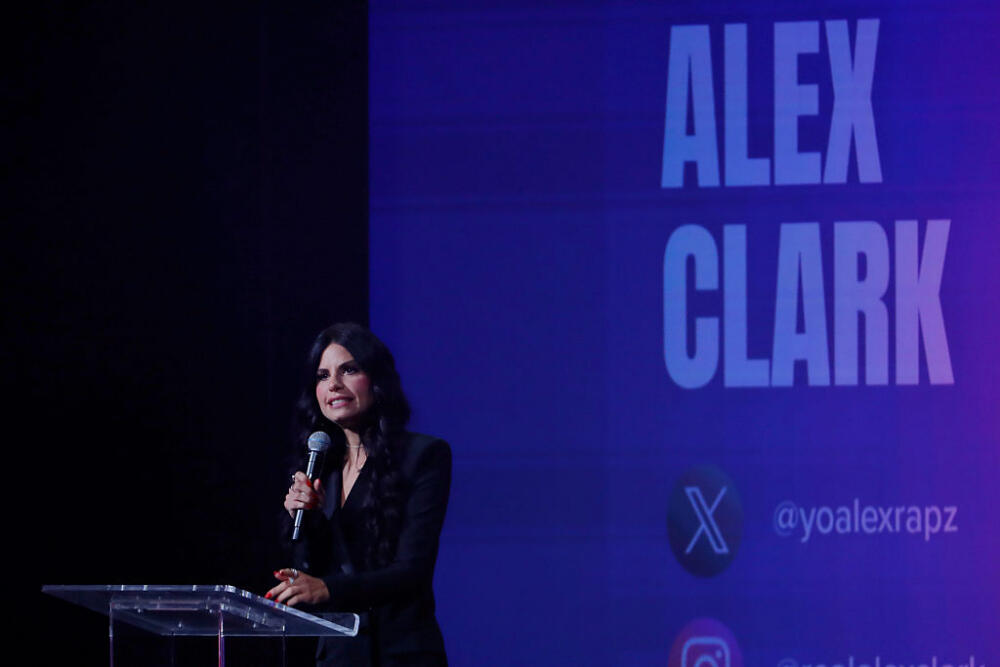
CHAKRABARTI: Okay, 88 over just a couple of years. All right. I want to also use some audio examples of how this persuasion machine works. And we’re going to use Alex Clark as an example. She hosts the podcast Culture Apothecary, and she’s associated with the Charlie Kirk founded student organization, Turning Point USA.
She has a YouTube channel, has 772,000 subscribers, and her channel describes itself as focused on, quote, “Healing a sick culture physically, emotionally, and spiritually.” And she’s got videos, skincare routine, fashion and how to make sourdough.
I’m scared. I have sourdough stage fright.
Just let that sit right there and don’t touch it for a couple minutes.
No touchy. Yes. My baby, my child. I was the only kid in my fourth-grade class that could not play the recorder. Oh. I can hold it like this, Simba. Bada boom, bada bing. When do I take this place over?
CHAKRABARTI: So Emily, Alex Clark, what first step in the persuasion machine is this sourdough clip describing?
AMICK: So that’s the entryway, that’s the gateway into the rabbit hole, and Alex Clark is a really great example of exactly what the right has been doing. She was a hire by Turning Point around 2019, really early on in the growth of influencer marketing, right? And they said, “We’re gonna develop this person. We’re gonna have a woman who can speak to people who are not radicalized to be really aggressive Republican advocates, but in fact people who like pop culture or who like clothes and things like that.” She, for many years, had a show called POPlitics. It was pop culture, politics.
Her followers were called cuteservatives. And a couple years ago she flipped and moved to MAHA and wellness, and is considered the MAHA queen of the right now, and talking about sourdough that’s just fun content for you to consume online. So you’re scrolling, I’m scrolling on the internet, maybe I’m in the bathroom, I’m on the toilet, I’m just looking, I’m looking, and I’m like, “Oh, ha, that’s so funny. I love sourdough. I love to make sourdough.”
And maybe I give her a follow, and then I start to get her content, and then it’s about what that content slowly trickles into my brain and my bloodstream.
Part II
CHAKRABARTI: Emily, let’s keep on with our example of Alex Clark. We first heard that clip of her from her YouTube channel about her sourdough stage fright as she said. And in between videos like that, Alex also sneaks these ones in this on birth control.
(MONTAGE)
Girl talk time. Sorry, boys. This POPlitics episode ain’t for you. You have been warned. But send it to all the women in your life. It could be life-changing for them.
Girl talk.
Look, when I was 15, I was prescribed hormonal birth control, not because I was having sex, but because my period cramps were so bad they made me sick. And almost all of my friends were on the pill, and continued to stay on it for over a decade. Some had it prescribed for acne, mood swings, irregular periods, or endometriosis. Others don’t even know why they were prescribed at all. They just were.
Why? Why? I don’t know why. I don’t know.
So how dangerous is the birth control pill?
CHAKRABARTI: Emily, respond to that. What do we hear?
AMICK: Yeah, and that’s Alex from a couple years ago. And her content on birth control has only increased as the years have gone on, and with MAHA, it’s become even more persuasive and more powerful. But she is the tip of the spear of convincing young women to go off birth control because they think that it’s unsafe and unhealthy for them.
And this is part of a very strategic larger litigation, impact litigation strategy that we see coming from the right to overturn Griswold v. Connecticut, which is the Supreme Court case that established a right to contraception in the United States, and the case from which a bunch of other legal rights fall, including the right to marriage equality, for example.
CHAKRABARTI: You know what’s interesting here is that in this clip, Alex talks about reasons why she and her friends were prescribed the pill. And many, almost all of them, in fact, I have to say all of the ones that she mentioned here are very common reasons, right? Endometriosis, period cramps, irregular periods, things like that.
These are also legal and long-accepted uses of the pill. So she pulls people in, saying, “Hey, maybe this is kind of, this has happened to you.” But then she says, “How dangerous is it?” It’s a really provocative question.
AMICK: Yeah. And one of the things the right does really effectively with their content is to use questions. To say, Do your own research. How safe could it really be? Have you read the black box? I have this single anecdata, and why don’t we extrapolate these grand things?” And of course, there are people who have had bad side effects from birth control. But when we look at sort of the broader impact of birth control on the country, it is much different, and people need it all the time, I needed birth control at one point.
One of the things the right does really effectively with their content is to use questions to say, Do your own research. How safe could it really be? Have you read the black box?
I had a very severe life nearly fatal health issue, and thank God I had access, easy access to birth control and was able to get better. This is a very common thing. And the content is sophisticated. It’s never going to come and say “Birth control should be illegal.” That’s not good persuasion.
It’s more about seeding these ideas of doubt, especially in young women and making them think that they should be against it and creating a point of the spear. Because at the end of the day, they don’t need everybody to be against birth control. They just need enough women to be public figures, to be able to say, you know what, in Texas or in Mississippi, when that first piece of legislation goes down banning birth control, “Oh that’s okay. We think this is for our health. You’re doing it for us,” in the same way we’re seeing in their litigation over mifepristone.
It’s more about seeding these ideas of doubt, especially in young women and making them think that they should be against it.
CHAKRABARTI: So seed doubt, then this is kind of in the MAHA world.
Seed doubt, reframe it as a question of are these toxins versus medications that help millions and millions of people. And then I think this is where the sort of social media aspect really becomes especially powerful. It’s like reframing it in the language of health influence.
AMICK: Yeah, and there’s two things about social media that are really powerful. Number one is the parasocial relationship viewers have with influencers is really strong. And if you don’t consume this type of content, it’s really hard to understand. But those relationships are real. You trust that person.
They’re in their bedroom with you. You feel like they’re a close personal friend, and you trust what they have to say. And the second thing is you have many touchpoints. It takes 20 advertisements to sell someone a widget, but these people get 100 touchpoints all the time.
And we’re seeing from Evie Mag, they’re able to put stuff out like, If you take birth control, it changes your hormones and men won’t be attracted to you anymore. It’s not leaning into your femininity. If you want to be romantic and sexy, you want those hormones to be free and valuable. You wouldn’t want to stop that with birth control. Ew.
And this is this type of soft touch persuasion that’s not, it doesn’t make sense when you really think about it. When you take a step, you’re like, “What? What are you talking about?” But in the context of someone who is consuming this content over and over again, it starts to become persuasive.
And we are seeing the impact in real life. Data is showing that young women are going off birth control, and the influence is because of online social media.
CHAKRABARTI: Wow. Okay. So let’s go back to Alex Clark here because she has been to the White House, and here’s a video of her talking about who she’s meeting at an event at the White House.
CLARK: Got about 15-minute blocks, a quick hit with a bunch of people, Max Tegmark, Bobby. I think that Dr. Marty, the FDA director, is gonna be in here. Bobby Kennedy is gonna be in here. But they’re only talking to two people and then leaving. But I will get to breathe the same air, so that’s exciting.
The dress is Cinq à Sept. The shoes are Louis Vuitton, and that’s all I’ve got on.
CHAKRABARTI: Emily, I find this actually to be quite brilliant, this clip, because she’s doing one, well, multiple important things. The sort of whispery tone, it’s like you are there next to her with your best friend in the White House, and it’s so exciting, right?
AMICK: Absolutely.
CHAKRABARTI: And then second of all she doesn’t forget to really enhance, as you said, that parasocial relationship by also talking about her outfit. And her shoes.
AMICK: I love the fit check.
CHAKRABARTI: Yeah. But, like how did she even get to be in the White House?
AMICK: Yeah, so this is, when we talk about MAHA and being a wellness movement, it’s a political movement, right?
It has the veneer, the facade of being a wellness movement, but it is in fact a very concrete political movement. And Alex first came to MAHA prominence really when she was invited to testify on Capitol Hill in a Congressional hearing about MAHA. With her great experience as a radio shock jock and podcast host, you can imagine why she was asked to testify in Congress about her experience on wellness and health.
So she was invited to the White House to help sell this administration’s supposed wins to help the health of Americans. And even though she has concurrently tweeted repeatedly about how she’s very mad about actions the administration is taking that affect MAHA, particularly with regards to glyphosate she has also continually said, I trust these people. These people are fighting for us. They are our guys, and no one else could be doing it better.
And that is because she is keeping her political message at the top of every post she is making.
CHAKRABARTI: Okay. So take me back. If you had to pinpoint a time at which Republicans really first started becoming much more invested in developing these social media influencers for political means, when would that be, and why?
AMICK: That’s a hard. Rush Limbaugh was an influencer. You know what I mean? Yeah. I think Fox News, when you look at everything they’ve done, those are all influencers. So I think Charlie Kirk is really the one who was able to capture this, and Charlie was the one who carried, who hired Alex Clark.
He is also the one who helped Candace Owens begin, and that’s a whole other conversation. And he started creating that ecosystem about a decade ago and investing in that and raising, he had really strong fundraising capabilities and was able to direct dollars towards this.
And he had a lot of trust with his donor community in saying “Give me money.” And one of the best metaphors I can think of when you think about investing in this is they spent a lot of time investing in Alex Clark. She had a staff, and for many years her and I had the same amount of followers, pretty much, and I had no support from anyone.
I was just doing this as a side job while I had a full-time job as a litigation attorney. And they built a weapon, and they built her, and they built her, and they built her. And then when the opportunity to pivot for MAHA came, they owned that weapon, and they were able to launch her, and she grew astronomically, and the political potency of the power of that account was immeasurable.
CHAKRABARTI: You mentioned Rush Limbaugh, and I think he’s one of the founding fathers of this, if I can put it that way, because what he was doing in the ’80s and ’90s was exactly what’s happening with social media influencers now, creating that very intimate personal relationship with people who had him on in their cars all day long.
Seeming to be accessible, seeming, again, seeming to be an everyman, not always directly talking about politics, but somehow pulling it back to politics eventually, again, when he wasn’t just going straight at people and ideas that he disliked.
He also was really big on just fomenting emotion, and I think the social media influencers do the same thing, not through the screaming anger of Rush Limbaugh, but through things like, “Hey,” like you said. You want to look beautiful. You want to be attractive. These are emotional pulls that they have.
AMICK: Yeah, and one of the reasons I think it’s so important to think about this, especially when we’re talking about reaching women online, is because motherhood has become so difficult. So many of my friends are really struggling. We are at a tenuous point. And I don’t know if we’re going to talk about the tradwife movement in this interview.
But the tradwife movement sounds ridiculous, right? They’re starting a political persuasion campaign to convince women to give up their autonomy and go back to being a traditional wife. What? That doesn’t make sense. But it’s reaching this very real emotional tenor, which is women are at their wits’ ends.
They’re not able to afford full-time childcare, going to work, taking care of their parents, putting food on, all of this stuff, and Republicans are saying, “We have this amazing opportunity for you. You can wear pretty dresses and bake sourdough, and you’ll be happy if you just lean into motherhood.” And it seems beautiful, and it’s because it’s emotionally resonant.
CHAKRABARTI: Emily, sorry. I just, my deep sigh there is I have issues. I have issues with how motherhood is talked about online, and I think maybe, and, again, respectfully, you almost subconsciously did it then, because I think from the left, when people get online and talk about motherhood, it’s almost always about, Childcare is too expensive. I don’t get enough support from work. I still have to do all this, the executive work at home, and I have to clean, and everything’s bad and horrible. Whereas there’s not enough content from, quote-unquote, Democratic or left or progressive mom influencers that are just coming out there and saying, Parenthood is beautiful. It’s hard, sure, but the greatest moments in your life are going to be when your kid hands you a drawing that you have no idea what it is at all, but they’re really proud of it.
Whereas to your point exactly, the tradwife movement, whether it’s genuine or not, are like, “Look at this beautiful experience you can have. We’re going to show you how.” Maybe just positivity might help left-leaning mom influencers a bit.
AMICK: Yeah, what left-leaning mom influencers? I guess is the question. Is that the topic? Yeah. Absolutely, right? That is emotionally resonant as well. And that is the solution that people are offering.
I think people want to see beauty, and they want to see happiness, and they want to see a path to — they want to have hope towards something wonderful. And the thing is, that content is hard to make. And if you want to build those types of weapons, you need to build them, and you need to invest in them, and we need to have content that is being put out there with this particular message.
I think I have lots of mom influencer friends who are posting content about how they love motherhood, and they’re also posting content about how to sleep train their kid and how to give your kids healthy meals and super helpful content. And what are the best toys you can get your toddler, right?
Like, all of these things that exist on the internet all at once. But the question is, how do you make that a political project?
CHAKRABARTI: Yeah. I wonder, and this may be too vague, but I wonder if part of the issue is fundamentally what conservatism is, which is being conservative, saying, “Don’t change things. Things are good. Don’t change them,” versus what progressivism is, which is, “Look, we can be better, but here’s the things that aren’t working. Let’s try to improve them.” But the focus is so much on let’s identify the things that aren’t working, that it’s really hard to keep people positive about it.
I don’t know if you want to respond to that, but that’s just always something I’ve been wondering about, how Democrats message versus Republicans.
AMICK: Yeah. Look, this is a conversation I’ve had a million times. Obviously, in 2008 when Obama ran, it was under hope, right? We have over and over again discovered that actually people want hope and happiness and joy.
And then we forget it, and then we have to do it all over again. I’ll say, trad wives, traditional for who? Were a lot of women happily frolicking in fields in the 1950s and not suffering and not having to work to put food on the table and not having to take odd jobs and do work from within the home?
And again, these trad wife influencers now, none of it’s real. They are businesswomen. It is a facade and a political project.
CHAKRABARTI: Okay going back to why. Because again, you worked for Senator Schumer. You’ve been in that world in terms of the top leadership of the Democratic Party.
When you say, Hey, look, you’ve got to help cultivate these online influencers who are young, they’re smart, they’re able to reach people. Yeah, they have affiliate links, but so what? What are some of the responses have you gotten over the years?
AMICK: Over the years, number one, I’ve gotten, “How does that translate to votes?”
It doesn’t, they don’t think it will translate directly. Where is the data to prove to me it will be effective? You’re never going to get data on things that are new. The internet changes every three months. It’s very hard to get data. And other people have said sure, go out and raise money.
Go get money for it. And donors are more interested, and had been historically interested in funding legacy projects, things that they know will work, that they’ll feel good about where their money is going towards, and not new prayers and ideas and things that are ever evolving.
So I think those are the two big things, in addition to the one I mentioned earlier, which is the people who are making the decisions are not online, and they fundamentally don’t understand the power of the medium. And I think a cruise ship, it is very hard to turn a cruise ship, and we see that a lot, whereas on the right they can be more innovative, because they have a lot more money to throw around, frankly.
CHAKRABARTI: Tell me about how much you love James Carville.
AMICK: This is my personal cross to bear. James Carville is one of those people who I’m like, is continually quoted in the media and propped up as a messaging guru, and it confounds me because I’m like, “When is the last election that he won?
And isn’t the whole point winning elections?” And a couple years ago he came out and was like, “I just learned about TikTok.” And I was like, “This guy? This guy?” “This guy?” For God sakes.
CHAKRABARTI: Are you saying the Raging Cajun is behind the times, Emily?
AMICK: Look, that’s fine. I think he has an important place in the community, right?
But I think a little bit we have empowered specific people to be deciders and decide the entire strategy of the movement, and we need to be a little bit more open to new ideas.
Part III
CHAKRABARTI: Here’s some titles from some recent Substack posts from you, Emily. We talked about the influencer economy as political infrastructure.
“I caught a secret right-wing influence operation running in my feed.” And then there’s this one, “The Democrats’ content problem isn’t just the camera, it’s what’s in front of it.” So what’s in front of it that’s the problem, Emily?
AMICK: Yeah, people who do not have charisma, which the kids call rizz these days.
Making social media content is an expertise in and of itself, and it’s hard, and you have to be able to be totally authentic and speak in sound bites that work online and hook people with your content and be interesting and fun and engaging. And I think a lot of the people that we’ve had as messengers for the Democratic Party writ large have not been people who have those skills.
Not everybody.
CHAKRABARTI: Okay, so here’s an example. Senator Elizabeth Warren, Democrat of Massachusetts, one of the biggest names in the party, we looked at some of her social media content, and obviously they feature her. She’s the senator. And here’s an example. Her style is blazers and straight up direct talk on politics, and here’s one.
ELIZABETH WARREN: Did you know that Donald Trump could appoint two more justices to the Supreme Court? That would make five, yes, five justices on the Supreme Court that were nominated by Donald Trump. The way he would reshape the legal landscape in America would literally be felt by your grandkids’ grandkids.
CHAKRABARTI: Now, Emily, I’m not going to be unfair to Senator Warren and say she should start talking about her jeans and the brand of blazers that she wears every single day.
But because she’s not a 20-something social media influencer. But what do you hear in sort of what Warren talks about or even how this content is put online that you say is symptomatic of the problem.
AMICK: Yeah. And so I think there’s two things here. One is Democrats have really wanted the messengers to be politicians.
And what we’ve seen on the right is they built out this huge messaging infrastructure for people who are not elected officials. And that is part one of the problem of who is the messenger. And then part two is the content of what those political officials are putting out there. I would actually say I think Elizabeth Warren is on the better side.
In the grand scheme of things there’s the AOCs and the Mamdanis of the world who are doing great, fantastic jobs, but Elizabeth Warren has really been trying, and I think communicating to her base in a way that works online. Versus other people, I’ve gone and tried to film content with some senators, and they literally speak for seven minutes.
And I’m like, you have two seconds to hook someone on the internet. No one, I am barely able to listen to a full seven-minute answer that’s rambling and incomplete. And I think the other thing you were getting at is it’s a policy-focused answer. And the reality is when you look at the grand political ecosystem.
And there’s an organization called More In Common that has done this research. About 8% of the electorate is the progressive activist base, the wing. And those people do often wanna hear about these policy things. But when you look at the rest of the electorate, they often want to hear more about emotion and what you’re going to be doing and how you’re going to change things and having that more fight mentality, and that is very different than hearing a dry recitation of a strategy to change the Supreme Court or change childcare policy or things like that.
CHAKRABARTI: So the other thing is that what I hear in this clip from Senator Warren is she could’ve been saying this at a Senate hearing, she could’ve been saying it at an election rally, she could’ve been saying it on the floor of the United States Senate. It’s the same language, the same talking points.
There’s nothing tailored in this message for what social media does best. It’s almost as if they took, I don’t know, a clip from her, an actual TV ad and just dropped it on the internet.
AMICK: What I would say is that is authentically Elizabeth Warren.
If you’ve ever spoken to Elizabeth Warren, that’s the one you get. And that’s why we need people who are different than that in elected office as well, people who have a more casual demeanor, one could say. And exactly, you want people, it’s the old adage of why Bush won.
You want someone you can have a beer with, and that’s a very typical voter mentality, and something that we can deliver online in a really massive and scalable way.
CHAKRABARTI: So let me talk and I appreciate that, yes, that is actually how Senator Warren talks. I have spoken with her multiple times. So again, I may be being a little bit unfair here, but she’s also, as I said, one of the biggest names in the Democratic Party. But what I wanted to also ask is, getting back to this talking about policy versus actually somehow connecting differently with people, and I think the talking about policy part is really important.
So that’s what Democrats do. They like to say, “Here’s our plan, and here’s our policy. Here’s what we’re gonna change,” which is important, right? Because that’s part of the sell. But how would you repackage that to work better on social media to connect on a human level?
AMICK: It is all about the culture war, and this was Charlie Kirk’s, I wouldn’t say innovation, because of course we saw it from Fox News and the green M&M, the war on Christmas of it all, right?
This isn’t new information. But the idea that politics is downstream from culture. And so you have to have a group of people who are talking about the policy. That is a necessary but insufficient component of a social media strategy for the left. Then you need to have people who are translating and amplifying that, and you have to make content that does well on the internet, which means people have to want to consume it.
The internet, it is shaped by algorithms, and that’s a whole other conversation, but it’s a meritocracy. People have to want to consume your content. They have to opt into it.
CHAKRABARTI: So the algorithm, yes, that’s a whole ‘nother 50,000 conversations. But let’s stick with that for a second here because you need to, I would say given the Republican success that we’ve been talking about, it’s not actually that impossible to understand generally the things that algorithms like to accelerate and throw up higher and prioritize in people’s feeds.
It’s that emotional content. Do you think in terms of the content-making rules for social media that again, Republican, sorry, Democratic leaders, the people who are deciding where the money goes, do you think they grasp that?
AMICK: I don’t know. Rage bait and emotion is what works really well.
I’ll say shooting on, if I wanted to just make content that got really high numbers and that was my only goal, I could just make content every day saying mean things about Trump, and I would get really high numbers. Just post clips of him acting poorly, and it would work every single time.
That doesn’t accomplish any persuasive goals that I may have. So there’s a balance here, but I think that there are certainly people on the left who feel above the rage bait economy and the attention economy. And the question is always, I’m like, you want to play the game or you want to lose the game?”
CHAKRABARTI: So going back to Alex, though, Alex Clark, there isn’t a lot of rage there that I heard. It’s some, it’s another form of persuasion, but that’s also very successful with the algorithms.
AMICK: Yeah. Alex has quite a bit of rage about the health care system and about the wellness industry, and how we are being taken advantage of by big pharma.
And I think rage looks different, right? It’s through the lens of a very particular theater of womanhood. In the same way you’re not going to see me screaming on my platform ever because you’re not going to see me screaming in real life. It’s very authentically me and who I am. But you’re going to see me talking about things that make me upset and framing things that way because that’s how content does well on the internet.
CHAKRABARTI: Yeah. We reached out to the DNC to get their view on this, and they said to us that they have improved over the years. They sent us, we’ve got some numbers here that basically in 2025 and to 2026, that they finished 2025 with some almost five billion impressions across their DNC accounts that they track at least.
They say that’s a 300% increase. So have you seen improvement?
AMICK: Yeah. And I think that they have improved. They’ve hired some new staff this year who are doing really great jobs, and they are trying to, I don’t know what the word would be, get with the times, one could say. The DNC isn’t the group of people who should be making cool culture war content that’s accessible and interesting for people to watch. In the same way the RNC makes really cringe content, to be honest.
It’s not, it’s a bunch of red graphics or a bunch of blue graphics. I will say, we are seeing a lot more innovation coming out of mainstream Democratic houses this year. The problem is, as you said, I wrote that article influencing is infrastructure, and it’s a much bigger infrastructure that you need to be able to reach the millions and millions of impressions through the many different types of people who are out there consuming content.
CHAKRABARTI: And so they also say that they do have more partnerships with creators now. They’ve sent us 525 creators in the DNC flagship messaging group, which was launched in January of 2025.
AMICK: Okay. And it’s so interesting, Ashley St. Clair, I don’t know if you’ve been seeing her, she is one of the mothers of Elon Musk’s children, and she was a right-wing influencer, and she has recently had an about-face and started spilling the tea on what life was like being a right-wing influencer posting videos on TikTok.
It’s very interesting. I think the Post or the Times did an article about her already. And she has reported that there are these internal Signal chats orchestrated by the White House where they tell people, “Here’s the talking points you need to talk.” So I think that Democrats, I imagine, have heard about that and are like, “Okay, great.
Let’s start putting out content,” which is great. I think there’s a degree to which more is more on the internet. You throw spaghetti at the wall and the volume is number one in the game of content.
CHAKRABARTI: Okay, so you had mentioned earlier in the conversation other people such as New York Mayor Zohran Mamdani and of course Representative Alexandria Ocasio-Cortez, and how their social media game is a bit more fresh, let’s put it, than Senator Warren.
But let’s look, let’s listen to a little bit. This is from Representative Ocasio-Cortez. So many videos. She also does a lot of live streaming. Sometimes she’s just in the middle of having a snack while talking to people. Sweatshirts, she’s in her sweatpants and sweatshirts at home.
You see her often with her dog, cooking, et cetera. Here’s one where she’s riding an e-bike down the streets of New York City.
ALEXANDRIA OCASIO-CORTEZ: All right, let’s see if I can clear this out. So I finished my endorsement interview earlier today. And I also had, let me see if this is rubbing up against the mic.
Don’t worry, guys, there’s a little DIY vibe here. It’s because I’m trying things for the first time, all right?
CHAKRABARTI: Emily, when I hear that just to be blunt, is part of the, is a big part of the problem, I mean you said this earlier, but that Democratic leadership’s just too old?
AMICK: Yeah, absolutely, 100%.
CHAKRABARTI: And so how’s that gonna change?
AMICK: Well–
CHAKRABARTI: Short of nature taking its course.
AMICK: But we are seeing a lot of people retiring, and I think that there is an increasing movement to prop up new and younger voices. Brian Schatz, Chris Murphy in the Senate come to mind as people who are increasingly taking a role, Cory Booker, in communicating to the public from the Senate side, which is our most gerontocracy-ridden branch. But I think AOC is a phenomenal communicator, and what you’re seeing there is the real AOC. As a consumer, you feel like you’re with her, and you feel like she’s your friend, and you feel connected to her, and you don’t feel like she’s just some bland institution that hates you.
You feel like she’s a real person. I always think about Us Weekly or People mag when they’re like, Celebrities, they’re people, too. And they’re, like, supermarket shopping. And I think that’s really important, right? Because so much of how people feel about government is that there are these people who don’t understand you and don’t care about you, and AOC is using social media to change that.
And we need more people. But that’s a risk. You have to have a lot of charisma to do it. And Pete Buttigieg often, he’ll do these three-hour-long interviews. And he was recently asked in an interview with Dr. Mike, “Why don’t other politicians do it?” And he’s “Because they run out of their talking points in the first 20 minutes.”
And you have to have it in you to be able to do a three-hour interview. So we need to have a pipeline of more people who are capable of doing it.
CHAKRABARTI: Yeah. Also, I just want to underscore a point that you’ve been trying to make through this whole thing. Because we’ve been playing, on the Democratic side, we’ve been playing clips of elected officials, but you’ve been calling out to the party that it’s not just the elected officials.
It’s cultivating this whole ecosystem of content creators online. I’m wondering if, also, are Democrats too afraid? Are they just too afraid of accidentally saying the wrong thing? Because online cancel culture.
AMICK: 100%. And that is, it’s a very, very risk averse culture within the Democratic Party, lowercase D, right?
Just on the left in general. Very concerned about offending people within our coalition, very scared of taking a stand. That is a recipe for bad content. Waffling and nuance are not good ways to make a viral video. And it’s not a way to capture the attention economy. That is something you see structurally with regards to partisan primaries as well, a whole other conversation.
But this instinct has hit us a number of different ways. But absolutely, being scared to say something that offends people makes it very hard to go on live for an hour and a half. And an electorate that is very, and not just an electorate, but a progressive base that is very intolerant of any mistakes or any waffling or anything that might, they might disagree with is problematic, but the only way to push through is to do it, right?
There’s not another option at this point. The train has left the station. We need to start creating this content.
CHAKRABARTI: Emily Amick is a Democratic influencer. She’s on Instagram and has a Substack known as Emily in Your Phone. She’s former counsel as well to Senator Chuck Schumer, author of Democracy in Retrograde: How to Make Changes Big and Small in Our Country and in Our Lives.
Emily, it has been terrific talking with you. Oh, do you know we have a few seconds. What are you wearing? What brands you got on?
AMICK: Oh, my God. I am wearing American Eagle. My favorite pants are the Dreamy Drape from American Eagle, but I also love the Rag & Bone sweatpants jeans because you can be comfy and cute.
CHAKRABARTI: Comfy and cute and smart, all at the same time.
The first draft of this transcript was created by Descript, an AI transcription tool. An On Point producer then thoroughly reviewed, corrected, and reformatted the transcript before publication. The use of this AI tool creates the capacity to provide these transcripts.