Editor’s Note: This is an excerpt from WBUR’s weekly health newsletter, CommonHealth. If you like what you read and want it in your inbox, sign up here.
As you likely know, my colleague Deborah Becker has been reporting on Lindsay Clancy, a Duxbury resident accused of murdering her three children.
Her weekslong jury trial generated an international onslaught of attention — from journalists to social media influencers to advocates for better mental healthcare for moms.
Online, people poured over details of the crimes and speculated about the case. There’s plenty of sordid material here, like the fact that in January 2023, Clancy strangled her children — 8-month-old Callan, 3-year-old Dawson and 5-year-old Cora — with exercise bands in the family’s basement. Or that her husband came home from running errands to find them there. Afterwards, the couple divorced, and Patrick Clancy moved to New York and remarried.
Beyond all this, though, is a deeper mystery about mental health, one that Deb’s been delving into in a new WBUR podcast about the Clancy trial.
The central question in this case, which resulted in a hung jury and a mistrial this month, is not whether Clancy committed the crimes — she has admitted that she did — but whether a condition known as postpartum psychosis made her unable to fully grasp or control her actions. After she killed her children, Clancy went upstairs and tried to die by suicide. (She was unsuccessful and is now paralyzed from the waist down.) Many witnesses testified that Clancy had, for months, tried to get mental health treatment following the birth of her third child.
Whether or not she planned and understood her actions, there’s a deep irony in the fact that Clancy was herself a labor and delivery nurse — someone who, in theory, understood the healthcare system, and would have cared for many new and soon-to-be new mothers. As her own crisis climbed, she visited ERs, called hotlines and saw several doctors. Yet, those efforts did not ultimately prevent this tragedy.
The parties are due back in court later this month, and we could learn whether prosecutors will retry this case. Whatever comes next, Deb will be there to cover it.
She recently spoke with WBUR’s host of All Things Considered, Lisa Mullins, about her experiences following the case so far. Here are some highlights from the interview, lightly edited for clarity.
On why she became interested in covering Clancy’s case:
“At the arraignment, which Lindsay Clancy had to appear at virtually because she was hospitalized at the time, there were a few people in the courtroom who said that her case was about postpartum mental health, and I thought that was really interesting.
“Her attorney had raised the question about the medication she was taking at the time, and so it was as much a health story as a criminal story, I thought.”
How the case put a spotlight on postpartum mental health:
“ It was hearing Lindsay Clancy’s medical providers testify about the care she received that really drew a lot of attention. The defense here was arguing that she should not be held criminally responsible for killing her children because of her postpartum mental health.
“These providers testified that Clancy repeatedly sought help. She was prescribed 13 different medications in four months, and she wasn’t getting the help she needed. She called suicide hotlines. She was hospitalized at McLean Hospital — inpatient — for five days just three weeks before the killings.
“And I think that galvanized people to say, ‘We don’t feel like we are often heard in this system,’ or, ‘We didn’t feel that we were heard when we were new mothers.’ And they thought that this trial was really showing the holes in the mental healthcare system, especially for new moms.”
On the prosecution’s response to the defense argument about postpartum mental health:
“ I would say the prosecution shifted gears. In the beginning, prosecutors said that Lindsay Clancy was a manipulative, controlling woman who was tired of her life and wanted to end her life. By the end [of the trial], they acknowledged that she had a serious mental illness and she was trying to get help, but they said she was still of rational mind and capable of carrying out these murders.
“So actually, at the closing arguments, the prosecutor said, knowing that this case had galvanized so much attention, this isn’t about the healthcare system or about the maternal healthcare system. This is about a murder case involving three young children.”
On the heart-wrenching 911 call from the family’s home:
“ I will never forget that 911 call — it was so emotional. Patrick Clancy, Lindsay Clancy’s former husband, arriving home, finding her on the ground. He calls 911 and waits until the responders arrive.
“The dispatcher is telling him not to move her. You can hear her moaning. And then when the first responders arrive, he goes in the house. You hear him running, he’s still got the phone on, and the howling, blood-curdling scream that you hear from him when he discovers his children. I don’t think there was a dry eye in the courtroom when that tape was played. And I think the judge was very wise to not release that because it would just be played over and over again all over social media.”
Other moments that will stick with her:
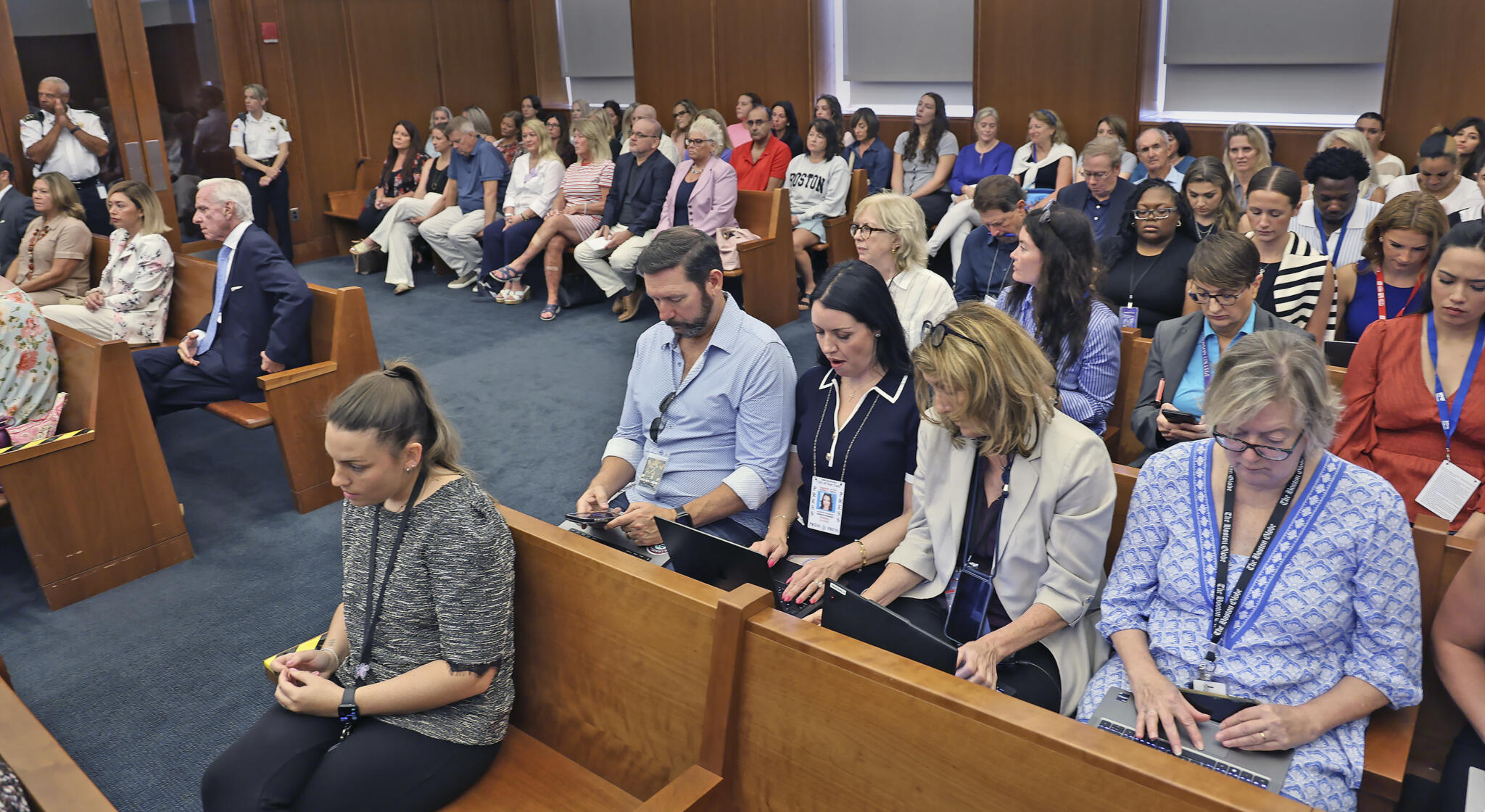
“ I think seeing Lindsay Clancy’s reaction was also really emotional. At times, she would really sob. I think that will obviously always stay with me, but also the people who wanted to watch this trial. As attention grew, the courtroom became full. The lines outside to get into the Plymouth Courthouse, you had to get there about an hour and a half early if you were going to get in, and they turned people away who couldn’t fit in the courtroom.
“The interest in it was unbelievable. People came from all over — Maine, people flew from Tennessee. They wanted to be at that courthouse.”
What the DA is weighing as he decides whether to retry this case:
“Plymouth County District Attorney Tim Cruz has held that post for 25 years.
“He’s known as a tough-on-crime prosecutor, and he’s an elected prosecutor. He’s up for election in November, running unopposed. But there are political considerations, and then there are considerations about this particular case. He claims that he started out by seeking first-degree murder charges because three children were violently killed, and he feels that he needs to seek justice for those children.
“And so I think he’ll be considering that, but also considering the backlash of what’s happened here, and he’ll make a decision accordingly. If he decides to pursue lesser charges, say second-degree murder or manslaughter, they could waive a jury. Only first-degree murder requires a jury, so it could be heard before a judge, and a judge could then determine to send Lindsay Clancy to treatment instead of having to serve prison time.”
P.S.— The second episode of Deb’s podcast miniseries dropped this past Friday. It focuses on how social media distorted the facts of the trial and fueled multiple online conspiracy theories. You can listen to it wherever you get your podcasts.