WASHTENAW COUNTY, MI – A request for a new countywide tax to support career and technical education programs in local schools could go before voters as soon as next November.
But some Ann Arbor area school leaders say they’ve questions about what implications a potential CTE, or vocational, millage would have on future taxpayers and how funds would be used.
A resolution that’d signal support for the idea was before two Washtenaw County school boards this week — those with Ann Arbor Public Schools on Wednesday, May 21, and the Chelsea School District two days prior.
“I think CTE is very important, but I do share some concerns about the number of millages that we’re putting on our families here,” Ann Arbor School Board Treasurer Don Wilkerson said as AAPS’ Wednesday meeting rolled into early Thursday.
“At least a majority of districts need to support a millage like this,” he said. “But we do have our sinking fund coming next year, and opportunities if we wanted to think about enhancement millages, things like that, in the future are also important.”
Ultimately, Ann Arbor School Board members agreed to postpone discussion until their June 11 meeting.
Meanwhile, the CTE millage resolution was an informational item for Chelsea School Board members, who’ll also return to discussion June 9.
According to the resolution itself, the potential measure, organized by the Washtenaw Intermediate School District, would levy 1 mill annually over a decade starting in 2026. One mill would cost the owner of a home valued at $200,000 roughly $200 a year or $17 a month.
Currently, WISD is one of 15 regional educational agencies that have no vocational millage.
In a statement on Wednesday, local ISD Superintendent Naomi Norman said CTE programs are funded through a combination of local school district general fund dollars, limited state and federal funding and one-time state grants.
“Nearly three-quarters of ISDs across Michigan support these programs, in part, through a CTE or vocational millage,” she said.
“Maintaining and expanding access to CTE in Washtenaw County will require a sustainable, long-term funding model that braids support from multiple revenue streams, which could include local, state, and federal sources, as well as industry, philanthropic and postsecondary partnerships.”
The agency is utilizing a $5 million grant to help fill some of the gaps in access to existing programs, as well as to expand offerings overall. That includes newly moving into the aerospace and aviation, entrepreneurship and construction engineering areas.
Still, Ryan Rowe, WISD’s CTE director, who made the rounds to local school boards earlier this year, has said that lack of a local millage can lead to program inequities.
On Wednesday, he said they want to be intentional about breaking down those barriers.
“We believe that no matter where they are, students should be able to explore their purpose, passions and potential through hands-on experiences, real-world opportunities, and pathways that lead to college and career success,” Rowe said in a statement.
“What’s clear is that our community sees the value of CTE. We’re committed to continuing this conversation to ensure our students graduate with the skills, experience and credentials they need to succeed in college and career.”
On Monday, Chelsea Schools Superintendent Michael Kapolka said 1 mill would save the district $350,000 in its general fund that is currently paid toward CTE programming.
Trustee Eric Wilkinson said he didn’t feel like he had a good understanding of how millage funds would be used after Rowe’s presentation at a recent work session.
“I’m just always cautious,” he said. Although he supported CTE like other officials, he referenced concerns about housing affordability and how the frequency of ballot requests affected taxpayers.
“What I also look at for graduates that want to go into those fields (that CTE covers is) we could be making it even harder for them to live,” Wilkinson added. “Not just in our district, but in Washtenaw County as a whole.”
CTE programs are run through four different groups and nine school districts in Washtenaw County, including Ann Arbor and Whitmore Lake public schools, Ypsilanti Community Schools, and the South and West Washtenaw Consortium.
WISD’s CTE enrollment went from 1,866 in 2021-22 to 3,157 this year compared to a total regional student population that declined by over 1,200 total in that period.
Norman said that while the district’s role is not to advocate for one particular funding mechanism for CTE, officials do support exploration of all viable funding options that close opportunity gaps and meet student, school and local business industry needs.
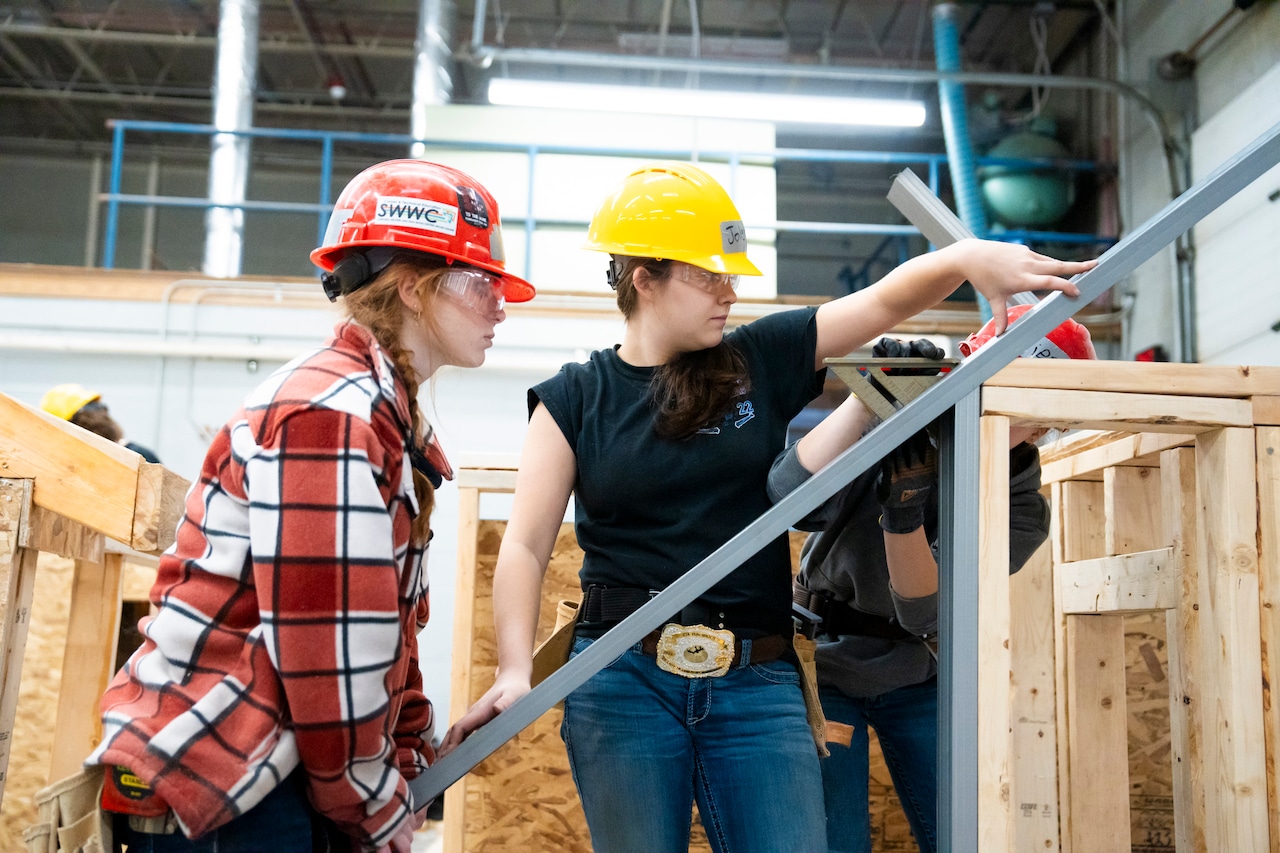
Trades were among the biggest example officials have cited in CTE growth — and in the need for funding supports.
Norman later added the responsibility to put the millage request before voters rested with WISD board members, who were expected to consider the move at their June 24 meeting.
If you would like more reporting like this delivered free to your inbox, click here and signup for our weekly newsletter: Michigan Schools.
Want more Ann Arbor-area news? Bookmark the local Ann Arbor news page or sign up for the free “3@3 Ann Arbor” daily newsletter.