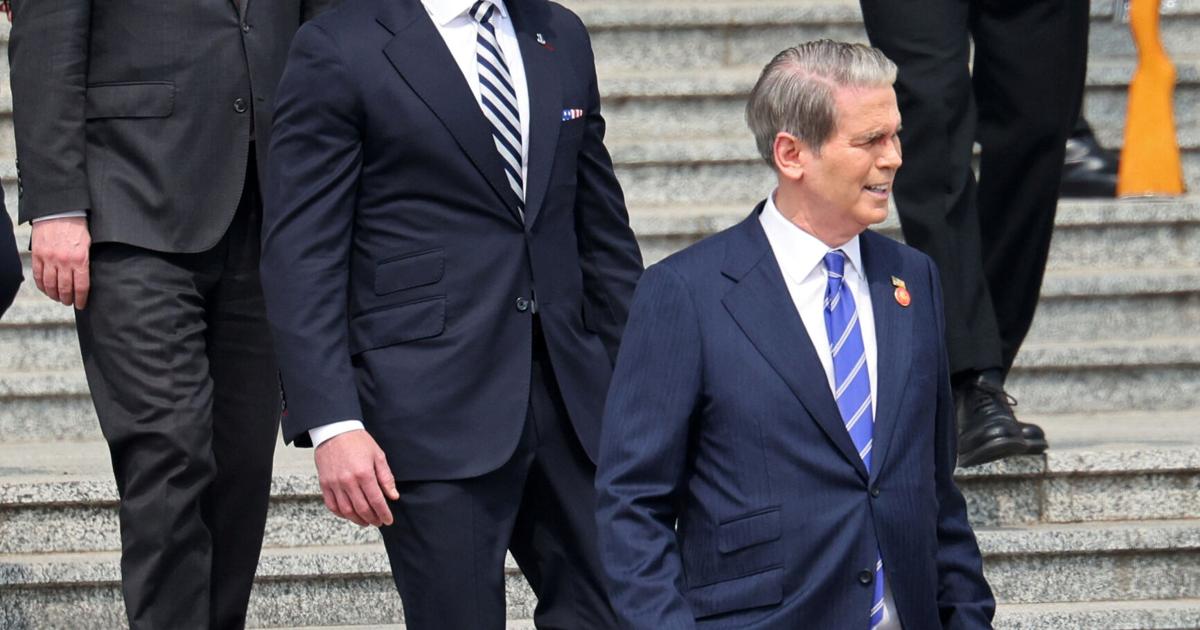
U.S. Treasury Secretary Scott Bessent on Thursday said he expected an announcement about large Chinese orders for Boeing aircraft during President Donald Trump’s visit to Beijing, adding that Washington wanted to expand exports to China.
“I think we’re going to see the large Boeing orders,” Bessent told CNBC’s “Squawk Box” program taped earlier on Thursday. The two sides would also discuss other purchases, including of energy and agricultural goods, as well as non-strategic areas in which China could invest in the United States, Bessent said.
He downplayed prospects of big new soybean orders, saying they were “all taken care of” under a previous agreement, although he said China should consider increasing its orders given the El Nino weather pattern expected this year that typically drives prices higher.
Fireworks were among goods that the U.S. would not seek to reshore, Bessent told CNBC after meetings with Chinese counterparts.
Thursday was the first day of a two-day summit between Trump and Chinese President Xi Jinping, which Chinese state media said would set a new course for relations between the countries. Chinese purchases of Boeing jets, U.S. energy and agricultural products have been flagged as possible parts of a deal, although no concrete details have emerged yet.
The CEO of Boeing and more than a dozen other top executives joined Trump during the visit to Beijing.
Boeing shares jumped 1.3 percent in pre-market trading after Bessent’s comments. He gave no details about the expected Chinese order but said the two sides were discussing starting with some $30 billion each in purchases of the other’s goods.
He said Chinese officials raised the prospect of buying more U.S. energy, noting that the U.S. was going to build more export facilities for liquefied natural gas, including in Alaska, which would be a prime location for sales to China.
Bessent also said U.S. and Chinese officials discussed forming a “Board of Trade” to govern bilateral trade between the world’s two largest economies, and a separate “Board of Investment” that would oversee investment in non-sensitive areas.