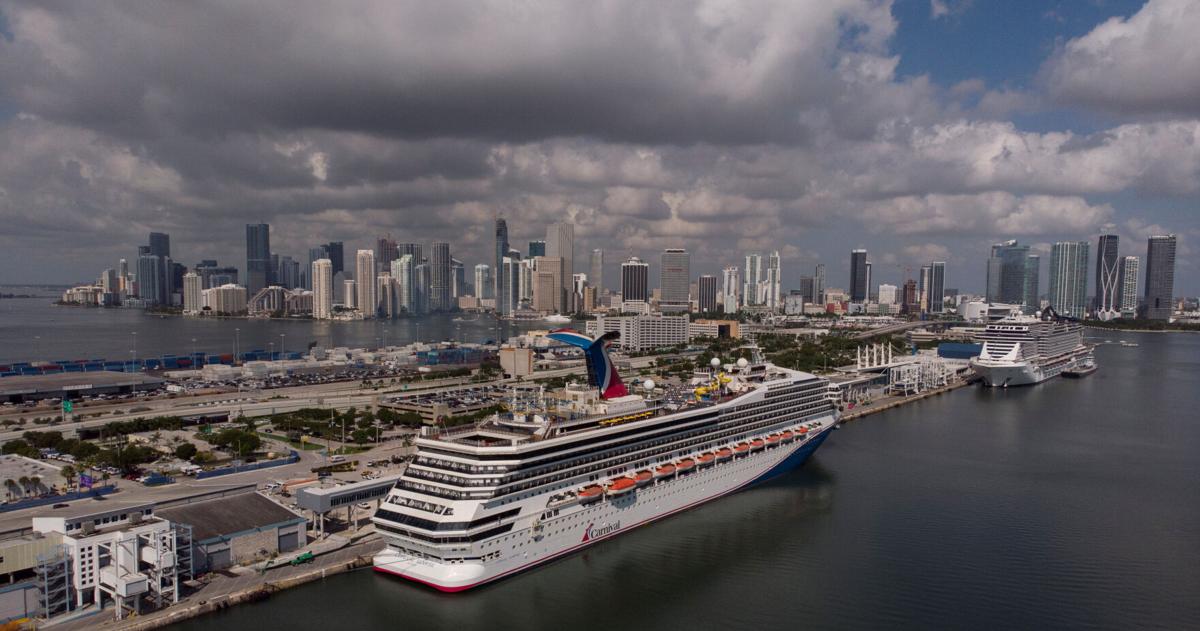
Cruise-ship operators face choppy waters as rising oil prices lift costs, with analysts warning Carnival Corp. could take the biggest hit to its 2026 profit as it is the only major U.S. line that doesn’t hedge fuel.
Oil prices have risen more than 35 percent since the beginning of the conflict in Iran, as attacks on oil and transport facilities across the Middle East and disruptions to energy flows through the Strait of Hormuz raised concerns about global supply.
Futures for the Brent variety of crude crossed $100 per barrel on Friday, compared with $72.48 before the conflict began. Iran has warned that oil prices could surge as high as $200 a barrel.
Cruise lines, which rely on heavy fuel oil and marine gas oil among other fuel types, turn to hedging to lock in prices via financial contracts and protect against sudden swings.
Carnival in the U.S. is an exception.
A 10 percent change in fuel cost per metric ton would reduce the Miami-based company’s 2026 net income by $145 million, compared with $57 million for rival Royal Caribbean, according to the latest company filings.
Norwegian Cruise Line said it has not updated its fuel hedges from its earnings from early March and the 10 percent change would cut full-year profit per share by 7 cents. This is equivalent to a roughly $90 million fall in net income, according to calculations by Morningstar Research.
“During 2022’s oil spike, Carnival’s fuel costs rose more rapidly than its peers,” CFRA analyst Alex Fasciano said.
In 2022, when oil prices rose after the Ukraine conflict broke out, Carnival’s fuel costs were 17.7 percent of its total revenue, compared with 12.1 percent for Royal Caribbean and 14.2 percent for Norwegian.
“Carnival also owns a larger fleet, meaning the level of consumption is also higher than their counterparts,” Fasciano said.
“Our best hedge against fuel costs is to use less, so we focus on using less fuel in the first place,” Carnival said in an e-mailed statement to Reuters.
“We’ve cut our fuel use by 18 percent since 2011 despite increasing capacity by roughly 38 percent during that time,” the company said, adding that it does not see a long-term net benefit in hedging.
Carnival is expected to report first-quarter results on Friday.
Royal Caribbean did not respond to a Reuters query.
The cost challenge comes during the “wave season” between January and March, the industry’s busiest booking period, when operators offer special cruise deals and discounts for the year.
Major cruise operators run global itineraries, with the Caribbean and transatlantic routes accounting for a large portion of capacity and passenger demand. None had ships in the Middle East when the conflict began, limiting their immediate operational exposure to the region.
“Despite zero direct exposure to the Middle East, shocks like this one have the potential to step up consumer hesitation in the booking process, especially for Americans thinking of traveling abroad,” Barclays analyst Brandt Montour said.
It could impact American customers’ bookings to Europe, particularly for transatlantic travel, which tend to be higher priced, according to Lizzie Dove, analyst at Goldman Sachs.
These cruises tend to run during the third quarter and have a disproportionately large contribution to cruise operators’ incomes, she added.
Charleston was the home base for years to a Carnival ship that took vacationers to the Bahamas for four- or five-day sailings. The relationship ended earlier in January as part of the State Port Authority’s plan to sell its passenger building and other property at Union Pier to developer Ben Navarro in 2027. No visiting cruise ships are scheduled to stop at the downtown terminal after July 4.
The Post and Courier contributed to this report.