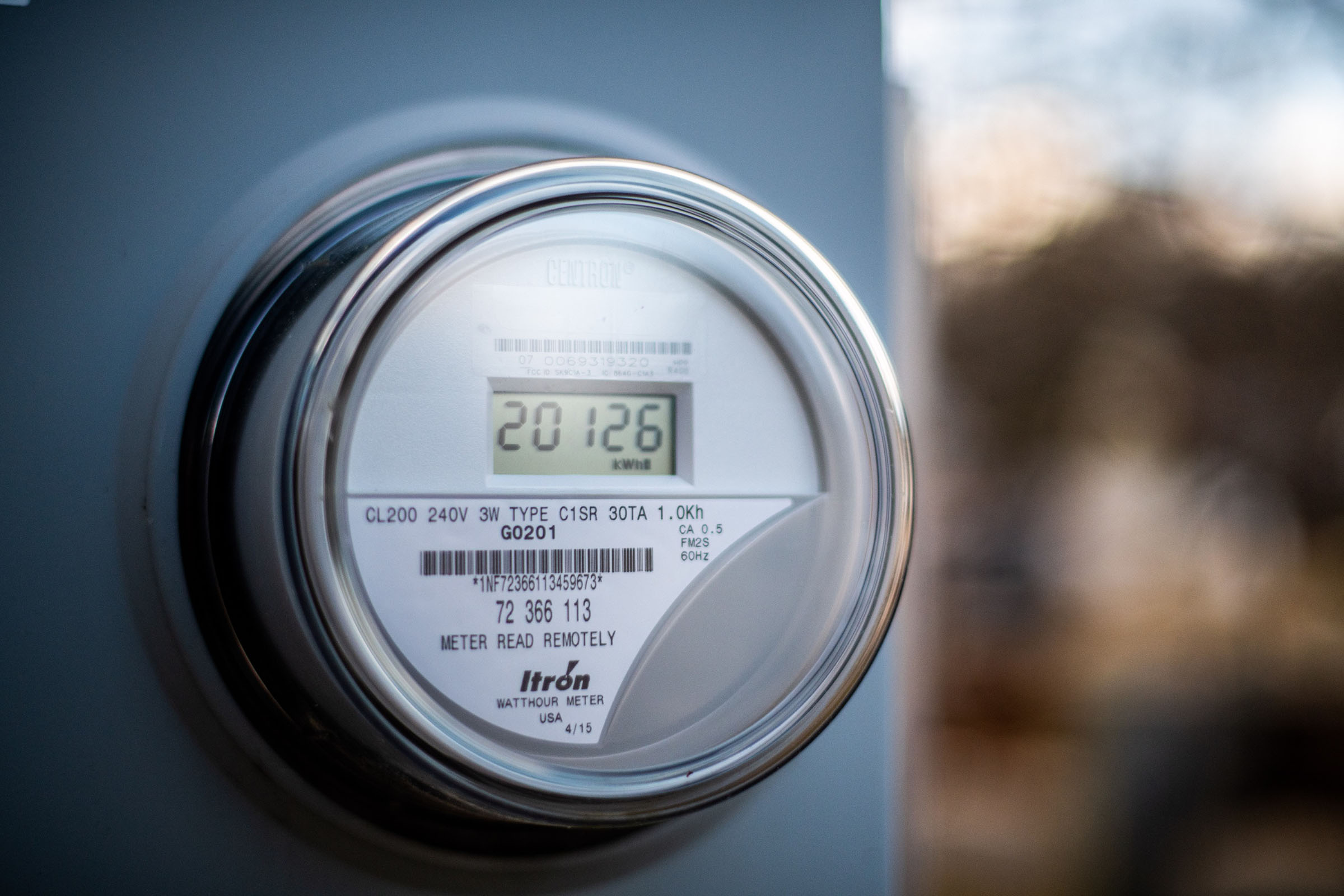
LEBANON — Upper Valley municipalities are holding steady as communities around New Hampshire question the future of their community power programs.
The Upper Valley is home to some of the earliest adopters of community power, a program that allows municipalities to purchase energy on behalf of residents. Community power aims to provide competitive electricity rates, increase choice, including giving customers the chance to “opt up” to buy more renewable energy, and to help municipalities fund renewable energy projects.
But, for the last year, community power rates through the nonprofit Community Power Coalition of New Hampshire, CPCNH, have been higher than legacy utility rates. CPCNH helps municipalities implement and operate community power systems. The shift in costs is causing some customers around the state to question the program and entire communities including Bow and Wilmot N.H., to pull out.
From Feb. 1 through July 31, one of two periods for which companies set electricity rates in New Hampshire, community power rates are between 14.5 and 14.94 cents per kilowatt hour for the “Granite Basic” program that includes the least renewable energy. Those rates are well above the 11.1 and 13.74 cents per kilowatt hour for private utilities.
In New Hampshire, electricity rates are proposed by private utilities and approved by the Public Utility Commission
But Kim Quirk, the current chair of the Community Power Coalition of New Hampshire Board of Directors, is warning against municipalities making a quick decision in response to the rates.
“This is just a little perturbation in the system and we expect in the long run that all our benefits will outweigh just sticking with utility defaults,” Quirk, who is also a member of the Enfield Energy Committee, said in a recent interview.
A difficult year
CPCNH is coming off of a difficult year, having had to raise rates after inappropriately planning for costs and setting rates too low. The nonprofit had to raise electric rates during the middle of the rate period last winter to make up for the shortfalls.
The nonprofit also navigated a leadership transition after former CEO Brian Callnan departed in February 2025. The CPCNH Board of Directors appointed Henry Herndon as acting general manager at the time and named him as executive director on Monday.
“The reason that we are optimistic and positive about community power is because the worst is behind us,” Quirk said.
The CPCNH is actively building up its financial reserves again which is one of the drivers of the higher rates along with shifts in the energy market, Quirk said.
Quirk and Clifton Below, of Lebanon, who was previously the CPCNH president, both see the rates as an indicator that CPCNH is increasing competition in New Hampshire.
Below said rates through Eversource and Liberty, two of the main Upper Valley electricity suppliers, are “artificially low” and will have to come up eventually. Changes in how the New Hampshire Public Utility Commission requires private utilities to buy energy have led to losses that the utilities will have to make up, he said.
Already, Liberty has filed a request with the New Hampshire Public Utility Commission to raise rates effective April 1 to cover $8.3 million in under-recovered costs. The proposed rates would make Liberty more expensive than community power, according to filings with the state.
A Liberty spokesperson did not respond to a request for comment by deadline.
Eversource would “strongly push back against any suggestion that we artificially set” rates, spokesperson William Hinkle said Thursday.
The rates Eversource can charge for energy delivery are dictated by the Public Utilities Commission in New Hampshire and impacted by outside factors such as weather, which can raise costs for the energy they distribute, Hinkle said.
“We have no control over the supply price, we cannot artificially or arbitrarily set it, it is purely based on market conditions and the cost (…) to procure it.”
In late 2024, the PUC began requiring energy suppliers to purchase some electricity on the daily or “spot” market instead of buying all of the electricity they will need for six months up front.
This change means Eversource and other private utilities are estimating costs, which can force them to make up their actual expenses later, Hinkle said. But, the opposite has also happened when Eversource overestimates costs and can charge less later on.
“I think when the market is particularly volatile, it creates some uncertainty (…) but again these things are always a moment in time,” Hinkle said.
Waiting for the right moment
Cornish has been on the brink of launching community power since last March, but Energy Committee Chairwoman Joanna Sharf encouraged residents to pass over adopting community power at Town Meeting last year.
Despite being on the committee that proposed the article, Sharf said it was an inopportune time to launch because rates were high and CPCNH was navigating turmoil. The Energy Committee is keeping a close eye on CPCNH, but opted not to ask voters to approve the program this year, Sharf said.
“They’re doing everything they need to do to rectify the mistakes they made(…) but we didn’t feel it was yet the right time to bring it to a vote at Town Meeting, so we’re waiting,” Sharf said in a recent interview. “But, we still think it’s a really good program and want to join as soon as we can.”
Sharf said CPCNH has been very transparent about what goes into their rates and have “taken very rigorous measures” to update risk management policies, train staff and complete an audit, which is encouraging.
As for communities that are already enrolled, Sharf said it makes sense to advise customers to opt out individually but not for whole towns to pull out.
“I don’t know why they did that, because there’s no cost to the town to stay in,” Sharf said.
System intact
Enfield was in the first round of communities to adopt community power in 2023 after a change in state law made the programs legal in New Hampshire, along with Hanover, Lebanon and Plainfield in the Upper Valley. Lyme, Grantham, Newport, Charlestown and New London have since launched community power, while Canaan and Sunapee are ready to go when rates come back down and Cornish and Springfield are in the planning phases.
Per community power plans approved by the state, a community cannot launch community power for all residents until the rates are lower than private utilities. This has left Canaan and Sunapee, where residents approved community power last March, in a holding pattern.
Because of the early-adopter status of several Upper Valley towns, “I think we have a stronger sense of looking at the big picture and the long run,” Enfield Energy Committee Vice Chairwoman Jo-Ellen Courtney said in a recent interview.
In a joint letter on the Enfield Listserv, Quirk and Courtney reminded customers that if the current community power rate “creates a hardship for you, please know that you can opt out of Enfield Community Power and opt back in at any time.”
The ability to switch in and out of the program at any time is one of the benefits of community power. So far, there have been individuals opting out around New Hampshire, “but it’s not enough to cause the system to be in any trouble,” Quirk said.
Quirk and Courtney were also optimistic about the benefits of community power, such as the chance for customers to include more renewable energy in their electric supply and for towns to use additional funds, when rates allow, to pay for renewable energy projects.
“There’s a lot you can do that no other program allows, but it is true that if the only reason you’re interested in community power is for the lower rate then it’s going to go up and down,” Quirk said.
Last year, Enfield voters approved a “local” community power rate that adds an additional charge to electricity costs when doing so would still save residents money over private rates. When the town is able to activate this program, they might use funds to pay for solar panels for public buildings or create an energy audit program for residents.
Hopeful for the future
In Hanover, the opportunity for choice and access to renewable energy were some of the main drivers for launching community power, Sustainable Hanover Co-Chair Yolanda Baumgartner said in a recent interview. She feels that the “fundamentals are sound” with CPCNH.
Baumgartner said there has not been an increase in Hanover residents opting out of community power since the rates went up.
“Definitely there’s no plan to change course and we’re really hopeful and optimistic that the community will feel all right about continuing,” Baumgartner said.
Hanover has a commitment to obtain 100% of electricity from renewable sources by 2030. Community power is one of the “main tools” to reach that goal and to support other energy projects, Baumgartner said.
Lebanon, another early adopter of community power, will not be pausing the program any time soon, Below said.
“The idea of Lebanon as a whole switching makes no sense because what we know is better days are not far down the road and we can be competitive,” Below said.
He was optimistic about changes CPCNH is spearheading in the state Legislature that would make it easier to build renewable energy projects and use the power supply in the Upper Valley and around New Hampshire and to offer cost savings for customers who use electricity outside of peak hours.