Let us read it for you. Listen now.
Your browser does not support the audio element.
Kevin Warsh has for years accused the Federal Reserve of losing its way and said it’s in desperate need of “regime change.”
Now, as President Donald Trump’s pick to be the next Fed leader, Warsh will have the opportunity to map out his plans to remold the world’s most important central bank when he testifies Tuesday before the Senate Banking Committee.
His testimony comes against the most politically charged backdrop for the central bank in decades. Trump’s scathing criticisms of Chair Jerome Powell, his attempt to fire a Fed governor and his Justice Department’s criminal investigation into Powell and the central bank have all fueled worries that the Fed’s independence is under threat.
“This has become an unusually high-stakes confirmation hearing,” said Sarah Binder, a professor of political science at George Washington University who has studied Fed independence. “President Trump and his supporters will expect Warsh to commit to lowering interest rates, no matter what. But senators from both parties will want to hear Warsh commit to protecting Fed independence. That’s where the balancing act comes in.”
Also hanging over the hearing is huge uncertainty over when Warsh may even get in the job.
A key Republican voter on the committee, Senator Thom Tillis of North Carolina, has vowed not to approve any appointment until the DOJ’s probe ends, effectively blocking Warsh’s path to confirmation and raising doubts about whether he’ll be in place by the time Powell’s term as chair expires on May 15.
That starting point leaves Warsh having to pull off two challenges simultaneously: Demonstrate some level of loyalty to Trump’s demands on monetary policy, while reassuring anxious investors that he’s committed to maintaining control over inflation.
Chief among the questions Warsh is likely to face is how he’ll respond to pressure from Trump. The president broke with his modern predecessors by openly criticizing Powell, after nominating him to the role in 2017, and has taken extraordinary steps to try to influence the Fed.
Sen. Elizabeth Warren of Massachusetts, the top Democrat on the banking committee, sent a letter to Warsh in February asking if Trump had demanded a loyalty pledge as part of the vetting process for the nomination. She has also argued Warsh will be the president’s “sock puppet” as chair.
Warsh’s past policy views will likely provide fodder for Democrats. Long an advocate for keeping rates high to mute inflation, he appeared to change his approach in 2025 after Trump returned to office and Powell’s second term was drawing nearer to an end. In July, he declared on Fox Business the Fed should be lowering rates.
Tuesday’s hearing will mark the first time Warsh weighs in publicly on interest rates since his nomination — and since the war in Iran triggered a surge in energy prices that has pushed up inflation.
The latest shock helped convince Fed officials to hit pause on rate cuts, after lowering them three times late last year. The Fed is widely expected to hold rates steady when officials meet next week. Investors currently don’t see an interest-rate cut likely until at least December.
For Warsh, the impact of the war on energy prices may undermine his ability to make a credible case for rate cuts any time soon.
Matthew Luzzetti, Deutsche Bank Chief U.S. Economist, said Warsh can present an argument for why rates could be lower a year from now, pointing to potential disinflationary forces like artificial intelligence and deregulation, and to easing price pressures in housing.
In the months leading up to his selection, Warsh laid out a multi-pronged argument for rate cuts, centered on the impacts of a U.S. productivity surge and shrinking the Fed’s balance sheet — forces that would take some time to play out.
“At the same time, the market will be looking for a forceful support for Fed independence,” Luzzetti said.
If Warsh fails to deliver that or stokes fears he will move to cut rates inappropriately, it could backfire, Luzzetti said, by awakening market-based worries over future inflation and pushing up longer-term interest rates, which the Fed doesn’t control.
Treasury Secretary Scott Bessent appeared to take some pressure off Warsh last week, telling CNBC on April 15 he would understand if Fed officials wished to wait on rate cuts.
But Trump put the pressure right back on the next day when asked if he agreed with Bessent.
“No, I don’t agree,” the president told reporters. “I think we should have lower interest rates.”
POTENTIAL QUESTIONS
Warsh will likely also face uncomfortable questions about the Trump administration’s legal pursuits of Powell and Lisa Cook, the Fed governor the president has tried to fire. His unprecedented move to dismiss Cook has sparked a legal battle now sitting at the Supreme Court.
Meanwhile, the DOJ is probing the Fed over matters related to its $2.5 billion headquarters renovation and testimony Powell provided about the project last year. Powell has hit back over the probe, saying it’s motivated by the president’s unhappiness with interest rates.
Tillis has characterized the investigation as a threat to the Fed’s independence, and held firm in his pledge not to support any Fed nomination until the probe is resolved. Trump has signaled he wants the investigation to continue, providing little obvious resolution to the stalemate.
Lawmakers may also quiz Warsh on his pledge to shrink the Fed’s $6.7 trillion balance sheet. He’s offered almost no detail on how he plans to achieve that without disrupting liquidity in money markets. Several proposals have emerged from other officials and academics on how this might be achieved, but many of them have cautioned Warsh against being too ambitious or moving too quickly.
Democratic lawmakers are also likely to raise questions over what they view as a lack of sufficient transparency in his financial disclosures. In the lead-up to the confirmation hearing, Warsh disclosed assets for him and his wife, Jane Lauder, that totaled at least $192 million — though the actual figure for their holdings is certainly much higher.
He will likely be pressed on his approach to banking oversight, as the Fed pursues a deregulatory push in line with other federal financial watchdogs, and on his calls for greater coordination between the Fed and the Treasury Department.
Warsh has also signaled his “regime change” would target everything from the economic models the Fed uses to how policymakers communicate with the public.
“I’m not afraid of the ideas he’s brought forward,” said Esther George, a former president of the Kansas City Fed. But, she added, “I think they do require more clarity.”
It’s important, George added, to “ensure that the central bank continues to serve its role as envisioned long ago, and that any modifications to its frameworks, its governance, they’ll be calibrated in a way that make it clear we want a credible central bank.”
That credibility also matters outside the U.S., where other governments may be inspired by Trump to interfere with their own central banks.
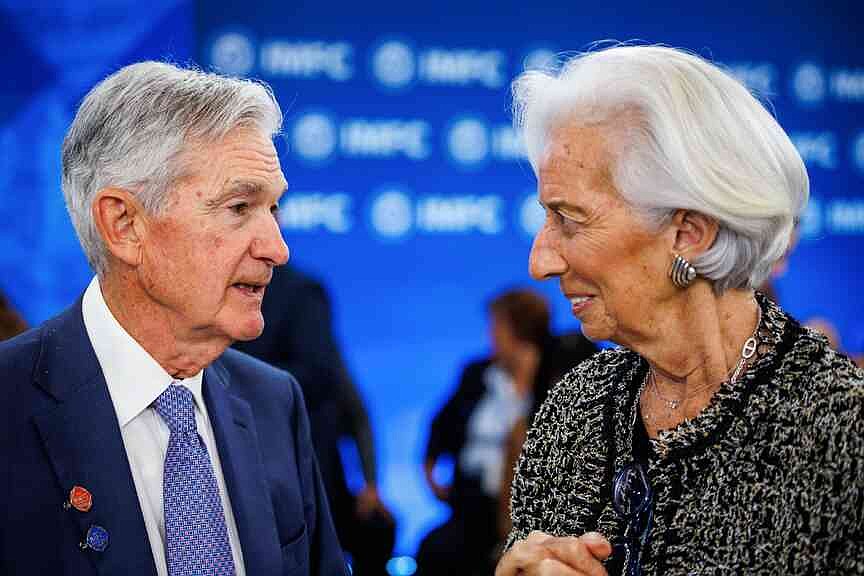
“If investors or markets are under the impression that decisions are made because of political pressure — to go in that direction or the other — I think that undermines clearly the credibility of institutions,” European Central Bank President Christine Lagarde said in Washington last week.
Information for this article was contributed by Jana Randow of Bloomberg (WPNS).
Senate Banking Chairman Senator Tim Scott and Ranking Member Senator Elizabeth Warren. MUST CREDIT: Aaron Schwartz/BloombergTreasury Secretary Scott Bessent. MUST CREDIT: Mattie Neretin/BloombergSenator Thom Tillis. MUST CREDIT: Graeme Sloan/BloombergKevin Warsh. MUST CREDIT: Tierney L. Cross/Bloomberg