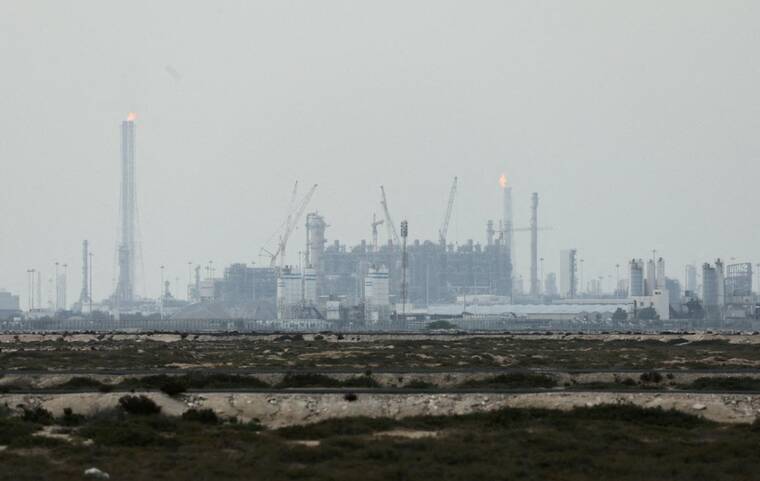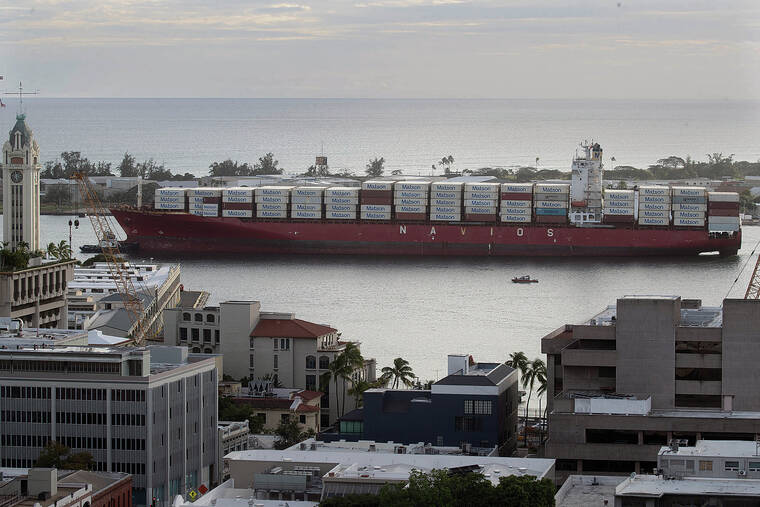
As the U.S.-Israeli war against Iran continues and the movement of oil through the Strait of Hormuz remains almost completely cut off amid Iranian counterattacks against oil infrastructure, ports and merchant vessels across the region, the White House on Wednesday announced a 60-day waiver of the Jones Act.
White House Press Secretary Karoline Leavitt said the waiver represents “another step to mitigate the short-term disruptions to the oil market as the U.S. military continues meeting the objectives of Operation Epic Fury.”
The waiver, a rare exception to the century-old law, temporarily would allow foreign-flagged vessels to move fuel, fertilizer and other goods between U.S. ports in hopes of curbing sharp price increases and supply disruptions from the intensifying conflict.
“President Trump’s waiver of the Jones Act is a no-brainer response to rapid increases in gas and other fossil fuel products from severe disruptions in international energy markets resulting from the Iran war,” said U.S. Rep. Case, who has long been critical of the Jones Act, in a statement Wednesday.
But Case added, “Make no mistake: that alone will not reduce prices; it will just mitigate further increases the longer these disruptions continue. It is the President’s war in Iran itself that is the overall driver of huge increases in gas, electricity, food and other costs to Hawai‘i families because of the disruption in both international energy supplies and worldwide shipping.”
The Jones Act’s official name is the Merchant Marine Act of 1920, which was sponsored by Sen. Wesley Jones of Washington state. It requires that trade between U.S. ports be limited to ships that are American-flagged, American-built and crewed mostly by American sailors.
Don’t miss out on what’s happening!
Stay in touch with breaking news, as it happens, conveniently in your email inbox. It’s FREE!
Before World War I the U.S. relied on a combination of U.S.- and foreign-flagged vessels for both international and domestic shipping. But when the war broke out, foreign ships withdrew from American routes to aid war efforts in their own countries. After the U.S. entry into the war, German submarines relentlessly attacked American merchant vessels, decimating the fleet.
The resulting shortfalls had profound impacts on U.S. ports and domestic trade routes. The Jones Act in theory was meant to ensure stable supply lines within the United States and bolster domestic shipbuilding to ensure an inventory of U.S. merchant marine vessels and trained American mariners that could be tapped to support U.S. operations in the event of another conflict.
But in Hawaii, two companies — Matson Inc. and the Pasha Group — largely dominate shipping between the islands and the mainland. They have been accused of using the Jones Act to essentially maintain a duopoly on shipping, driving up costs for almost all goods in the islands.
The Jones Act has been waived before, notably after Hurricane Maria ravaged Puerto Rico in 2017 and in 2021 after a critical energy pipeline was shut down by a cyberattack.
But the American Maritime Partnership, an advocacy group representing U.S. shipbuilders and operators, said it was “deeply concerned” that the 60‑day broad waiver would displace U.S. workers and companies, and said the ability to waive the Jones Act is intended only for immediate threats to military operations. The AMP’s board includes Matson Senior Vice President Ku‘uhaku Park and Pasha Group Vice President Cary Davis, with Park serving as its board president from 2022 to 2024.
In a joint statement to shipping industry news website gCaptain, nine maritime labor organizations, including the Marine Engineers’ Beneficial Association, Sailors’ Union of the Pacific, and AFL-CIO Transportation Trades Department, condemned the waiver, saying “this sweeping waiver will undermine national security and hurt the American maritime workforce during a volatile time for our country. We know that this decision will not lower gas prices or benefit consumers, and will instead benefit foreign-flagged carriers.”
Today there are fewer than 100 Jones Act-compliant vessels in the country, with most oil tankers that meet the requirements committed to routes that don’t include Hawaii or America’s Pacific Island territories. That has contributed to Hawaii relying almost exclusively on foreign tankers, which can legally deliver or pick up oil in American ports but cannot move it between them — essentially limiting them to only delivering oil from overseas here in the islands.
In Hawaii, all crude oil is processed by Par Hawaii’s refinery in Kapolei. In a statement, Par Hawaii President Eric Wright said that while “crude oil prices worldwide have increased significantly and continue to be volatile” as the strait remains closed, he doesn’t anticipate Hawaii’s actual supply to be significantly affected, saying “Par Hawaii generally does not source crude oil from the Persian Gulf region, and our upcoming crude oil imports are sourced from North and South America.”
However, Wright also said that “The Jones Act waiver serves as an important tool that provides additional flexibility, and we welcome the temporary waiver to ensure adequate fuel supply for Hawaii.”
Relaxing the Jones Act in theory gives coastal refineries and fuel distributors access to a larger pool of ships to move gasoline, diesel and other petroleum products between ports. But here in the islands another critical factor is that the state requires that Hawaiian Electric — which relies on Par to get oil to power its generators — use only low-sulfur fuel oil to meet emissions standards.
Even the domestic oil that does make it to Hawaii — mostly from Alaska — has too high a sulfur content to meet those regulations, requiring that it be mixed with low-sulfur “sweet crude” sourced from overseas to lower it. According to data from the Hawaii State Energy Office, since 2016 only about one-fifth of the islands’ oil was domestic.
Geopolitical conflict and turmoil has at various times disrupted Hawaii’s oil supply chains as Par has sought to get sweet crude from far-flung — and sometimes volatile — regions. In 2019 the majority of imported crude oil to Hawaii came from Libya (57%), followed by Russia (34%).
But in 2020, Libyan warlord Khalifa Haftar seized oil fields in the country with the help of Russian Wagner Group mercenaries, disrupting global markets. That year, Libya provided only 16% of Hawaii’s oil, while Russia remained at 34%, becoming Hawaii’s top overall source for 2020.
That disruption forced Par to turn to other sources, including the war-torn Republic of Congo and others, to make up the difference for Hawaii’s needs. After Russian President Vladimir Putin pushed troops into western Ukraine in 2022, Par stopped importing from Russia, which Hawaiian Electric later told customers forced a rate hike.
While Libyan oil — which sails through the Suez Canal rather than the Strait of Hormuz — continues to be a source, lately Par has begun buying much larger shipments from Argentina and Brazil. Wright said “Argentina has brought new production online, and those grades have become more economical for Hawaii. Par Hawaii works hard to provide energy security to local residents, and we do not foresee any impacts to fuel supply to our Hawaii customers.”
But attacks on vessels also have driven up insurance rates on merchant vessels, boosting the cost of shipping operations worldwide.
Brett Erickson, a managing principal at Obsidian Risk Advisors, said the Jones Act waiver — along with other efforts by the administration — will not have a meaningful impact on prices. He said “we’re completely at the mercy right now of Iran, and as long as they have a credible threat to maritime shipping across the Strait of Hormuz, we’re in a quagmire right now.”
———
Reuters contributed to this report.