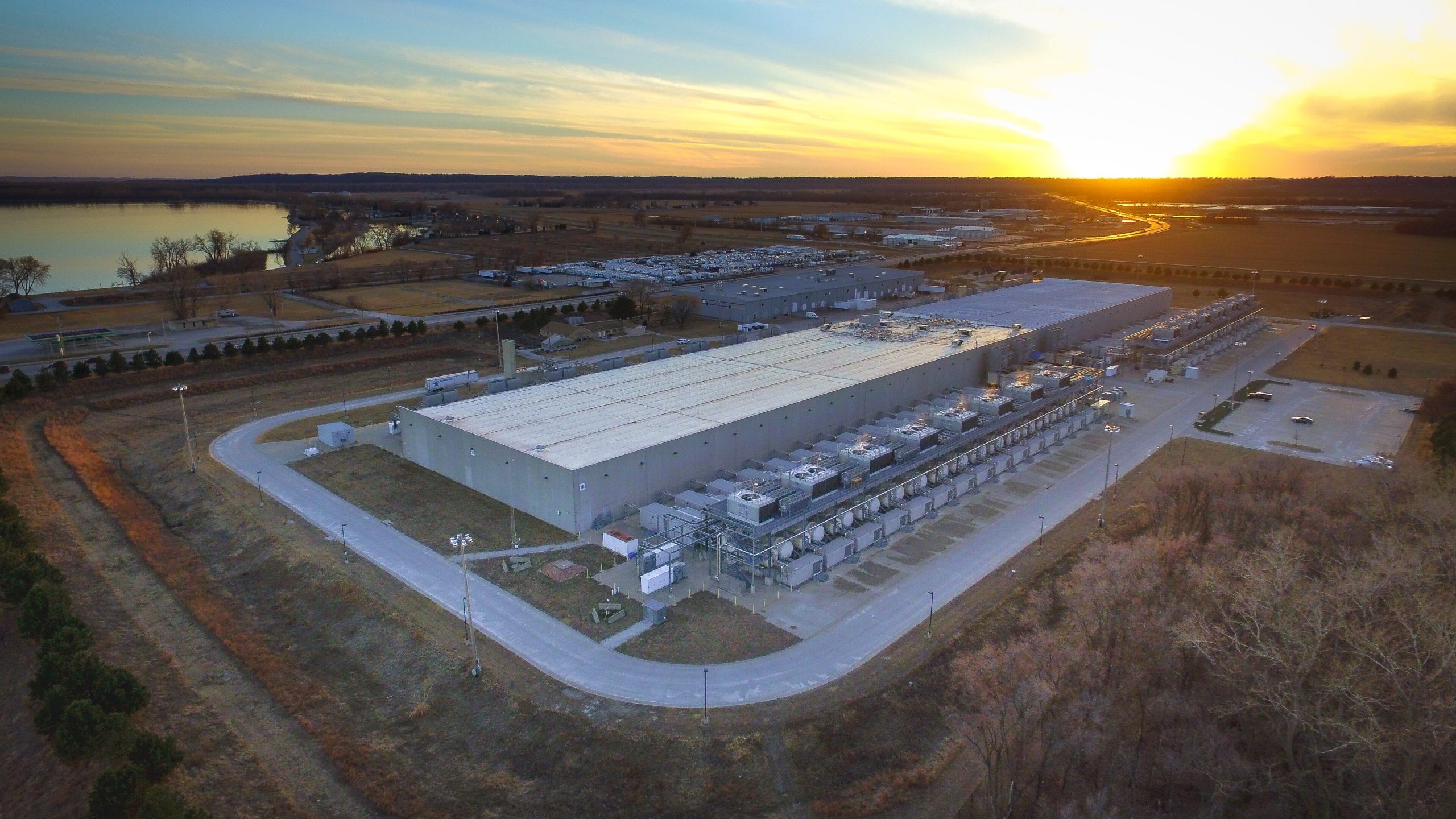
Pulaski County is locked in a battle over whether — and how — to regulate data centers. Google and AVAIO Digital are planning projects in the Port of Little Rock and Wrightsville, respectively, that will require incredible amounts of water and electricity.
Some argue that we risk chasing tech companies away with burdensome regulations. But AVAIO’s actions in recent weeks show why communities can’t afford to let tech companies write their own rules.
Last week, AVAIO Digital representatives met face to face with the Wrightsville community, where it plans to build a 150-megawatt data center on a 760-acre property. Company representatives promised to be transparent and accountable and pledged to be good neighbors. They said they’d set their own standards and report on their progress every year. All of this sounded good — great, even.
Yet even as AVAIO was making its good-neighbor pledge, we now know the company’s legal team was working to secure an exemption to tougher regulations, as reported early this week in the Arkansas Democrat-Gazette. Little Rock has adopted a handful of data center regulations, while the county is still debating whether to regulate data centers at all.
Why AI changes the equation
Defenders of the status quo argue that data centers are not unique when it comes to large-scale development and don’t need separate rules. Their argument overlooks how AI has changed things: Artificial intelligence requires vastly more computing power than earlier iterations of digital technology. And it’s AI that is driving the demand for more and ever-larger data centers — referred to as “hyperscale” data centers.
AVAIO executive John Malone has said that the Wrightsville facility will support AI-enabled cloud computing. As AI becomes integrated into more online services, the computing power needed to support them is growing.
The supersized data centers powering the AI boom consume far more electricity than anything we’ve seen before — and they are creating novel problems, such as heat islands (where temperatures in the surrounding area increase), constant noise from backup generators, and damage to ecosystems and sensitive wetlands. They’re being built in Southern states like Arkansas with plentiful water, cheap electricity, and loose regulations because they’re so resource-intensive.
Without clear regulations, technology companies will leave Arkansas exposed. The cracks in this approach are already showing.
Promises aren’t protections
AVAIO, for example, has told the public two different things about its plans for water consumption. Data centers, as has been widely reported, use vast quantities of water to cool server rooms, which generate intense heat.
At last week’s meeting in Wrightsville, the company’s project manager, Tom Nesel, reassured the community that it plans to use a closed-loop system that recycles water to cool its server rooms. This more efficient system could use as little as 8,000 gallons of water per day, about what’s needed to water 10 acres of corn, Nesel said.
But AVAIO’s closed-loop water system appears to come with an important caveat: The companies that lease space in its facilities may not actually use it. At a Quorum Court meeting in May, Nesel said that its agreement with Central Arkansas Water allows the project to use up to 1 million gallons of potable water per day if companies using the facility decide to go with an evaporative cooling system instead.
This scenario is far from hypothetical. Evaporative cooling uses less power and some tech companies prefer it.
Whether AVAIO intended to mislead the public is beside the point: The public shouldn’t be left guessing how much the project would ultimately consume. Regulation could require AVAIO to use a closed-loop cooling system, regardless of what the company leasing the facility prefers. At the very least, regulations could require AVAIO and any other future data center developers to disclose their anticipated water usage at every stage of development and operation.
Wrightsville resident Ruby Macon Heard presses AVAIO Digital representative John Malone on residents’ concerns about the company’s proposed data center. Credit: Brian Chilson
Then there’s the noise. Hyperscale data centers can generate around-the-clock noise, described by one Mississippi resident living near Elon Musk’s xAI data centers as a high-pitched roar. That’s especially concerning as Daisy Bates Elementary School and dozens of homes sit near the proposed AVAIO site.
AVAIO representatives promise to install quiet air conditioners, move backup generators inside, and build at a distance from the property line. “You will absolutely not hear the project in any way from Daisy Bates,” the AVAIO representatives have said.
But what if they’re wrong? The consequences would fall on homeowners and schoolchildren, not on AVAIO. A simple noise-level regulation could turn a fleeting promise into a legal requirement.
Electricity consumption is another area where blind faith in tech companies’ promises could prove costly — literally. The AVAIO data center, in its first phase, will draw more than 150 megawatts of power, and plans show it may eventually scale to a staggering 1 gigawatt, enough to power most households in Arkansas.
AVAIO promised that costs associated with any electricity infrastructure development or increased demand will not be passed onto consumers. Yet, as one man shouted during the Wrightsville meeting: “How can we be sure?”
Some critics argue that Entergy is already passing on the cost of solar development for data centers to ratepayers. As it stands, the public can only take the utility and tech companies’ word for it that their rates aren’t climbing because of AVAIO and Google’s incredible electricity needs.
Under Pulaski County’s proposed moratorium, one of the goals includes “understanding and evaluating” to what extent, if any, data centers require ratepayers to subsidize their infrastructure. While it’s unclear how they might achieve this, they might require, for example, document disclosures, third-party analyses or expert input. They might also require Entergy to correct any public statements found to be misleading.
Good regulation balances community interests for a clean environment and an affordable cost of living against company goals to earn profits and elected leaders’ mandate to create jobs. Right now, it’s arguably just the tech companies that are getting their needs met.
When the stakes are this high, Pulaski County shouldn’t trust that every future data center operator will be a good neighbor. It should insist that they all have to be one.
AVAIO Digital did not return multiple requests for comment.