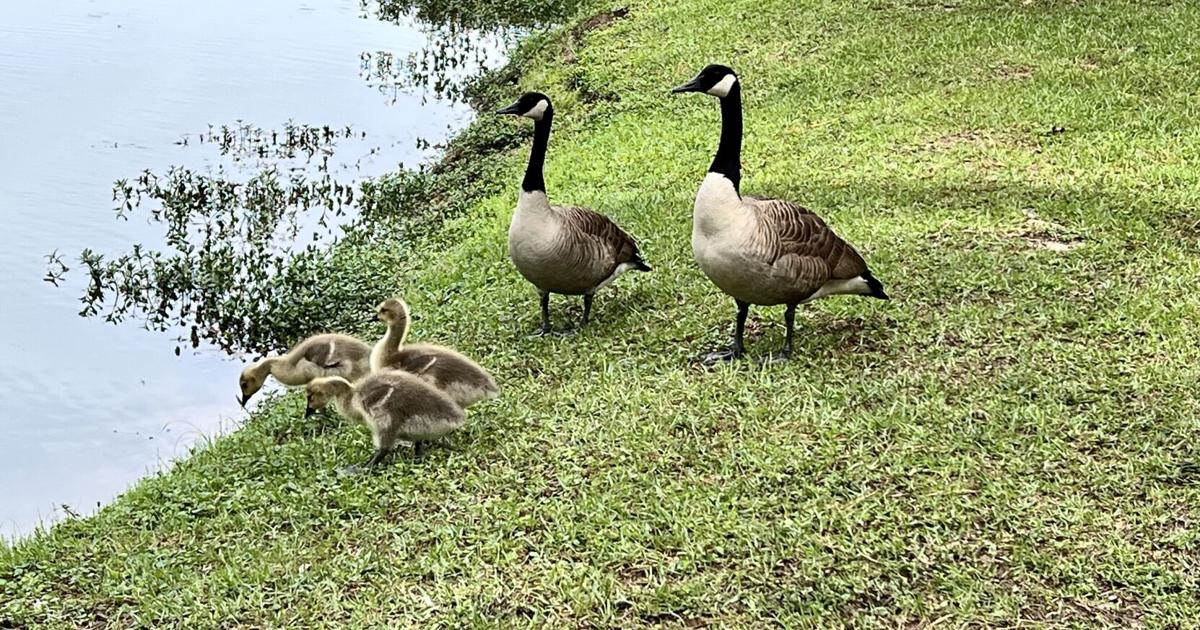
SURFSIDE BEACH — Frustrated by the growing presence of Canada geese, Surfside Beach leaders want to crack down on those feeding the birds.
A proposed change to the town’s birds and waterfowl ordinance would include fines and potentially jail time for violators. Newly elected town council member John Hiatt suggested the update at the council’s March 10 meeting, though no action has been taken.
Under the current ordinance, feeding geese is considered a civil infraction punishable by a fine of up to $200. If the proposed changes pass, fines would start at $100 for the initial offense and increase with each violation up to $500.
Hiatt also introduced the idea of adding up to 30 days in jail as a potential punishment, an idea that received support from several council members.
Council member Shawn Fallon said jail time would be necessary because fines alone would not be enough to deter repeat offenders.
“If it’s a repetitive thing, I think it has to be jail time,” Fallon said. “I feel like certain people will keep doing this over and over and over.”
Council members Rick Lawhorn and Skip Walls also voiced support for adding jail time to the ordinance.
Mayor Robert Krouse told The Post and Courier that in his two and a half years campaigning and then holding office, the top complaint he has received from residents is about the geese. He also said that if jail time is added to the ordinance, it would be a last resort for those who continue to break the law even after reaching the $500 fine.
“Jail time would not be for feeding geese, it would be for utter contempt of the law,” Krouse said.
Hiatt told the Post and Courier the problem with feeding geese is that it domesticates them and affects their migration patterns. With such a large number of geese living in the town, residents have to deal with the birds on their properties. He contends those feeding the geese harm the birds and hurt their neighbors’ property values.
“The feeding of geese is unhealthy,” Hiatt said. “They develop a fatal bone condition to their wings called Angel Wings. After that they need to either be placed on some type of reserve or maintained by people in the community because they cannot compete with their brethren for food and mating ability.”
Canada geese are protected by state and federal law. However, the growing number of resident Canada geese has caused problems in some communities, according to the S.C. Department of Natural Resources.
“As both human and resident Canada goose populations have increased in South Carolina, conflicts have increased,” the department’s website states. “Most people tolerate Canada geese; however, as densities increase problems proportionally follow. Concentrations of Canada geese can cause problems by overgrazing lawns and by depositing large accumulations of feathers and feces. Health concerns arise when geese congregate at water treatment facilities and swimming areas. Resident Canada geese may also cause destruction of vegetable gardens or commercially grown agricultural crops such as corn, peanuts and soybeans.”
Surfside Beach resident Kathy Subrize said the town’s geese problem is the worst it has been in her 28 years in the area, and she frequently sees geese on her property.
Subrize said there should be stricter adherence to the no feeding ordinance, and the town needs more education and signage about it.
Resident Maria Pesce has an active social media presence where she calls herself an animal rights activist and the Surfside “geese police.” She posts about stopping abuse of geese. Pesce said she does not speak with reporters when The Post and Courier asked for comment.
Krouse, the mayor, said that the town is scheduling a workshop to discuss proposed changes to the ordinance and get input from city staff. No date has been set yet.