The company cleaning up the Pilgrim Nuclear Power Station in Plymouth will not be allowed to discharge radioactive wastewater into Cape Cod Bay. The Massachusetts Department of Environmental Protection issued the final decision Tuesday after a two year review.
“The news from MassDEP is good for Cape Cod, Cape Cod Bay, and Southeastern Massachusetts,” said Andrew Gottlieb, executive director of the Association to Preserve Cape Cod, one of the groups that opposed the dumping.
The wastewater was used to cool fuel rods while Pilgrim was operating, and is contaminated with radioactive elements, metals and PFAS “forever chemicals.” The plant closed in 2019.
Holtec, the company cleaning up Pilgrim, asked the state for a modified water permit that would allow them to discharge up to 1.1 million gallons of treated wastewater into Cape Cod Bay.
Holtec said discharging the water was the most environmentally-friendly disposal option, and would release radioactivity far below federal safety limits. A coalition of citizens, environmental activists, business groups, fishermen and members of the Mashpee Wampanoag Tribe opposed the plan.
MassDEP denied Holtec’s request in 2024, and the company appealed.
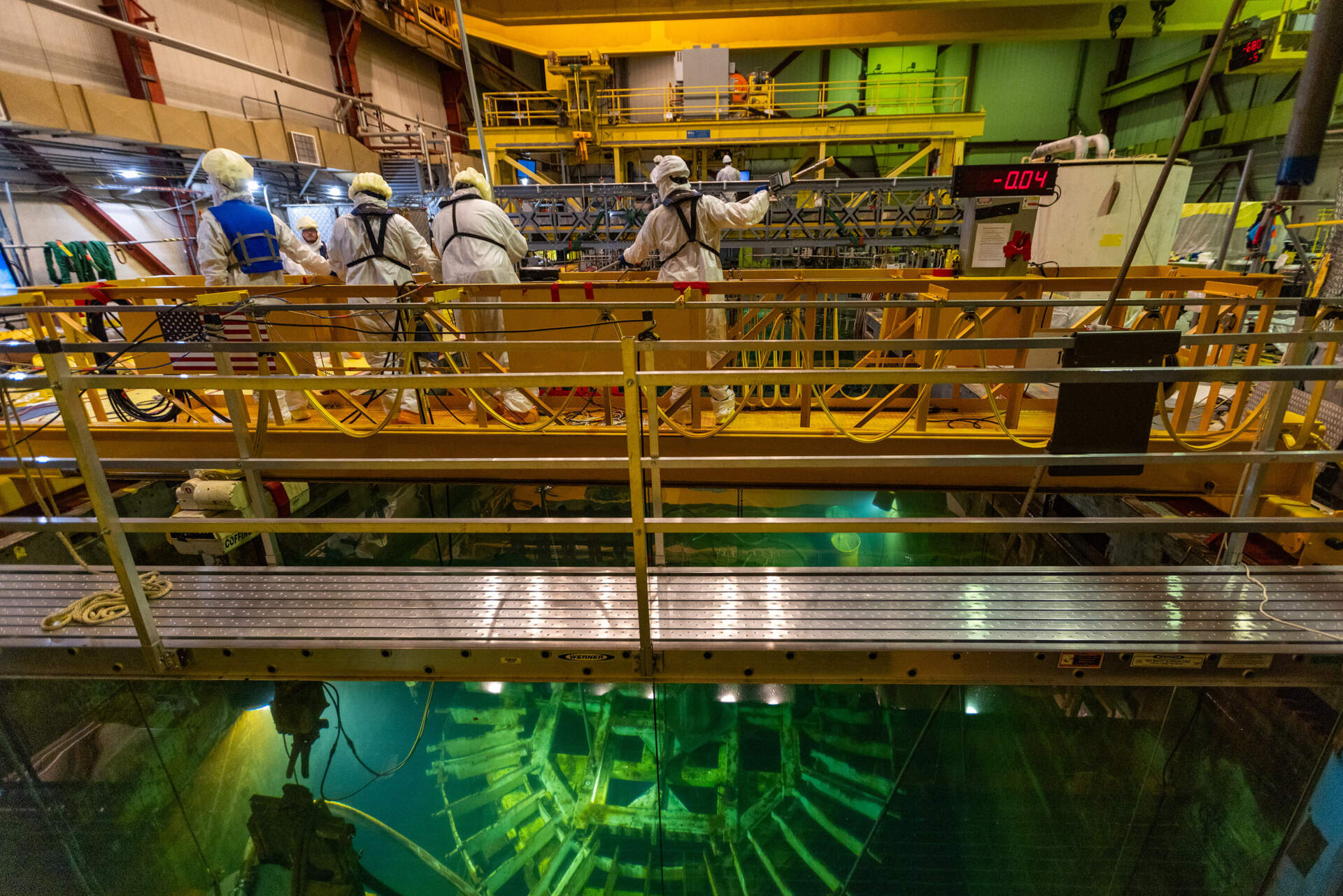
A decommissioning crew works on the top floor of the Pilgrim Nuclear Power Station reactor where wastewater is being held in the spent fuel pool and the dryer separator pit. (Jesse Costa/WBUR)
Cape Cod Bay is protected under the Massachusetts Ocean Sanctuaries Act, which prohibits the “dumping or discharge of commercial, municipal, domestic or industrial wastes.”
In a statement issued with its final decision, MassDEP said the agency “determined that the water that Holtec proposes to discharge into Cape Cod Bay qualifies as industrial wastewater, and therefore, the proposed discharge is prohibited.”
The state’s decision is final, but Holtec could appeal the decision in court.
One of the entryways into the torus, one place where wastewater is stored at the Pilgrim Nuclear Power Station. (Jesse Costa/WBUR)
Patrick O’Brien, Holtec’s executive director of government affairs and communications, said in a statement that the company is “reviewing the finalized denial and looking at what options may remain available.”
Holtec is scheduled to finish decontaminating the site in 2034. O’Brien said the ongoing wastewater challenges have already delayed the cleanup schedule, and the state’s final decision may cause further delays.
“As always our focus remains on a safe, efficient clean-up of the plant,” O’Brien said.
In the meantime, Holtec is letting the wastewater evaporate, releasing small amounts of radioactive tritium through the air vents to the surrounding area. The Nuclear Regulatory Commission allows airborne releases of tritium, and Holtec’s reported releases are below the agency’s safety limits.
Holtec has evaporated hundreds of thousands of gallons of radioactive wastewater since the start of decommissioning at Pilgrim, and has enhanced the process in recent winters by heating the wastewater pools. Holtec said the procedure helps warm the building and keep pipes from freezing. But the practice has angered local residents and opposition groups.
Gottlieb said he expects Holtec to appeal the state’s decision in court while it continues to evaporate the wastewater.
“It’s a cynical ploy on their part to allow them to continue to do something that no one in Massachusetts wants them to do,” he said.