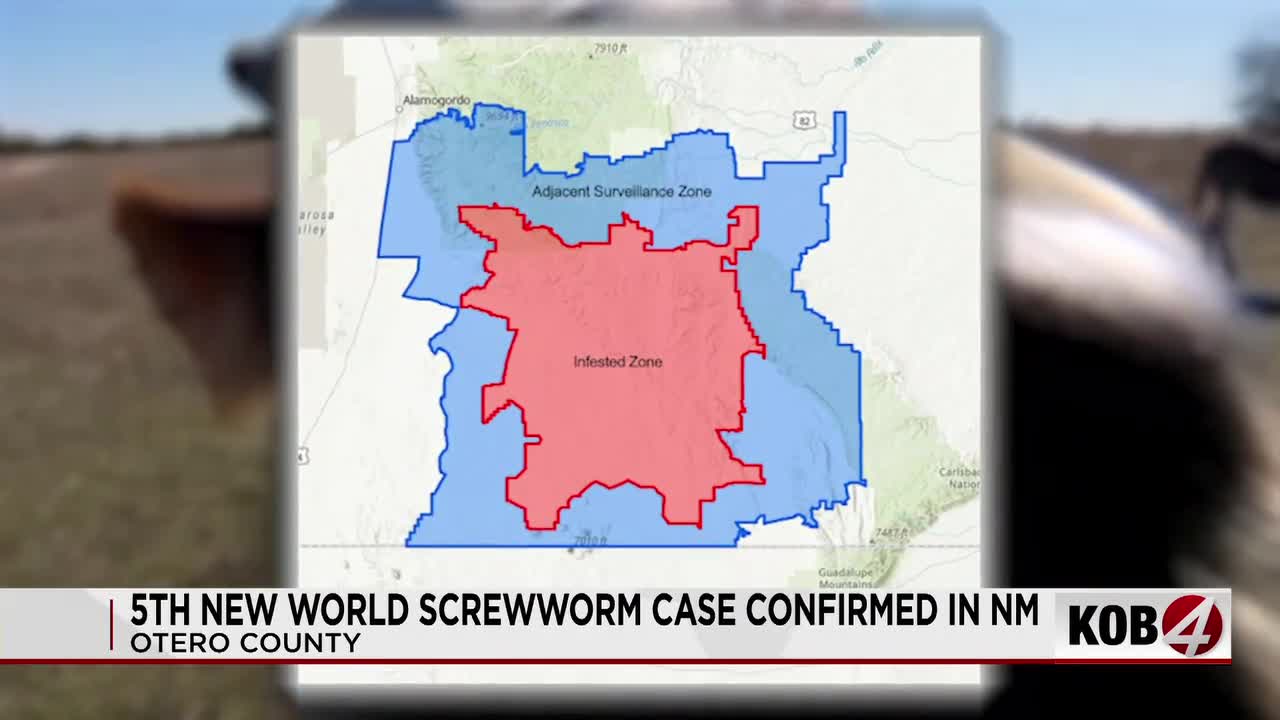
New Mexico confirmed a fifth New World screwworm case in Otero County as officials set a 12.4-mile infested zone and release sterile flies.
SANTA TERESA, N.M. – New Mexico confirmed a fifth New World screwworm case in Otero County as officials set a 12.4-mile infested zone and release sterile flies.
The state said the larvae turned up in a beef cow on a cattle ranch between Pinon, New Mexico and Dell City, Texas. A 12.4 mile infested zone has been set up around the area with animals inside the zone needing to be inspected or even treated before moving within or outside the area.
“We are working closely with our state and federal partners to investigate these cases, increase surveillance and monitor for additional infestations,” said State Veterinarian Dr. Samantha Holeck with the New Mexico Livestock Board in a press release.
Holeck said New Mexico is working with the U.S. Department of Agriculture to release sterile flies in the area after the latest case. She lauded the rancher’s quick action in reporting the case.
“Getting sterile flies distributed in the area will provide the broadest stroke of protection for all of the warm-blooded animals in that region,” Holleck said.
The latest case marks the third of its kind since livestock started moving through the Port of Santa Teresa again last month. The port had been closed since May 2025 because of screwworm concerns. Holeck said she believes the new cases likely came from northward migration of the airborne flies, not from the port reopening. She said cattle entering from Mexico go through repeated inspections.
“The cattle that are being presented to that port are being inspected multiple times and they have treatment on board that does protect them, they’ve been inspected a minimum of three times before they even cross onto US soil,” Holeck said.
To date, officials have released more than 11.2 million sterile flies in New Mexico.
County agriculture officials are also offering free screening for anyone who thinks they found larvae in a pet’s wounds.
People can place the larvae in 70% isopropyl alcohol in a sealed container and take it to their local New Mexico State University county extension office for testing. John Garlisch, an agricultural extension agent, said people in Albuquerque have brought in samples out of caution, but none have tested positive there.
“We’ve had people who have brough in samples out of caution, but nothing has tested positive for screwworm up here in Albuquerque,” Garlisch said.
Garlisch said people can also work with their veterinarian.
Holeck said the sterile fly releases should help prevent a larger outbreak, but she warned ranchers and other animal owners to stay alert because the fly pupae can survive cold days into the winter months.
- For Related Stories: Blake Troli