The 2026-27 LSU athletic year was already overflowing with storylines.
Can Lane Kiffin lead the Tigers back to the College Football Playoff in his first season?
How good can men’s basketball be in the Will Wade 2.0 era?
Can LSU baseball bounce back for another College World Series appearance?
Will Kim Mulkey have a Ukranian (Kate Koval) and a Russian (Anna Mineava) on its roster as the Tigers try to return to the Women’s Final Four?
How many perfect 10s will gymnastics’ Kailin Chio possibly have?
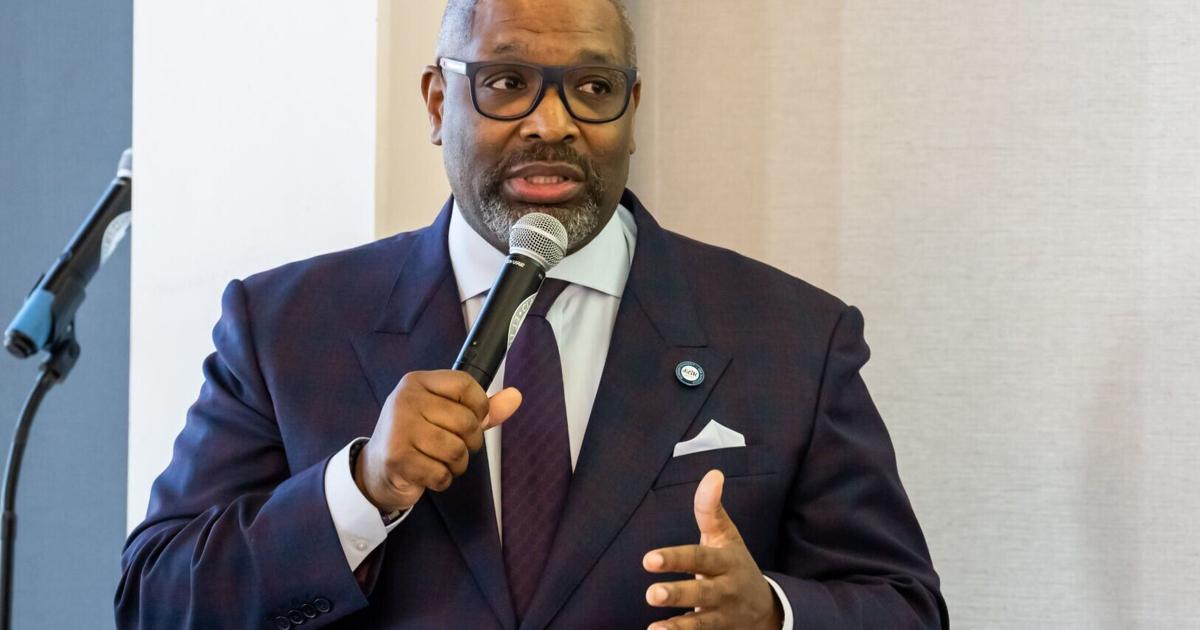
Last week, LSU added one more huge, off-the-field story line to the mix. News broke Thursday that Gov. Jeff Landry and LSU System President Wade Rousse plan to host 40 top boosters at the Governor’s Mansion the first week of August to discuss the financial future of the athletic department.
The news immediately sparked a couple of questions:
1. What will this future look like, especially since the letter LSU sent to the 40 made no small boast about “a first look at an alternative revenue generating opportunity” that could “quite possibly change the future of college sports in America”?
2. How do you feel if you’re No. 41 on the LSU athletic donor list? Has that person been glumly trudging away from the mailbox day after day, finding only unsolicited timeshare offers and some random coupons in there?
We’ll leave that last one for now. Like you, I don’t spend a lot of time pondering the mental outlook of multimillionaires. The first question is of course highly intriguing, as no word has yet spilled as to what that “alternative revenue generating opportunity” could be.
Initial thought naturally gravitates toward the notion that it could be some sort of private equity scheme. Southeastern Conference schools in general and LSU athletic director Verge Ausberry in particular have not gone chasing after private equity capital like an edge rusher pursuing a quarterback, but they haven’t ruled out the possibility, either. That said, a straight private equity deal wouldn’t live up to the hype in the letter of “quite possibly changing the future of college sports,” would it?
Private equity is a refuge of last resort for a wealthy athletic program like LSU. Yes, Louisiana the state may be poor, but its flagship athletic department generated over $220 million in 2024-25. While PE brings piles of cash needed by everyone in this NIL era, it’s money that comes not with strings but giant oil tanker-sized mooring lines attached. Schools see their autonomy instantly eroded by these people who are mostly there seeking a return on their sizable investment, not because they love LSU or Whatever U.
What if LSU’s big 40 donors are the ones asked to put up the private equity? That would be a group not only financially but emotionally invested in LSU’s athletic success. But the letter said the meeting is “not an ask for money. It’s not a fundraiser. It’s informational.” A timeshare pitch does come to mind once again, but maybe the letter is to be taken at its word. LSU could also be looking to detach its athletic program into an LLC, but that’s not new either. Kentucky, just searching within the SEC for an example, has already done that.
It’s asking a lot to believe, but perhaps LSU’s hierarchy has come up with something truly novel. Rousse, it’s certainly worth remembering here, is an economist by trade and helped raise millions in new support while president at McNeese State, once was a research specialist for the Federal Reserve Bank of Chicago and founded what his LSU bio calls an “alternative investment company.” Another Rousse bio says the company specialized “in a market strategy with an objective of absolute returns.”
Absolute returns are what LSU, and athletic departments across the country, could use right now.
I’m only speculating in what LSU might do, completely confident only in the knowledge that something must be done. It is a broken record of a statement by now, but the current trajectory of athletic spending is not sustainable. LSU has found millions to invest in coaches buyouts and funding for roster building over this past unprecedented year, but it’s hard to imagine deep pockets are bottomless pockets.
Despite the protests of student-athletes like incoming LSU women’s basketball point guard Jada Williams, and the SEC and Big Ten writ large, college athletics does need some sort of outside oversight like the Protect College Sports Act. Schools are clearly unwilling and/or incapable of policing themselves. If so, the money now earmarked for revenue sharing with athletes would eventually be workable as a budget line items for schools. But they insist on continuing to blow past it.
Something like the PCSA must eventually come. Meanwhile, schools are looking for new revenue streams and or cutting back, as in cutting entire sports programs. That, to this writer is completely wrong thinking.
Meanwhile, I’m trying to think of what LSU may have up its financial sleeve. Word will come eventually. How much impact it has remains to be seen.