Public dollars fund Boston’s public schools. But many communities supplement with private donations — and those dollars aren’t spread evenly across the city. Now, a Boston city councilor is calling for more transparency around this funding.
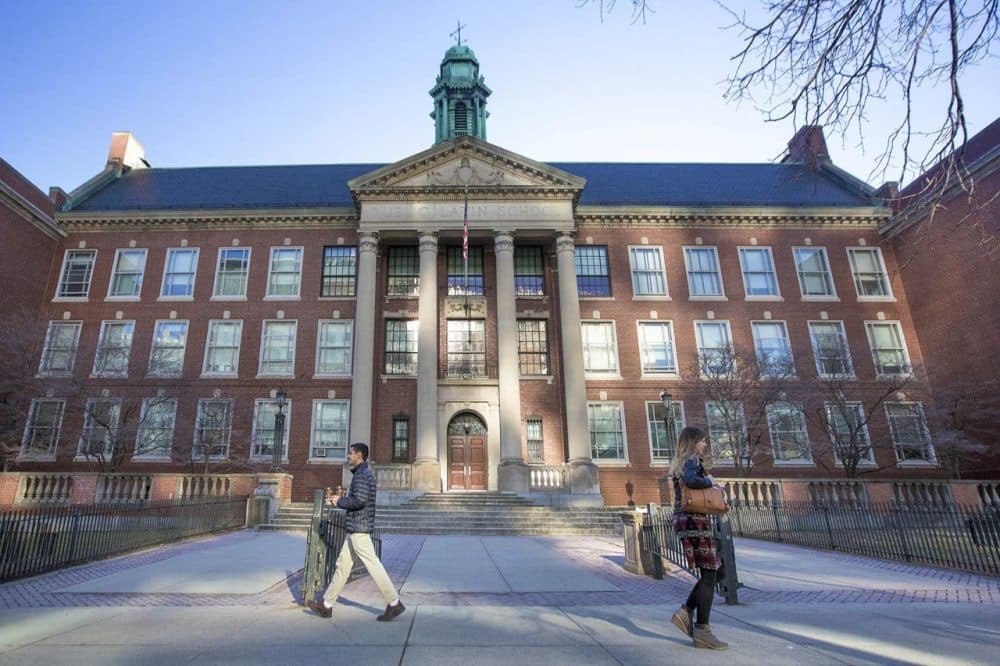
The Boston Latin School had a nearly $95 million endowment at the end of fiscal year 2025, according to its tax filings. That money makes a meaningful difference for its students, supporting academic programming and the school’s library and technology. It even provides college scholarships for graduating seniors.
But few communities have the fundraising power of the prestigious exam school, and those with less social capital and connections attract fewer resources.
“The Blacker and browner a school, the less community wealth there is to flow into it from outside the budget,” said Travis Marshall, a member of QUEST, a Boston parent coalition examining the disparity.
Only 16% of Boston Latin’s students are Black. The school regularly brings in millions of dollars in private support for a student body that represents a sliver of the district’s total enrollment. Its fundraising arm, the Boston Latin School Association, has enough private money to employ a small staff and paid its president more than $300,000 in fiscal year 2025.
The Clap Elementary School on Harvest Street in Dorchester. (Robin Lubbock/WBUR)
Across town, the fundraising picture looks different. Roger Clap Elementary sits in Dorchester, where a third of its students are Black. The school raised just shy of $4,000 in fiscal year 2026, according to the Boston Education Fund, a nonprofit that manages donations for the city’s public schools.
“It seems like there’s some loopholes where $97 million can sit with the Friends of Boston Latin while [Roxbury’s] Orchard Garden students can’t even use their auditorium because their seats are torn up,” said City Councilor Miniard Culpepper at a recent education committee hearing. “I’m just amazed.”
A budget steering committee for the district in 2023 recommended that officials collect and publish the private revenue schools raise in order to provide a fuller picture of the resources available to each.
So far, the city has not taken that step.
“There are schools that have significantly more private fundraising power than others,” the district’s Chief Financial Officer David Bloom told city councilors.
That money can make up a meaningful share of a school’s budget, he said, adding that he is not opposed to making the data public.
Councilor Julia Mejia said she plans to create a working group to make the private donations transparent and start addressing the financial disparity.