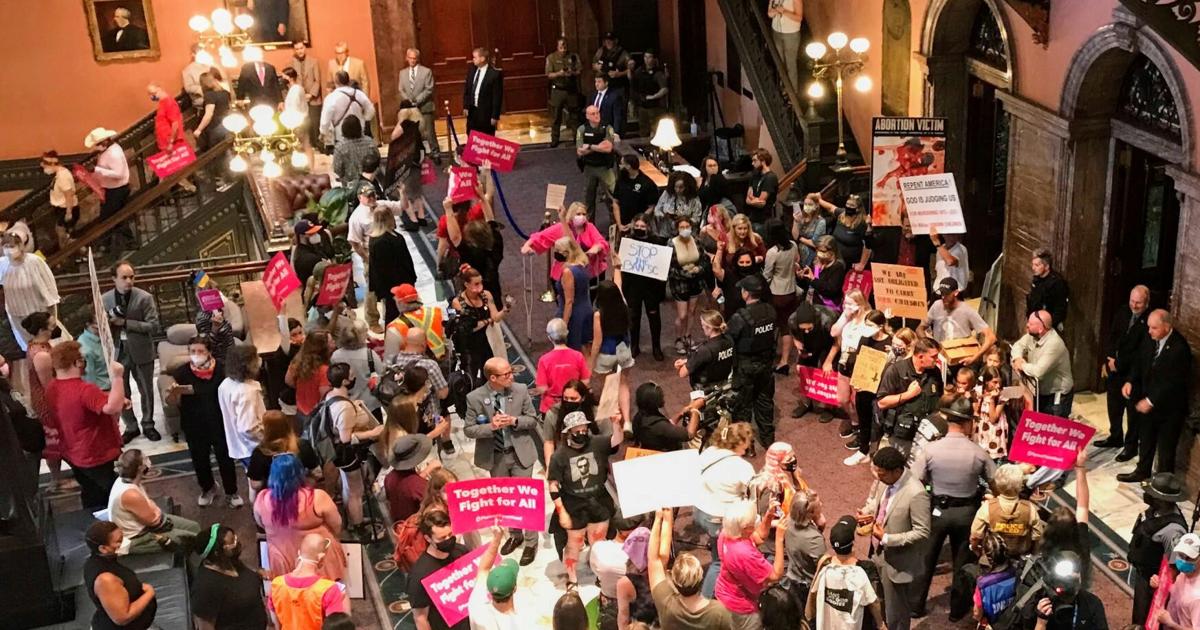
With last week’s unanimous decision from the S.C. Supreme Court upholding South Carolina’s six-week abortion ban, we hope we’ve seen the last of the lawsuits challenging the law.
That’s not because we like the law. Like most South Carolinians, we’d like to see limits on abortion but not a ban after only six weeks, when most women don’t even realize they’re pregnant.
We’d also like a law that doesn’t force frightened physicians and hospitals to refuse care to women who want to have their babies but experience horrible complications. A woman shouldn’t be forced to carry her dead baby to term, and any law that results in that needs changing. Even if that’s an overly broad reading of the law, it’s hard to blame physicians for over-reading, since they face the loss of their medical license and a prison sentence if a court agrees with that reading.
But while a court might be able to rein in a prosecutor who himself reads the law too broadly and brings criminal charges against a doctor, it’s not going to rewrite the law itself. That’s not the job of any court, and our justices made clear in their latest order that they understand that.
The way to change an abortion law — or any law — is to change the legislature that wrote it. That’s what voters and advocacy groups need to focus on.
And that’s not something they can focus on in November. For the foreseeable future, changing how the Legislature approaches abortion or any other culture-war battle — or for that matter taxation or highway safety or education policy — means changing who wins Republican primaries.
We’re not talking only or even primarily to Democrats here. We’re talking to the majority of Republicans, who refuse to participate in the primaries and instead find themselves forced to choose in November between a Republican they consider too extreme and either a Democrat they consider too extreme or no one or, on occasion, a Democrat they agree with, but they just can’t bring themselves to vote for. So they hold their nose, vote once again for a Republican who doesn’t share their values and then spend the next two or four years being upset about the decisions the Legislature makes.
Many South Carolinians probably recognize this as what has happened to them in the past three presidential elections as well.
The possibility that more mainstream South Carolinians who vote Republican in November will begin to recognize this is the reason party officials and the fringier Republican legislators are getting increasingly insistent about locking most voters out of what they consider “their” primary.
Fortunately, Republican leaders in the Legislature have managed to hold back these efforts, because they understand that the way then-Gov. Carroll Campbell transformed South Carolina from a Democratic state to a Republican monolith was by encouraging people who were accustomed to calling themselves Democrats to vote in both the state and presidential Republican primaries.
Today, Republicans and independents — and yes, Democrats when they’re willing to pick the person they consider the best candidate instead of the one they fantasize can be defeated — need to learn a variation of that lesson: The only way to take back South Carolina from people who want to outlaw all abortions and defund our public schools and make other changes that the majority of voters oppose is to stop them in a Republican primary.
That won’t turn this into a Democratic state, because our electorate is far more conservative than the national Democratic Party. What it will do is turn our Legislature into a sensible governing body that doesn’t spend its time passing extremist laws that most of us oppose.
Click here for more opinion content from The Post and Courier.