ROOTS also emphasizes individualized instruction. With a student-to-teacher ratio of 6-to-1, educators can recognize different learning styles and give children room to progress at their own pace while continuing to challenge and support them.
ROOTS offers four-day school programs as an alternative to traditional education, along with one-day and two-day enrichment options for homeschooling families.
By John Riddle, Contributing Journalist, Delaware LIVE
At ROOTS Farm & Forest School, a garden can become a science lab, caring for an animal can teach responsibility, and a walk through the forest can inspire questions that lead to a day of discovery.
The Delaware nature-based learning community serves children ages 2 to 14 at campuses in Georgetown, Milton, Clayton and Townsend. Its preschool, elementary and middle school programs combine traditional academics with outdoor exploration, project-based learning and practical experiences. A high school program is also planned.
ROOTS offers four-day school programs as an alternative to traditional education, along with one-day and two-day enrichment options for homeschooling families. Students learn math, reading, writing and science, but lessons are often connected to real situations rather than limited to textbooks, worksheets or memorization.
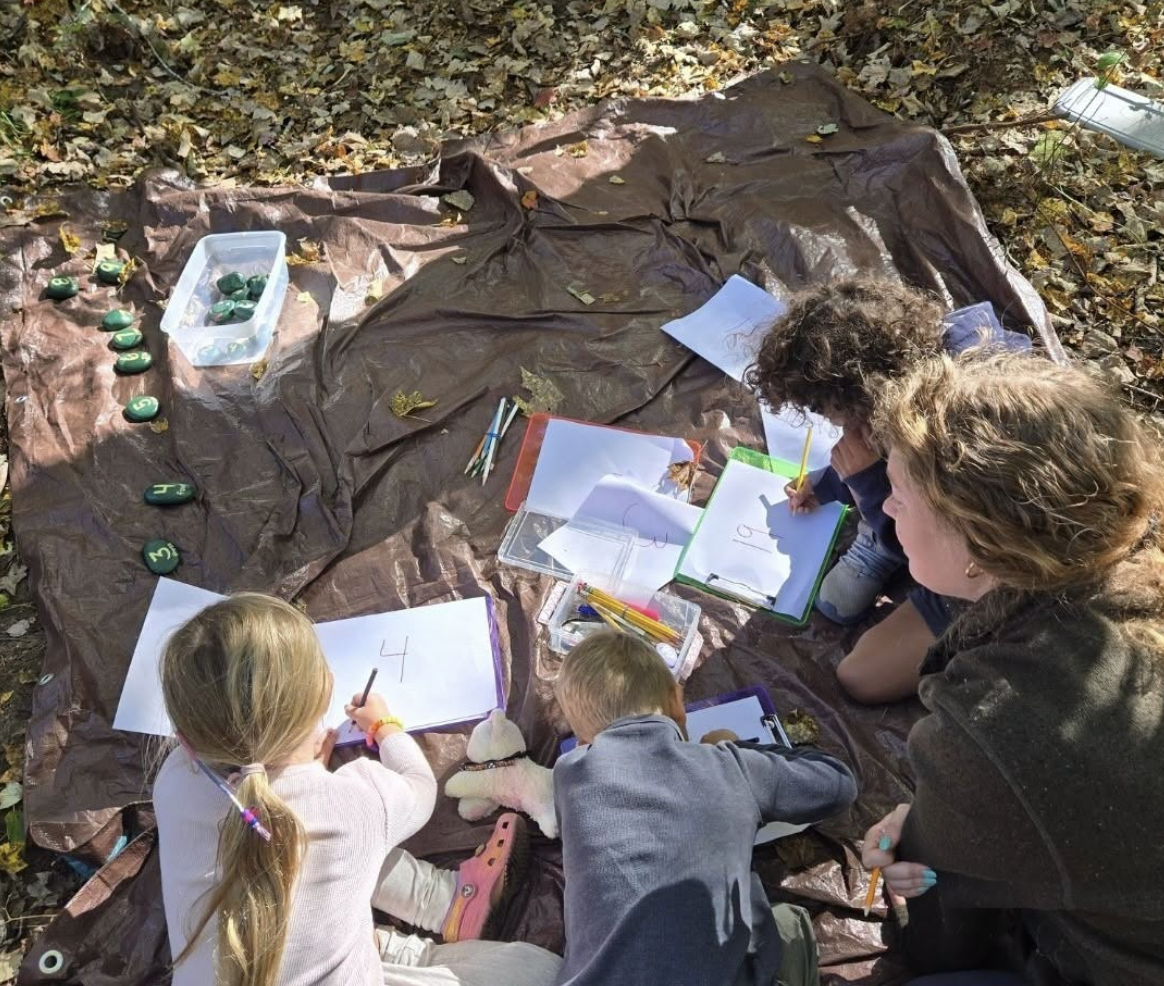
The school’s outdoor classrooms include gardens, food forests, natural play areas and spaces where children help care for animals. Students may also build with natural materials, participate in community service, complete STEAM activities, create art and stories, and work with others to solve problems.
“We learn by doing,” the organization states on its website, identifying one of the four beliefs at the heart of its educational philosophy.
The other three are taking responsibility, staying curious and solving real problems. Together, those principles are intended to help students understand not only what they are learning, but also why it matters and how it can be used outside the classroom.
Five foundational pillars guide the ROOTS curriculum: community, environmental stewardship, homesteading, nature studies and animal husbandry. Rather than treating those areas as isolated subjects, teachers weave them into students’ daily experiences.
A gardening project, for example, can introduce children to plant biology, weather, food systems, mathematics and environmental responsibility. Caring for animals can help students develop patience, empathy and dependability. Collaborative projects can strengthen communication, leadership and problem-solving skills.
ROOTS also emphasizes individualized instruction. With a student-to-teacher ratio of 6-to-1, educators can recognize different learning styles and give children room to progress at their own pace while continuing to challenge and support them.
Programs are designed for neurotypical and neurodivergent students, with teachers working to create an inclusive setting where children feel valued and capable. Auditory, visual, tactile and kinesthetic learning styles are incorporated into the school’s approach.
The school’s leadership has pursued specialized training in nature-based education and outdoor inclusion. Founder and director Talon Holleman has completed the Level 1 Nature-Based Teacher Certification Course through the Association of Nature-Based Education. Holleman and co-founder Travis Holleman are also certified as Forest School Teachers and Directors through the Forest School Teacher Institute.
That training complements the school’s focus on educating the whole child. Along with academic development, ROOTS seeks to nurture resilience, creativity, independence, social and emotional growth, and a lasting connection to the environment. “Our goal isn’t simply to help children succeed in school,” the ROOTS website states. “It’s to help them become capable, compassionate people.”
Families who select ROOTS are also invited into a broader learning community. The organization works with schools, libraries, youth groups, small businesses and other community partners to provide workshops, field trips and hands-on programs. Adults can become involved through volunteer opportunities, gaining the chance to learn alongside the children while supporting the school’s programs.
At a time when many parents are considering alternatives to conventional classrooms, ROOTS offers an educational model grounded in experience, curiosity and connection.
Its mission is straightforward: empower children to care for themselves, their community and their environment. At ROOTS, those lessons begin with children rolling up their sleeves, stepping outside and discovering what they are capable of doing.
Delaware LIVE collaborates with a network of professional journalists to cover a diverse range of stories across various fields. Staff Writers include experienced journalists and young professionals. If you have questions, please feel free to contact [email protected] or our publisher, George D. Rotsch, at [email protected]