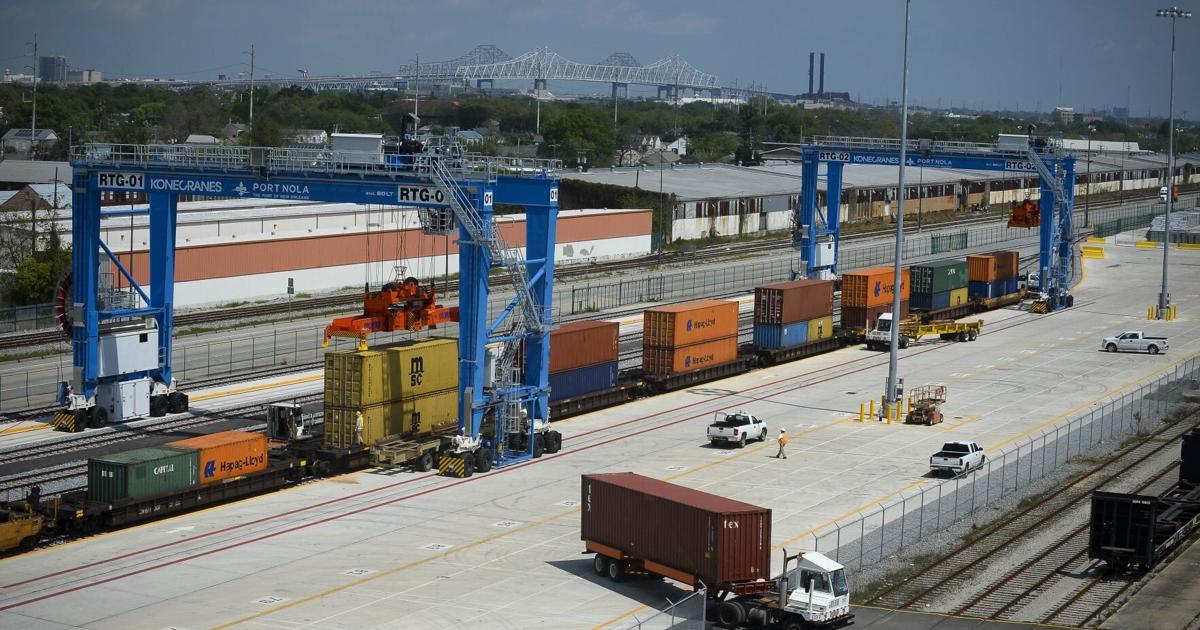
When nearly 1,000 maritime leaders gathered recently in New Orleans for the American Association of Port Authorities’ annual convention, discussion focused on how small modular reactors, or SMRs, can help power U.S. ports and the maritime industry. This conversation featured top federal officials, port leaders from around the country and leading industry executives.
Currently, nearly 22 million workers help move more than 2 billion metric tons of cargo every year through U.S. ports. Everything in the average American home, from laptops to couches to medicine, moves through ports. It’s no surprise that American ports contribute $2.9 trillion to the U.S. gross domestic product. To move the goods for a growing economy and population, ports need more cranes, more terminals and more workers. Ports are adding electric cargo-handling equipment, power for docked vessels and cold storage for perishables. Ports must also operate through extreme weather, grid disruptions and other emergencies. So how do we power these 370 ports spread across 41 states, especially with growing demands?
SMRs for ports are a new type of nuclear reactor that can be manufactured faster, are far safer, are easier to transport than typical large-scale nuclear power plants and would reduce competition for electricity with other critical sectors. Given the nexus of energy and ports, there was no better place to have this conversation than New Orleans.
Fortunately, there is an undeniable momentum for nuclear energy at ports. For example, under the leadership of U.S. Transportation Secretary Sean Duffy and Maritime Administrator Stephen Carmel, the ports of Long Beach and Corpus Christi recently became the first U.S. ports to sign agreements with the Maritime Administration, or MARAD, to explore SMR technology for both commercial vessels and port operations. These partnerships will examine port microgrids, shoreside power and emerging vessel propulsion technology applications.
Sang H. Yi
Provided photo
While nuclear energy may propel cargo ships across oceans, these partnerships envision broader potential for SMRs. A barge-mounted reactor at a port could power cranes during the day and an entire neighborhood at night. A reactor based at a port could also power communities impacted by a hurricane. SMRs will undoubtedly create new jobs for American workers.
One of my proudest accomplishments during my tenure as deputy maritime administrator was helping to lay the groundwork for the Port of Long Beach’s historic memorandum of cooperation with MARAD. While visiting ports across the country, I saw firsthand what can happen when federal officials, port leaders and private-sector innovators come together with an open mind.
A room with the right people, the right ideas and enthusiasm is a recipe for creative solutions. That spirit of collaboration, as demonstrated in New Orleans, is exactly what America needs as our ports continue to consider the next generation of maritime infrastructure.
The Port of New Orleans highlighted the critical importance of investment in our ports. In 2024, marine cargo activity through the port supported 342,150 U.S. jobs and generated $101.5 billion in economic value nationwide. Looking to the future, the port’s CEO, Beth Ann Branch, and her team sought and secured federal permitting from the U.S. Army Corps of Engineers to construct the $1.8 billion Louisiana International Terminal, or LIT, in St. Bernard Parish, which will significantly expand Gulf Coast container capacity.
Projects like LIT raise the important question of how additional energy requirements will be met. This question confronts ports across the country. A diverse energy portfolio, including expanded grid connections, energy storage, microgrids and other emerging technologies like SMRs, will be the answer.
Undoubtedly, nuclear technology must meet rigorous safety, security, environmental and regulatory standards. AAPA has called for clear federal permitting responsibilities and strong emergency-response protocols developed with the U.S. Coast Guard through meaningful public and stakeholder engagement.
America’s ports are gateways to the global economy. They support jobs, manufacturing, agriculture, energy and national security. Our ports, however, require reliable, resilient and sufficient power to keep American commerce moving.
New Orleans demonstrates the regional and national benefits of investment in port infrastructure. With nearly 1,000 maritime leaders together in New Orleans, it was clear that we have an opportunity to think through revolutionary energy systems to power America’s ports for the future.