Redemptions come in different sizes and guises.
Politics included.
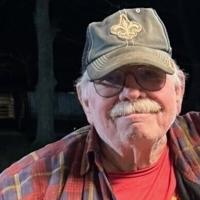
Tommy Gaudet was a cousin of sorts — the adoptive son of the second husband of my widowed great-aunt. Two decades older than I am, he wasn’t around much when I was a kid. At age 84, he died of natural causes on Feb. 18.
Thirty-seven years to the day before Tommy died, on Feb. 18, 1989, I left my Uptown New Orleans abode at 3:30 a.m. to drive to a Metairie campaign headquarters. It was the day of a special election for a state House seat between businessman John Treen and former Ku Klux Klan leader David Duke. I was in a crew that the Treen campaign was sending throughout the district to put thousands of little Election Day signs at every major intersection — you know, those placards that by law should be removed again within 24 hours.
The organizer pointed to a man with a pickup truck and said he was my partner for the morning. Bleary-eyed, in the dark, I introduced myself — only to hear: “Of course I know you; I’m your cousin Tommy Gaudet! Hop aboard; let’s go to work!”
Tommy was a former Marine, starting offensive guard for the Vanderbilt football team and bar bouncer. (He also was smart, a competitive bridge player, but that’s another story.) He wasn’t tall, but he was astonishingly burly, with a walrus mustache that added to the tough-guy effect — and he looked like he could knock somebody into another solar system. For three hours, while pounding hundreds of signs into the dirt, Tommy spoke in martial terms.
“This is a show of power, Quin,” he kept saying. “We’re gonna show those Kluxers we aren’t intimidated. We’ll show the voters there’s enthusiasm for Treen; it’s about impressions, about who’s got the juice. People want to be with winners!”
Quin Hillyer
Alas, Duke eked out a 227-vote win. But Tommy was on the case. As a new member of the Republican State Central Committee, Tommy decided that state chairman Billy Nungesser (father of the current lieutenant governor) needed protection from violent elements in the Klan. Nungesser, though 12 years Tommy’s senior, was a tough guy himself and probably wanted no help, but that didn’t matter: At every public event or Republican committee meeting for several years, Tommy, as self-appointed bodyguard, attached himself at the hip (figuratively speaking) of the chairman.
Referring to himself in the third person, he’d tell me, numerous times: “If they want a piece of Chairman Billy, they’re gonna have to go through ol’ Tommy Boy here, and there’s no way they’re gonna get past ol’ Tommy.”
My father at the time was the state’s Republican National Committeeman, so sometimes Tommy would add: “Now you tell your daddy that I’ve got his back, too, if he needs anything on the committee; if he needs someone to talk sense into other members, cousin Tommy is right here for him!”
Tommy was a bundle of aggressively coiled zeal, and uber-loyal to family and to those he thought were “doing right.”
Well, the Duke threat finally, blessedly faded, and I moved to Washington, D.C., and stopped seeing Tommy except at random family funerals. But about a decade ago, I sat with him in Bay St. Louis, Mississippi, for a burger and beer.
For two hours, we traded old political stories, and he talked of his life. He spoke movingly about how much he loved his sisters Michelle and Meg. He spoke of things he had done in his teens and 20s, some that made him proud, some that made him agonizingly ashamed — some of the latter (details not needed here) of a racial nature.
“But I helped stop that Kluxer, Duke,” he said. “Maybe that makes up, at least a little, for those things I said and did way back then. Those Kluxers are full of hate: They needed to be stopped. And we stopped them, didn’t we, boy? We stopped ’em good.”
In later years, Tommy Gaudet craved lots of space. A childhood friend owned major acreage 15 miles north of the Mississippi coast, and Tommy set up a trailer. The friend’s family, the Lukes, included Tommy at nightly dinners, and he taught their grandchildren to drive.
At his funeral, one of the Luke grandchildren noted how Tommy had set up bird feeders all around his trailer, and how he would sit there in a lawn chair in total peace. This man, who once was overly wound up with kinetic energy, now happily could sit so still that birds literally perched on his arms.
Tommy Gaudet found blessings.
And we can say to Tommy, to use the vernacular: You done good.