It was Feb. 8, a warm and windy Sunday afternoon in Logan County, when the Sheriff’s Department got a call saying an armed man was suicidal. The man was a 74-year-old retired Oklahoma County Sheriff’s Office lieutenant. He turned his gun toward a Highway Patrol trooper and a Sheriff’s deputy, who both fired. The retired officer was pronounced dead at the scene.
An hour and 15 minutes later, Tulsa police stopped an armed man on East 51st Street who was walking along the sidewalk near the Burger Street restaurant. An officer fatally wounded him with a rifle shot after he pointed a revolver at an officer.
Just before 6 p.m. on Feb. 16, Oklahoma City Police MSgt. Mathew Nelson shot 50-year-old Steven Saathoff after encountering him firing a pistol outside a mobile home park.
About three and a half hours later, Ada police shot an armed man as he exited a home on East 7th Street.
Through the end of 2025, Oklahoma recorded 33 fatal encounters involving police, placing the state among the highest in the nation and ranking third per capita.
Oklahoma has recorded 383 fatal encounters involving police over the past 12 years, consistently ranking among the highest in the nation per capita, yet the system that reviews those deaths, built on legal standards that ask only whether force was reasonable in the moment, rarely produces criminal charges against officers. The result is a cycle that satisfies legal definitions of accountability while leaving unresolved questions about whether training, culture and policy are doing enough to change outcomes.
Consistent Numbers
Oklahoma consistently ranks near the top nationally in per-capita fatal encounters involving police with about 8 deaths per million residents. That data comes from the nonprofit Mapping Police Violence project, which compiles nationwide data on police-related deaths from news reports, public records and open-source databases. What those numbers mean depends on who is interpreting them: police officials point to policy and training, prosecutors to legal standards, and researchers to structural factors shaping how these cases are investigated.
The disparities are stark. Black Oklahomans make up about 7.9 percent of the state’s population but accounted for six of the 33 people killed in police encounters in 2025, about 18%, meaning they were more than twice as likely as white residents to die in such encounters.
White residents accounted for 22 deaths, or about 67%. Hispanic residents accounted for two deaths, about 6%. Three cases, about 9%, were listed as unknown race. No victims in 2025 were identified as Native American, though Native Americans have been represented in earlier years.
Over the past 12 years, Oklahoma has recorded 383 fatal encounters involving police. Annual totals have ranged from a low of 20 in 2021 to a high of 38 in 2019. Most years have fallen in the high 20s to mid 30s, leaving the overall rate relatively consistent even as national totals fluctuate.
In raw numbers, larger states such as California and Texas consistently record the highest number of fatal encounters involving police. Adjusted for population, however, Oklahoma regularly ranks among the highest per capita, often placing within the top five nationally and reaching as high as third in recent years.
Why Oklahoma Per Capita Police Shootings Are So High
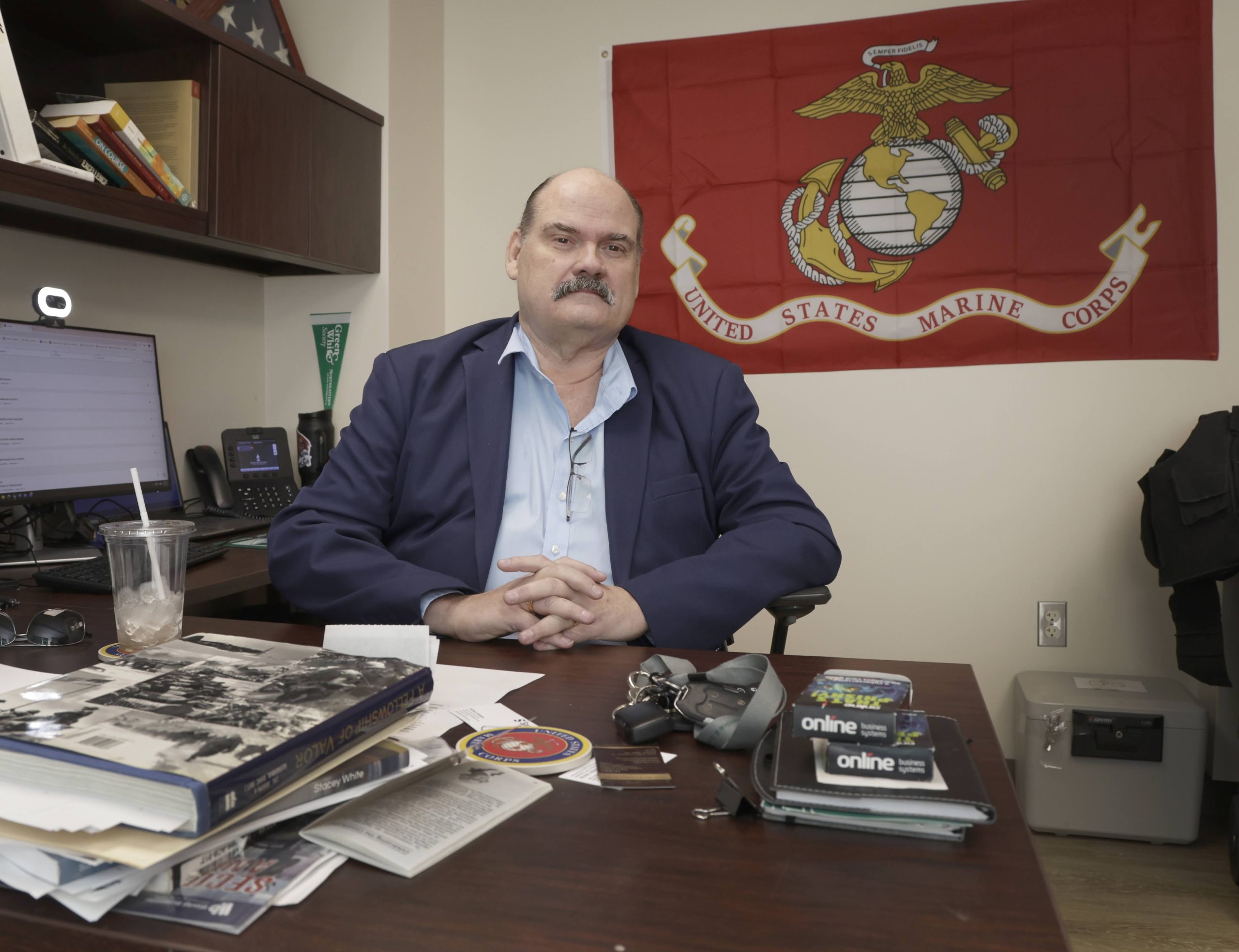
As departments and policymakers debate what the numbers mean, Stacey White, a former Blanchard police chief who now teaches criminal justice at Northeastern State University in Tahlequah, said policing culture has shifted over the past two decades.
“Police changed,” White said. “They went from the ‘Adam-12’ shiny-uniform look to the ‘I just got back from Afghanistan’ combat-gear look.”
That shift, he said, can create tension between officers and the communities they serve, as well as within departments themselves.
After years of high-profile shootings nationwide, Oklahoma departments say they have focused heavily on training and internal accountability. J.R. Kidney, Tecumseh police chief and first vice president of the Oklahoma Association of Chiefs of Police, said agencies now emphasize de-escalation and after-action review.
“Nobody hates a bad cop worse than a good cop,” Kidney said.
He also acknowledged the split-second pressures officers face, citing an old policing maxim: “It’s better to be judged by 12 than carried by six.”
The Process
After a fatal police encounter in Oklahoma, the case typically moves through a defined sequence of internal review, outside investigation and legal evaluation. Police officials said those procedures have become more structured in recent years, with written policies, training requirements and coordination with outside agencies intended to ensure consistency and accountability.
“They went from the ‘Adam-12’ shiny-uniform look to the ‘I just got back from Afghanistan’ combat-gear look.”
Stacey White
The review process begins immediately after a shooting and often involves both internal investigators and outside agencies. Departments document the incident, collect evidence and conduct administrative reviews to determine whether policy was followed. Findings are then forwarded for legal review.
In many cases, outside agencies assist with the investigation. The Oklahoma State Bureau of Investigation typically becomes involved only when requested by a law enforcement agency, according to OSBI Public Information Manager Hunter McKee.
Investigative timelines vary by case, he said, and once completed, OSBI provides a finalized investigative report to the local district attorney for review and potential charging decisions.
In larger departments, the investigative process can involve multiple layers, including administrative review, outside investigators and consultation with prosecutors.
In Oklahoma City, for example, officer-involved shootings are typically investigated by a combination of internal detectives and outside agencies, with findings forwarded for legal review once the investigation is complete. Police officials say the process is designed to separate administrative questions — whether policy was followed — from potential criminal liability.
Master Sgt. Gary Knight, a spokesman for the Oklahoma City Police Department, said investigators focus first on reconstructing what happened at the scene, gathering physical evidence, body-camera footage and witness statements. Those materials are then reviewed internally and shared with outside investigators and prosecutors.
Departments operate under detailed use-of-force policies outlining when deadly force is justified and how incidents must be reviewed. The Norman Police Department’s policy manual, for example, requires supervisory notification, evidence collection, internal investigation and coordination with outside agencies in fatal encounters. Similar policies across the state call for written reports, administrative review and, in many cases, outside investigative involvement.
Once an investigation is complete, findings are typically forwarded to a district attorney, who determines whether the officer’s actions meet Oklahoma’s legal standard for justified use of deadly force.
Legal Standards
That decision ultimately rests with prosecutors, whose review determines whether an officer faces criminal charges or whether the shooting is ruled justified under state law.
Steve Kunzweiler (Rip Stell/Oklahoma Watch)
Tulsa County District Attorney Steve Kunzweiler said prosecutors review those cases under Oklahoma’s self-defense and use-of-force statutes, which allow officers to use deadly force if they reasonably believe it is necessary to protect themselves or others from death or serious injury.
Prosecutors do not investigate the shootings themselves but rely on investigative files assembled by local departments, outside agencies and, in some cases, the OSBI. Those files can include body-camera footage, forensic reports, witness interviews and department policy reviews.
Kunzweiler said the legal question is narrower than the broader public debate that often follows a high-profile shooting.
Federal law sets a high bar for criminal charges in police shootings. Under the U.S. Supreme Court’s 1989 decision in Graham v. Connor, use of force is judged from the perspective of a reasonable officer on the scene rather than with the benefit of hindsight.
Oklahoma law similarly allows officers to use deadly force when they reasonably believe it is necessary to prevent death or serious injury. Under Oklahoma law, Title 21, Section 732, an officer may be justified in using deadly force if a suspect poses an imminent threat or has committed a violent felony and cannot be safely apprehended by other means.
Because those standards focus on reasonableness under the circumstances, an officer can violate departmental policy without necessarily violating the law. Administrative reviews examine whether an officer followed agency rules, training and procedures. Criminal investigations must determine whether the use of force meets the legal definition of a crime — a much narrower question.
“The standard isn’t whether something could have been handled differently,” Kunzweiler said. “The standard is whether the officer’s actions were justified under Oklahoma law.”
Most fatal encounters involving police in Oklahoma are ultimately ruled justified under state law, a pattern that mirrors national trends.
Even so, each case is reviewed individually, Kunzweiler said, with prosecutors weighing evidence against the legal thresholds set out in statute and case law.
The Public’s View is Different
For researchers who study policing and community trust, that legal framework helps explain why many cases end without charges but does less to explain how those outcomes are experienced by the public.
Trina Hope, director of the University of Oklahoma’s criminal justice program and an associate professor of sociology, said research often points to a mismatch between how police are trained and what most officers encounter on the job.
Much of police work involves routine calls and order maintenance, she said, but training and culture often emphasize danger and the potential for violence.
Hope said departments face a broader training and cultural challenge. Agencies must either expand de-escalation and mental-health training or rely more on non-police professionals to respond to certain calls, she said.
She also pointed to research suggesting education levels and professional training can influence outcomes, with some studies finding that college-educated officers are less likely to engage in unnecessary force.
At the same time, she said policy changes alone do not always translate into practice. The effectiveness of de-escalation or other reforms depends on whether departments adopt evidence-based training and implement it consistently.
“It would be very interesting to find out what specific training program they’re using and whether there’s any evidence behind it,” Hope said.
White said rebuilding trust may depend on a renewed emphasis on community-oriented policing.
“I think maybe a return to the community-oriented policing model of the late ’80s and early ’90s would really help a lot,” White said.
Officers, he said, must be part of the communities they serve rather than responding only in moments of crisis.
Training Gaps
He also said there is room for expanded training, particularly for smaller departments facing staffing shortages.
Recruiting pressures, he said, can lead agencies to put officers on the street before they are fully prepared, creating gaps that additional training could help address.
The numbers themselves place Oklahoma among a small group of states with consistently high per-capita fatal encounters involving police.
In 2025, only New Mexico and Alaska recorded higher per-capita rates.
Those comparisons also come from the Mapping Police Violence dataset.
Project officials acknowledge the dataset is not perfect — no national database is — but said it captures incidents that may not appear in federal reporting systems, which rely largely on voluntary reporting from departments.
Using that methodology, Oklahoma’s annual totals have remained relatively consistent over the past decade, even as national totals rise and fall.
Each fatal encounter is investigated individually under the same legal standards. Taken together, however, the numbers describe a system whose outcomes have changed little over time, a consistency that continues to shape how police, prosecutors and communities understand the use of deadly force in Oklahoma.
Stephen Martin is an Oklahoma City-based journalist and contributor to Oklahoma Watch. Contact him at smartin0170@gmail.com.
MORE FROM OKLAHOMA WATCH
After Years of Stalemate, Lawmakers Advance Bail Reform Proposals
Proposals to create a bail hearing pilot program and standardize pretrial risk assessments are headed to the Senate floor, though with lingering fiscal questions.
March 2, 2026
Twin Chickasha Hearings Reveal Agents Knew of Hail Claim Practice
Hearings on two almost identical motions to dismiss in cases against State Farm captive agents raise questions about how culpable agents are in Oklahoma’s ongoing hail claim saga and provide additional information on the growing scope of the actions brought against Oklahoma’s largest writer of homeowners insurance.
February 27, 2026
Native American Leaders Are Furious With Trump’s Tribal Education Shakeup
Native American tribal leaders say the Trump administration’s push to dismantle the Department of Education has left tribal education programs in limbo, with transfers to other federal agencies already underway. A February consultation with tribal leaders drew hundreds of participants but left many feeling the decision had already been made without them.
February 26, 2026February 27, 2026
Support our publication
Every day we strive to produce journalism that matters — stories that strengthen accountability and transparency, provide value and resonate with readers like you.
This work is essential to a better-informed community and a healthy democracy. But it isn’t possible without your support.
Republish This Story
Republish our articles for free, online or in print, under a Creative Commons license.