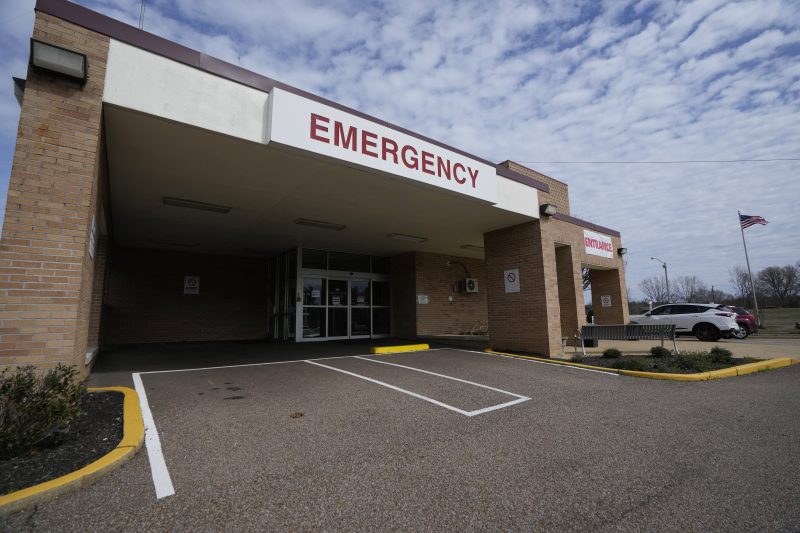
OKLAHOMA CITY (KFOR) — Rural hospitals in Oklahoma could be forced to slash services or shut down entirely if proposed federal Medicaid cuts become law, healthcare leaders say.
The cuts are part of a sweeping federal bill recently passed by the U.S. House of Representatives, raising alarms across the healthcare industry. Leaders say the plan could devastate access to care in rural communities across the state.
The legislation, dubbed “one big beautiful bill” by President Donald Trump, passed Friday by a single vote.
The bill calls for increased spending on immigration enforcement and the military, makes Trump’s 2017 tax cuts permanent, and would temporarily eliminate taxes on tips and overtime wages.
To offset those costs, the bill includes deep cuts to clean energy programs, food assistance and Medicaid—potentially removing millions of Americans from the program.
“People will file for bankruptcy when they have to go to the doctor or the hospital,” disability advocate Lindsay Latham told NBC News. “Ripple effects.”
Healthcare leaders in Oklahoma say those ripple effects would hit rural areas hardest.
Lawmakers pass Reindustrialize Oklahoma Act to help fund aluminum smelting plant
“Every rural hospital in this state operates in the red,” said Rich Rasmussen, president of the Oklahoma Hospital Association. “It is these types of Medicaid programs that keep them open.”
Rasmussen explained how Medicaid funding works in Oklahoma.
A portion comes from a hospital tax, currently set at 4% of each hospital’s total revenue.
The state collects that money and pools it into a single fund. The federal government then matches the total, effectively doubling the amount available to support Medicaid services.
But if the federal bill becomes law and fewer patients remain on Medicaid, Rasmussen said Oklahoma may need to raise its hospital tax rate to increase its federal match.
However, the bill in its current form would lock states into their current hospital tax rates, removing their ability to raise them to adjust for the cuts.
“Unfortunately, now we’re kind of being forced to have to potentially adjust to fewer dollars,” Rasmussen said.
He warned that the consequences could be severe—hospitals laying off staff, ending services, and canceling long-awaited expansions.
“Right now we have hospitals, for the first time in 20 years, contemplating adding obstetrical services to deliver babies,” Rasmussen said. “If what is passed makes it more difficult to be able to financially demonstrate that you can do that, then you will have hospitals that just won’t choose to offer obstetrical services.”
“Hospitals that might want to offer some specialty service or some additional rehabilitation services for the folks in their communities—they may not be able to do that.”
In the worst cases, he said some rural hospitals may have no choice but to close.
“Hospitals tend to be the largest employer in a community,” Rasmussen said. “So if you lose the ability for that community to hold on to them, you lose their tax base, you lose their ability to pay for their homes. So it has an effect of kind of just rippling downstream.”
Rasmussen said there may still be time for a solution.
He hopes the U.S. Senate will consider including a one to two-year grace period for states to adjust their hospital tax rates as needed, allowing them to prepare for the Medicaid changes accordingly.
News 4 will continue to monitor the bill’s progress.