January 9, 2026, 7:00 AM HST
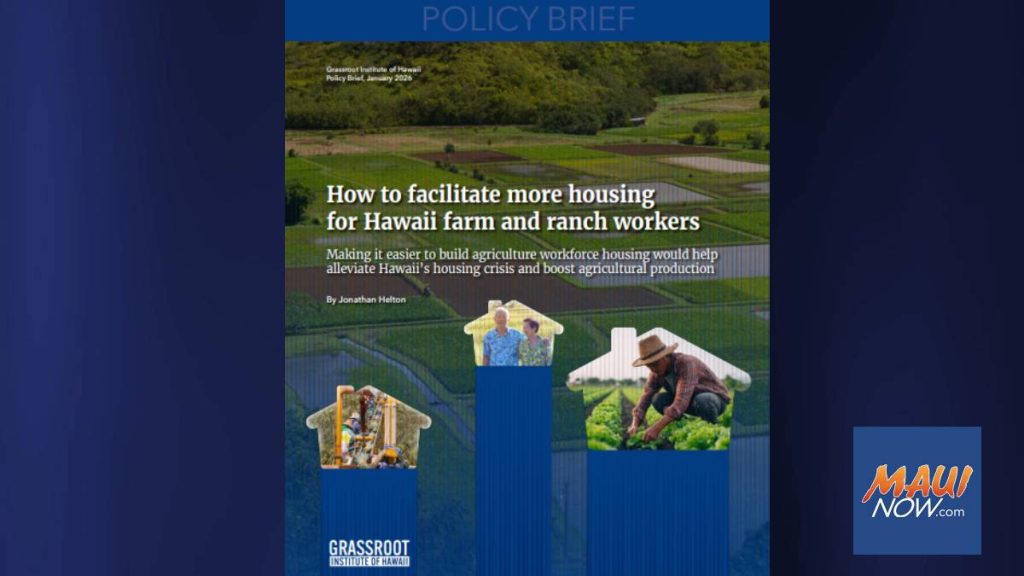
Pictured is the cover page of “How to facilitate more housing for Hawaiʻi farm and ranch workers.” Screenshot courtesy: Grassroot Institute of Hawaiʻi
The Grassroots Institute of Hawaiʻi has released a policy brief that addresses workforce challenges faced by Hawaiʻi’s farmers and ranchers and makes recommendations to allow more housing on agricultural lands throughout the state.
Titled “How to facilitate more housing for Hawaiʻi farm and ranch workers,” the document lays out specific proposals to state and county lawmakers that would help redefine agricultural housing and reform or eliminate regulations that have hindered building in agricultural zones.
Written by Grassroot policy analyst Jonathan Helton, it recommends the following for the state:
- Allow more small homes to be built on agricultural lands.
- Permit cluster housing in agricultural districts.
- Redefine what is considered a “farm dwelling” to include subsistence agriculture.
ARTICLE CONTINUES BELOW AD
For the state’s four counties, the new brief proposes:
- Promote more small farm dwellings.
- Reduce requirements for farmworker housing.
- Remove discretionary approvals for farmworker housing.
“Ensuring that agricultural workers can live near the farms and ranches that employ them would positively affect many people,” Helton wrote. “[This includes] the workers who need housing near where they work, the farmers and ranchers who are experiencing labor shortages and consumers in Hawaiʻi and around the world who like to buy Hawaiʻi-grown agricultural products.”
Helton also said that state and county governments would benefit through increased revenues derived from property and general excise taxes and other taxes and fees from homebuilding and the sale of agricultural products.
ARTICLE CONTINUES BELOW AD
In the preface to the policy brief, Grassroot president and CEO Keli‘i Akina said the broader economic and community benefits from farm housing.
ARTICLE CONTINUES BELOW ADARTICLE CONTINUES BELOW AD
“When farmers and farmworkers live on the land they tend, everyone gains,” Akina wrote. “Workers are safely and affordably housed and have reliable access to their jobs. Farm and ranch owners benefit by being able to better train and retain quality employees. State and county governments see their revenues increase in the form of taxes and fees from homebuilding and agricultural sales. And we all get to enjoy Hawaiʻi-grown food products.”
The full report is available at grassrootinstitute.org.