New frameworks keeps Juneau as command center for regional spill plan
Published 12:00 pm Tuesday, September 15, 2026
By Jeffrey Kennett Juneau Empire Writer
A regional plan that determines who takes charge, where responders deploy, and which shorelines receive priority after a major Southeast Alaska oil spill is undergoing its first major restructure rewrite since 2021.
Public review opened Sept. 9 on a new Southeast Alaska Area Contingency Plan developed by the Alaska Department of Environmental Conservation, U.S. Coast Guard and Environmental Protection Agency. The document serves as the government playbook for coordinating responses to oil discharges and hazardous-substance releases across the region. Comments are being accepted through Oct. 14.
The 2026 draft reorganizes the plan around a national framework developed by the Coast Guard, replacing the command, operations, planning, logistics and finance chapters used in the existing Southeast plan.
When the Coast Guard announced the new format in 2023, it described the change as the first major overhaul of coastal area contingency plan architecture in more than 25 years. The agency said a common structure nationwide should make plans easier to use during large incidents, particularly when personnel and equipment arrive from outside the affected region.
Under the new structure, Southeast Alaska’s plan separates pre-spill risk analysis from response procedures and places resources and response technologies in dedicated sections. It also adds annexes addressing tribal coordination, aircraft and unmanned aircraft, unconventional oil, international coordination, and cold-weather operations.
Several portions remain unfinished. Sections covering economically sensitive areas, nongovernmental technical support, some oil-spill response organizations and several response technologies are marked “Pending development.” Draft annexes on tribal coordination, hazardous substances, salvage and marine firefighting, unconventional oil, and international coordination carry the same designation.
One proposed change gives tribal governments a more explicit role in the response structure. An affected tribe could designate a tribal on-scene coordinator to participate in Unified Command and coordinate the tribe’s response. The existing Southeast plan does not identify the same position by that role or acronym.
Despite the structural overhaul, much of the underlying response strategy remains unchanged. As before, the plan uses a hypothetical 500,000-gallon fuel release near Metlakatla as its worst-case scenario. In the exercise, an Alaska Marine Highway ferry collides with a fully loaded tank barge during high winds, spilling aviation fuel, diesel, kerosene and gasoline and threatening wildlife, fisheries, and subsistence resources.
Juneau would serve as a command center even for that spill hundreds of miles away.
During the Metlakatla scenario, Unified Command would be established in the Juneau Federal Building, with forward operations and staging in Ketchikan. Those provisions also appear in the existing plan.
For incidents closer to the capital, Juneau Police Department headquarters is identified as the city’s primary emergency operations center, with Capital City Fire/Rescue’s Glacier Fire Station serving as the alternate.
More detailed shoreline-protection plans are maintained separately through DEC’s Geographic Response Strategies, which the contingency plan directs responders to use when deciding how to protect environmentally sensitive areas.
Twelve sites fall within the Juneau-area response zone, including the Mendenhall River mouth, Auke Bay West, Berners Bay, Echo Cove, Port Snettisham, Taku Inlet, and the Shelter Islands.
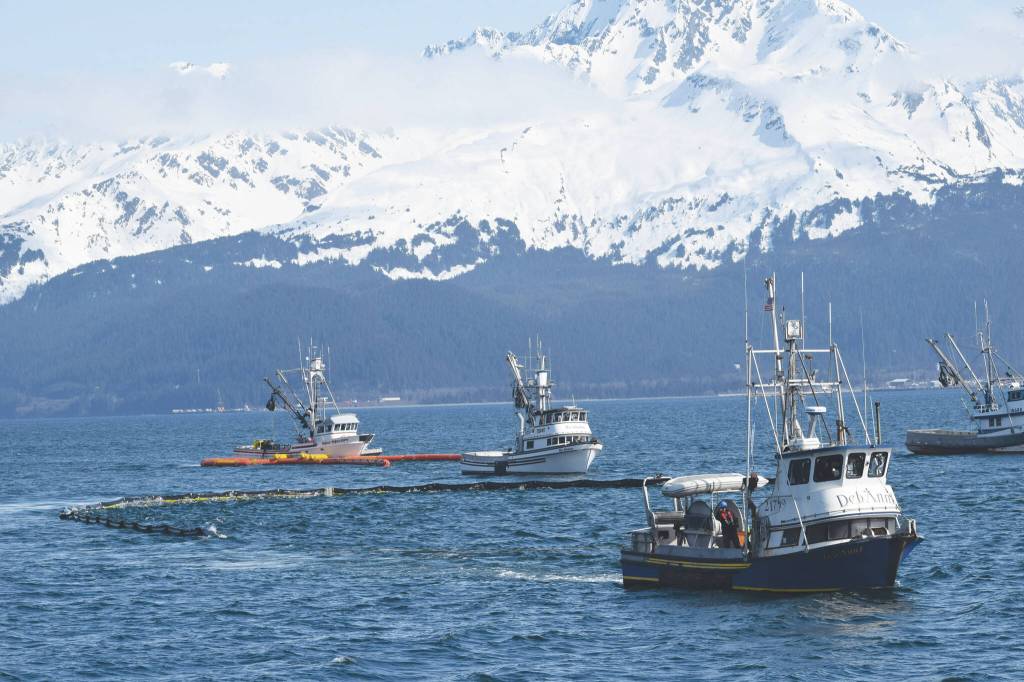
Those site-specific strategies identify locations where boom and other equipment could be deployed during the first hours after a waterborne spill. DEC says sites are selected based on environmental sensitivity, the likelihood they could all be affected by a spill, and whether available technology could effectively protect them.
The contingency plan says the region contains more than 18,377 miles of remote tidal coastline and supports fishing, tourism, and communities that rely on subsistence resources. It cautions that preselected response strategies cannot cover every sensitive location that could be threatened.
First adopted in 2021, the current Southeast plan received an administrative update in March 2025 involving the captain of the port. By comparison, the 2026 proposal reorganizes the document under the Coast Guard’s newer national framework.
Written comments on the draft can be submitted to DEC through Oct. 14. A Southeast Alaska Area Committee meeting is scheduled for Oct. 21at Coast Guard Sector Southeast Alaska in Juneau, with virtual participation also available.