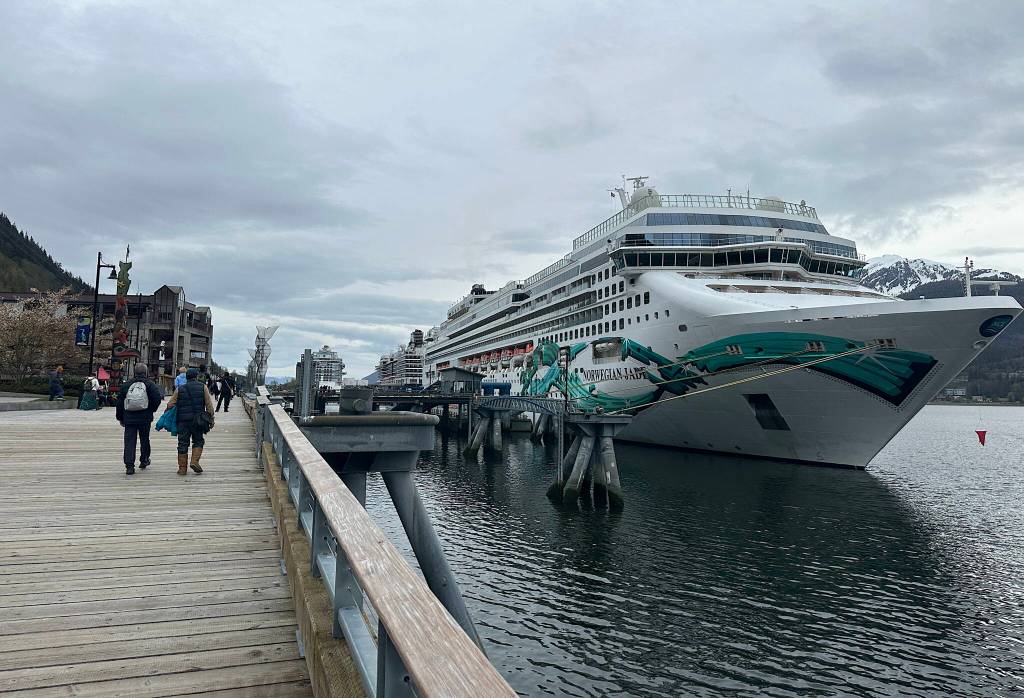
Southeast Alaska is standing at a dangerous crossroads: short-term tourism expansion on one side, and long-term ecological and cultural survival on the other.
Every year, the pressure grows.
More cruise ships push through the Inside Passage. More shoreline development spreads along coastal corridors. More helicopter traffic echoes through mountain valleys. More buses flood narrow roads. More wastewater, emissions, noise, and industrial activity enter ecosystems that once felt impossibly alive and largely untouched.
Places like Glacier Bay, North Douglas, Gustavus, Hoonah, and the waters surrounding Juneau are marketed to the world as pristine wilderness. Yet many residents increasingly feel they are witnessing the slow industrialization of the very silence, wildlife, and ecological balance people travel here hoping to experience.
The deepest irony is that the wilderness itself is being reshaped by the scale of the industry built around selling it.
This issue is larger than one dock, one project, or one season. It is about cumulative pressure.
Juneau is a small coastal community of roughly 32,000 residents, yet it has received more than 1.5 million cruise passengers annually in recent years.
On a still summer morning in Southeast Alaska, the scale of the pressure is impossible to ignore. It is not confined to one dock or one street downtown. The pressure spreads outward through the entire community and surrounding landscape.
In downtown Juneau, cruise ships rise above the waterfront like floating buildings, their generators feeding thousands of rooms, kitchens, laundry systems, lights, elevators, and entertainment decks while the mountains hold the engine hum against the channel.
In the Mendenhall Valley, traffic thickens toward the glacier as buses, rental vehicles, and tour vans move steadily through roads and intersections never originally built for industrial-scale tourism volume.
In Auke Bay, tour vessels, whale-watch boats, floatplanes, and marine traffic layer over one another through waters that once felt quieter and less crowded.
Along trails and shorelines, residents increasingly feel the difference between visitation and saturation.
And that scale changes more than traffic patterns. It changes sound. It changes pace. It changes the psychological feeling of place.
Residents feel it before reading a scientific report or seeing an environmental study. They feel it in the constant movement of buses, the helicopters disappearing into low cloud ceilings, the prolonged engine noise in the channel, the congestion at trailheads, and the strange feeling that even remote wilderness is increasingly being scheduled, packaged, timed, and processed through the machinery of industrial tourism.
Every new cruise-related project — whether a dock, road, staging area, parking lot, shoreline modification, or visitor facility — extends impacts far beyond its physical footprint. These developments alter water flow, wildlife movement, traffic patterns, soundscapes, shoreline conditions, and the overall character of a place.
Forest clearing removes habitat complexity relied upon by birds, small mammals, insects, fungi, amphibians, pollinators, and countless organisms most people never notice. Even relatively small clearings can fragment habitat, interrupt wildlife movement, alter drainage patterns, expose soil, increase runoff, and weaken the continuity of temperate rainforest ecosystems that developed over centuries.
A forest here is not empty space waiting to become profitable.
It is rain-soaked soil held together by roots older than some towns. It is salmon nutrients feeding the trees. It is fungal networks, moss beds, eagle nests, mouse trails beneath devil’s club, spider webs carrying morning rain, and bears moving quietly through timber that once knew silence.
Expanded cruise infrastructure generally increases vessel activity, underwater noise, wake disturbance, fuel consumption, emissions, wastewater pressure, and shoreline hardening. Cruise ships also generate large volumes of blackwater, graywater, bilge water, food waste, and air emissions.
Even while docked, many cruise ships continue running massive onboard diesel generators to power lighting, kitchens, air systems, laundry facilities, entertainment systems, and hotel operations. Residents standing near the waterfront can often hear the constant low-frequency engine hum echoing through the channel long after ships have stopped moving.
That idling pollution matters. It contributes to air emissions, particulate pollution, greenhouse gas output, and chronic noise exposure directly within the heart of the community.
If Southeast Alaska is serious about balancing tourism with environmental stewardship, then solutions must become part of the conversation rather than endless expansion alone.
Those solutions could include: expanding mandatory shore-power hookups so ships can shut down diesel generators while docked; stricter wastewater and discharge oversight; stronger carrying-capacity limits; reduced daily ship volume; quieter marine technologies; improved emissions standards; protection of intact forest corridors; and greater investment in sustainable tourism infrastructure instead of perpetual growth.
The concern many residents express is not opposition to tourism itself. Tourism has long been part of Southeast Alaska’s economy, and many local families rely on seasonal employment connected to it.
The concern is whether the current model prioritizes perpetual growth without honestly accounting for ecological carrying capacity, long-term environmental stability, and community well-being.
This issue ultimately forces Southeast Alaska to confront a larger question:
At what point does a place stop being shaped around the health of its ecosystems and communities, and begin being shaped primarily around maximizing visitor throughput?
Because once forests are fragmented, shorelines industrialized, wildlife displaced, and silence replaced by engines, propellers, helicopters, traffic, and crowds, those losses are not easily reversed.
Some places do not disappear all at once.
They are diminished piece by piece. Tree by tree. Dock by dock. Ship by ship.
Until one day, the place being sold as wild no longer feels wild to the people who actually live there.
Josh Himmel is a Juneau resident.