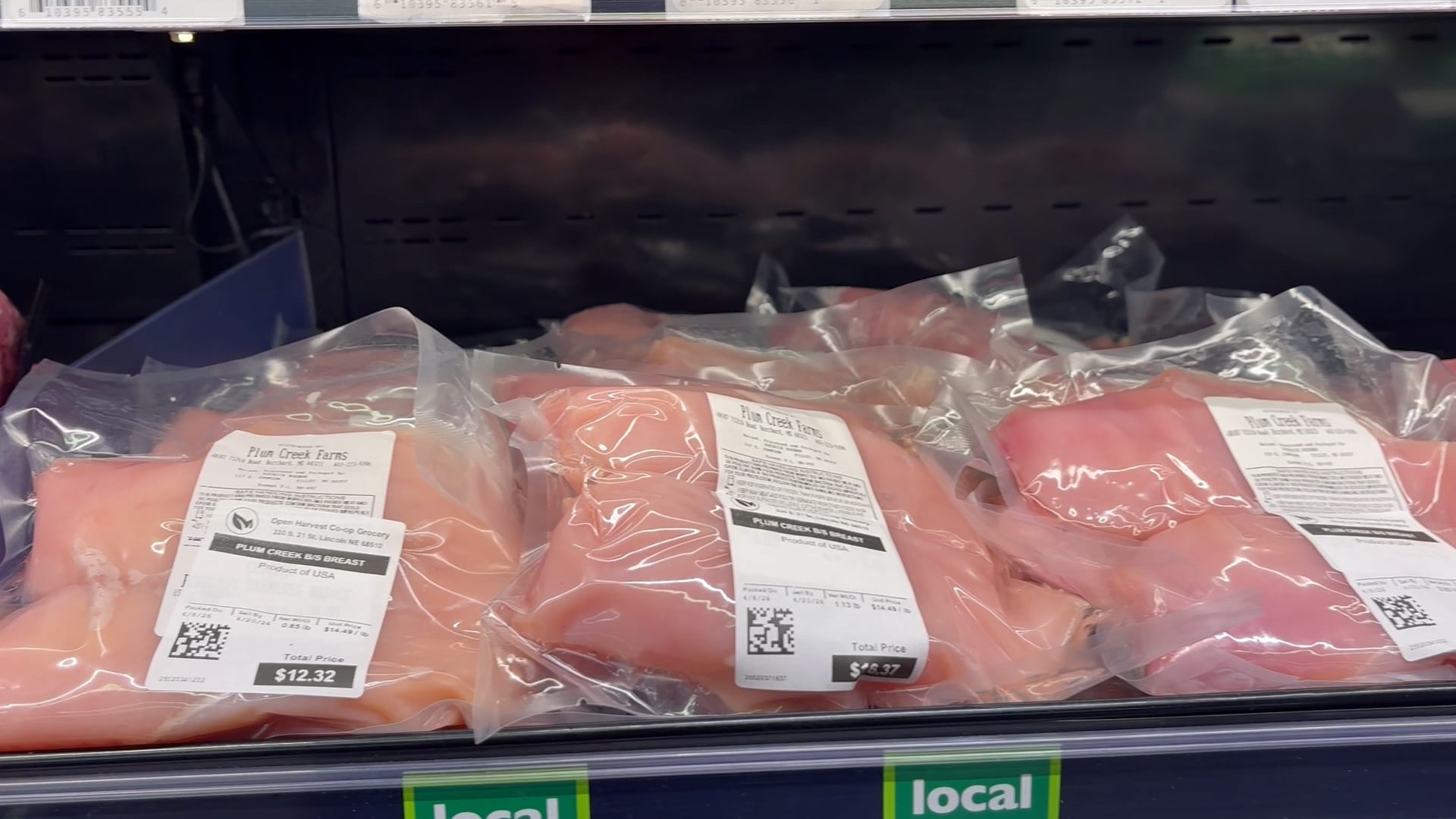
LINCOLN, Neb. (KLKN) – Meat prices may be on the rise, but the sale of meat is also growing with it, as per a new study called “The Power of Meat.”
One Lincoln grocer says this upward trend in meat has been growing because eating meat has become trendier; it has become the centerpiece of many Gen-Z dishes and is being recommended by doctors pushing protein.
“One of the biggest things we see is how people’s health journeys are calling them to have a more protein-forward diet,” said Elizabeth Evans, food service manager at Open Harvest Co-op in Lincoln.
“And while there are other forms of protein like beans and dairy products and ancient grains, people are really just geared towards that meat selection in those meals.”
Dietary guidelines posted by the USDA show protein being just as important in one’s diet as fruits and vegetables.
They recommend consuming 1.2 to 1.6 grams of protein per pound of body weight per day.
“I think it’s just natural we see price increases as the years go on,” said Evans.
The U.S. Department of Labor reports a nearly 3% inflation increase in food prices in the last year, but there’s been little to no impact on meat sales.
Rick Stein is a VP at the FMI- Food Industry Association, the group that first put out the meat report, and says, “The meat department is outperforming because it delivers what shoppers want right now: protein, flexibility, value, and taste.”
Stein goes on to say, “Retailers that balance convenient ground options with premium, indulgent cuts will be best positioned to capture both budget-conscious and experience-driven shoppers.”
Evans says Open Harvest stays in consistent communication with local farmers and ranchers to negotiate prices as costs rise.
“One thing that we try to focus on here at our local store is really working closer with our farmers to negotiate sale pricing and be able to pass savings on to our customers,” she said.
In addition to meat sales, studies based on monitoring social media and AI platforms show increased searches for meat-based recipes among Gen Z and Millennial shoppers.