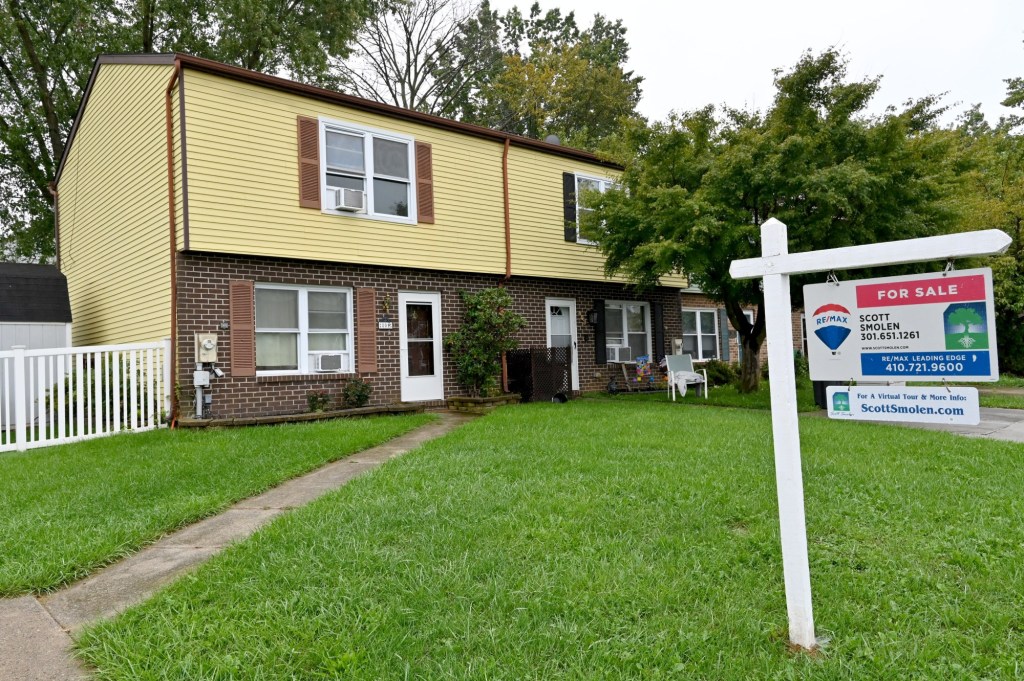
Carroll County officials are worried that several housing-related bills being considered by the Maryland state legislature — including two that are part of an effort by Gov. Wes Moore to address the state’s affordable housing shortage — could limit local control over housing growth.
For the past two years, Moore has proposed a package of bills aimed at encouraging developers to build more affordable housing units. Proponents say these bills would slash the costs of building new homes in Maryland. While a housing shortage is hard to track, an October 2025 report by the Office of the Comptroller estimates that the state is short by about 100,000 housing units.
The bills have faced opposition from the Maryland Association of Counties, which represents county governments across the state, because they would preempt some zoning laws that have been set by local governments. But since MACO’s representatives said in January that they’re willing to negotiate with the governor, these bills have come under the spotlight in Carroll County.
“These have the potential to significantly increase the number of planned housing units through preempting our local zoning code,” said Brenda Dinne, special projects coordinator for the department of planning, at a Tuesday meeting of the county’s Planning and Zoning Commission. “Anything that’s preempting local zoning authority, we’re obviously going to have concerns with.”
Carroll County’s staff typically tracks state bills that would have an impact on local law. Dinne said Tuesday that this year, the county is tracking 16 bills — “more than normal that would impact planning and zoning.”
Among the 16 are two of Moore’s three affordable housing bills, along with another bill backed by MACO that is something of a middle ground between Moore’s proposed reforms and many county governments’ current preferences. All of these bills are still being considered by committees in the state legislature, and it’s not certain whether they will pass this year.
The Starter and Silver Homes Act, one of Moore’s package, is aimed at spurring more apartments and town houses that are smaller in size, intended for young adults and older people. It would prevent counties from banning town houses in a residential zoning district that allows single-family homes, and from establishing a minimum residential lot size that’s smaller than 5,000 square feet.
While the act would make it easier to build affordable housing options like town houses, it would also take some authority away from county governments. In Carroll, the smallest residential lot size allowed is 7,500 square feet — a minimum that would change if the Starter and Silver Homes Act were passed.
The Maryland Housing Certainty Act, another of Moore’s bills, would mandate that counties can’t subject developers to any new zoning laws enacted after a developer’s project begins the process of getting a local permit. This would provide more certainty for developers, ensuring that their project won’t be unexpectedly blocked once they’ve already put it into motion.
If it’s passed, the Housing Certainty Act could make it more complicated for Carroll County to pass future deferral ordinances. In December, the county passed four such ordinances, which temporarily paused permitting for four different types of development in the Eldersburg area.
However, Dinne said the county’s main concern with that act is that it imposes tight turnaround times for counties to review plans for housing developments, requiring them to issue a decision within 15 days on whether a developer’s plan is complete.
In response to Moore’s proposed legislation, MACO also introduced its own legislation, dubbed the Building Affordably in My Backyard (BAMBY) Act. The bill offered offers several housing reforms, similar to Moore’s, that have fewer mandates for county governments.
In a Jan. 20 news release that announced the BAMBY bill had been dropped, MACO officials wrote that “county leaders have been actively negotiating with legislators, administration officials, and stakeholders — and a workable compromise appears not only likely, but potentially close at hand.”
“Maybe we don’t want anything, but we could live with this a little easier, as the counties, than the governor’s housing package,” Dinne said.
The debate over how to handle affordable housing has also caught the attention of Carroll County’s commissioners, who have said they think it’s the state government’s mandates on housing that are driving up construction costs.
At the commissioners’ Feb. 5 meeting, the board voted to direct staff to write up two letters expressing their thoughts on the affordable housing bills. County Administrator Roberta Windham said Carroll is “in support of affordable housing,” but believes that “[the governor’s] goals are difficult, at a minimum, with those kinds of constraints.”
And at their Thursday morning meeting, Commissioner Susan Krebs also criticized the state, saying its affordable housing policies can be overly “prescriptive” for local governments.
“We all want to have enough housing for our population to grow,” Krebs said. “But some of the things are not in our bailiwick, like the cost of, they want us to do all this high-density housing. It’s no less expensive to buy.”
Have a news tip? Contact Lily Carey at LCarey@baltsun.com.