Presented by First National Bank Alaska
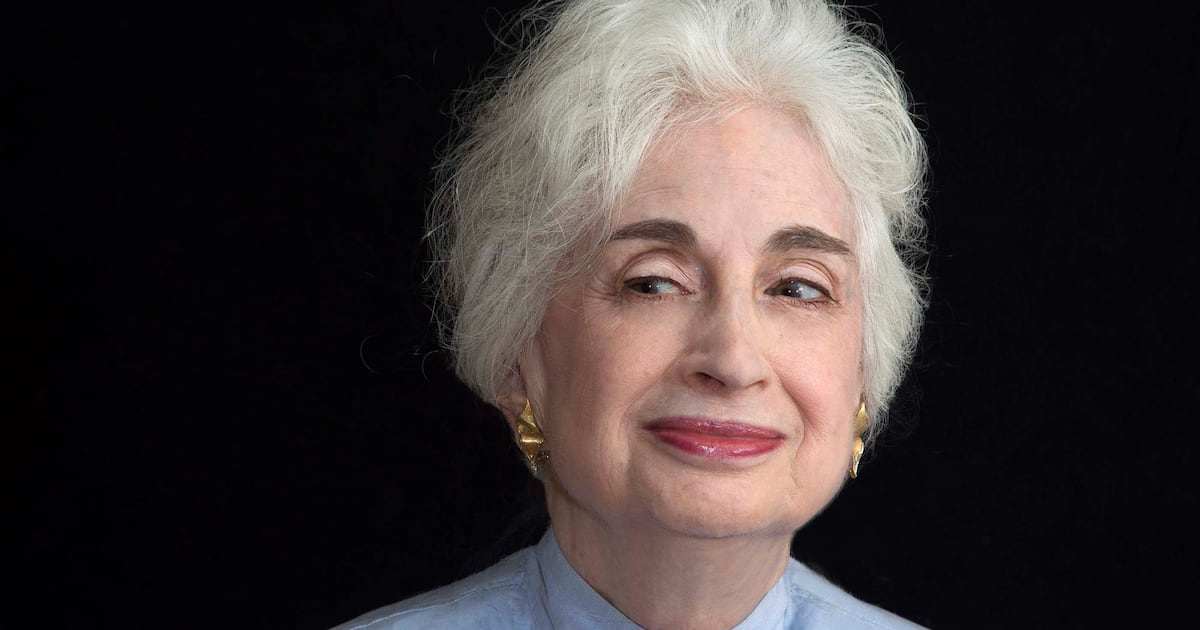
When Leslie Patton was growing up, her father’s work was “beyond (her) understanding.” Today, Patton is instrumental in continuing his legacy — and helping lead the family business into its most successful years yet.
In 1982, Patton was drawn back to Alaska to work at her father’s company, Arctic Foundations, Inc. (AFI). Thanks to technology created by Patton’s father, Erv Long, AFI is one of the few companies in the world specializing in building on permafrost, a layer of soil that underlies much of Alaska’s tundra and often contains excess ice, creating an unsteady building surface as it freezes and thaws.
“Dad was an innovator and struck out in a whole new direction that, at the time, was unheard of,” Patton said. “To this day, even though the business has grown and many folks don’t know our roots, we remember, and honor, the original innovation that started it.”
Ed Yarmak’s path to AFI hit similarly close to home. A third-generation Alaskan, Yarmak and his family were living nearby the Long family when Erv asked him to join AFI. Yarmak, who had then earned civil and geotechnical engineering degrees, was intrigued by Long’s offer.
Arctic Foundations, Inc. manufactures and installs technology developed to stabilize and build on permafrost. Image courtesy of First National Bank Alaska.
“Honestly, I had no idea what I was getting into,” said Yarmak, now president at AFI. “I respected Erv and figured that I could learn something from him. It’s fun to build things, and it’s never gotten boring.”
Today, more than four decades after joining the company, Yarmak and Patton have weathered challenges, grown a family business into an operation with international contracts, and helped developers build on some of the world’s most challenging terrain.
Steady Service Through the Ebbs and Flows
Since Yarmak’s 1981 hiring, AFI has expanded from four employees to 21. Growth opportunities have come as more infrastructure is developed on permafrost.
AFI helps developers build on permafrost by manufacturing and installing thermosyphons, devices that remove heat from the ground to stabilize permafrost. While Erv Long passed away in 2012, the company continues to use and build on the ground-stabilizing technology he pioneered.
“I believe that if Erv was here today, he’d be quite happy with the work we’re doing,” Yarmak said. “We’ve streamlined the manufacturing processes for each of our products, and we’re able to produce quality materials in what he might think is record time. We’ve modified designs to make them simpler, more cost-effective and more enduring for our clients.”
While the company works heavily with the petroleum industry on Alaska’s North Slope, Yarmak said AFI has worked in many communities “from Quinhagak to Kaktovik.” AFI also does international work, including a recent project in St. Moritz, Switzerland.
“Our products are known to the cold regions engineering community as dependable technology that they can count on,” Yarmak said. “We have a lot of Alaska projects, but we’ve got products in other countries and even Antarctica. There are always new challenges to keep our team from getting bored.”
While AFI’s worldwide contracts keep the work interesting, so do client needs. The company often works directly with project design teams to manufacture custom foundation solutions for each client, making each new project a fresh, exciting venture.
Smart financial management has allowed Arctic Foundations, Inc. to thrive and be a part of remarkable projects over the years, including helping stabilize a bridge in Denali National Park and a hospital in Kotzebue. Image courtesy of AFI.
“Our products fit the project — you don’t have to mold the project to fit the products,” Yarmak said. “We never know what that next phone call or email will bring.”
Because AFI helps create foundation components at the very start of project construction, the team isn’t present when a project is completed. Still, when AFI team members revisit old projects or see how their work helps Alaska communities, the work can be immensely rewarding.
“When the fall typhoons hit western Alaska, many of the buildings used to shelter victims of the storms were founded on foundations that AFI supplied the components for,” Yarmak said. “It’s made us all proud of our work that these facilities can be used to help the people in these situations.”
Manufacturing thermosyphons in Alaska does present some regular challenges for AFI. The company ships in raw materials, including steel, which can be subject to unpredictable pricing.
“When prices are volatile, it’s hard to quote the ‘best price’ to a client when the supplier will only hold their price until the end of the day,” Yarmak said. “We’ve seen materials prices rise 20% in a couple of days. And yes, we still built the product for the client for the originally quoted price.”
Founded in the early 1970s, AFI prioritizes establishing and maintaining excellent client and vendor relationships. The company typically pays vendor bills before they’re due and often ends up carrying that cost before the client pays.
AFI’s relationship with First National Bank Alaska, the company’s longtime financial institution, is critical in moments like these. Along with a full suite of other services, AFI uses lines of credit from First National, allowing the company to put vendors, customers and employees first.
The pandemic years were tight for AFI. Yarmak proudly remembers that even when the company sent team members home, AFI continued to pay them and avoided any layoffs.
“Because the company owns our facility, we were financially able to hold on through that difficult time without debt,” he said. “And, when work picked up, we were able to use our line of credit with First National to fund material purchases to keep our suppliers and customers happy.”
While Arctic Foundations, Inc. works heavily with the petroleum industry on Alaska’s North Slope, AFI also has worked in communities “from Quinhagak to Kaktovik.” Image courtesy of First National Bank Alaska.
There have been lean years of operation, Patton remembers. She, Yarmak and the rest of the AFI team have maintained her father’s careful approach to finances, a tactic that also helped AFI weather the pandemic.
“Historically, the economy has always waxed and waned,” Patton said. “There were years way back when it seemed we were hanging on by a thread, but we’ve always maintained a relatively conservative line with our finances and managed to pull through.”
Part of AFI’s financial success comes from Yarmak and Patton’s desire to ask questions about their banking options, said Cecil Cocom, senior business development officer and treasury management consultant at First National.
“I can’t speak enough about how awesome it is to work with folks that want to sit down, learn and understand,” Cocom said. “Not only are they eager, but they ask pointed questions about what the bank does and how it’s really going to help them.”
Smart financial management has allowed AFI to thrive and be a part of remarkable projects over the years. Yarmak recalls a 1980s project to stabilize a North Slope compressor plant that’s still safely operating, and a recent project to help stabilize a bridge in Denali National Park.
One of his more rewarding projects arrived in 2012, when AFI built a piling system for the Yukon-Kuskokwim Aquatic Recreation Center in Bethel.
“This project was initially started by mothers wanting their children to learn to swim because too many were being taken by the river,” Yarmak said. “Funding started with local bake sales. While there was nothing outlandish about the engineering or design, we remember who we were working for and are proud to see the facility in use.”
Local Business, Local Banking
While First National’s business banking relationship with AFI began in 2001 under Erv Long’s leadership, Yarmak knew and appreciated the Alaska institution long before then.
“My parents bought a house in Seward in the mid-50s and used First National for the mortgage,” Yarmak said. “My first personal checking account was with First National. First National had the mortgage on my house and helped us to finance a small addition and an energy upgrade. The bank is an Alaskan institution, and a damn good one.”
First National Bank Alaska’s fraud prevention tools have been especially critical for Arctic Foundations, which has weathered several fraud attempts over the last few years. Image courtesy of First National Bank Alaska.
Today, AFI, like any of First National’s business customers, counts on the institution for one-stop banking solutions. Along with a line of credit, AFI also uses First National’s deposit and transfer services, business interest sweep services, fraud protection services, and savings account services.
“We’ve provided those tools to help them be successful and very streamlined and efficient,” said Kippy Lane, assistant vice president and South Center branch manager at First National.
The bank’s fraud prevention tools have been especially critical for AFI, which, like many businesses, has weathered several fraud attempts over the last few years.
“Fraud continues to be an epidemic across the country, and we see nonstop daily fraud attempts from scammers,” Cocom said. “Giving AFI the tools to protect themselves from unforeseen fraud attempts definitely gives them peace of mind.”
When AFI’s business goes international, so do the local bank’s services. The company’s unique technology means AFI’s work is sometimes in demand in Europe, including projects at a U.S. military base in Greenland and a mine in the Kyrgyz Republic.
Lane and the First National team have supported AFI’s cross-continental business with international bank transfers and wire assistance, in addition to the local relationship, reliable communication, and solutions First National provides.
“Being with a local bank is important to us — we like to be able to pick up the phone and talk to someone locally,” Patton said. “We like that we can see and visit with our bankers in either their office or ours. We’re not ‘just another account.’ I call with a problem or question, the person I’m talking to knows AFI and me. They have come to the office to help when I’ve needed assistance.”
AFI has expanded exponentially since Patton and Yarmak joined the company in the early 80s, but the organization’s growth is far from over. AFI saw a record income year in 2025, and expects more noteworthy numbers in 2026 and 2027.
“We are starting to evaluate options to expand our operations in order to continue to provide our clients with the level of service they have grown to expect,” Yarmak said. “There are many options out there, and we see First National supporting us through whichever makes the most sense for us.”
First National Bank Alaska has been Alaska’s community bank since 1922. We’re proud to help Alaskans shape a brighter tomorrow by investing in your success as you take the leaps of faith, large and small, that enrich communities across the state.
NMLS #640297
This article was produced by the sponsored content department of Anchorage Daily News in collaboration with First National Bank Alaska. The ADN newsroom was not involved in its production.