MARMET, W.Va. (WOWK) — Coal barges are not an uncommon sight for West Virginians who live along riverways, but for those who live along the Kanawha River, those barges that travel the waterway will be seeing a delay.
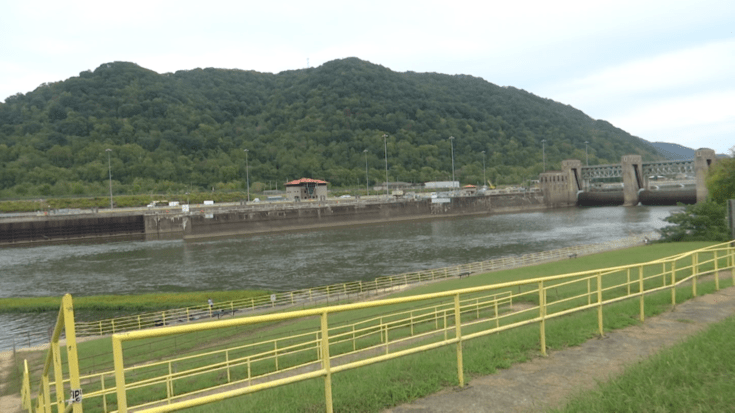
On Tuesday, a fleet of boats with the Army Corps of Engineers made its way down the Kanawha River toward Marmet to begin maintenance on the main lock chamber there, an effort that will last 31 days.
“We wouldn’t want an extended, continual outage for a major maintenance problem or for equipment failure,” said Jason Bostic, the Vice President of the West Virginia Coal Association. “So, the routine maintenance is extremely important.”
In West Virginia, coal is the largest commodity that moves on the river system.
According to the West Virginia Coal Association, thousands of tons of Coal travel through that lock. However, despite the month-long closure of the lock, they’re not worried about the delay as they have another method to get the coal where it needs to go.
“It’s called splitting a tow,” Bostic said. “So, you have coal shipping on the river. It’s called a tow, and it’ll will to contain several barges, as many as 16. So rather than locking all 16 through the bar or to the locks at one time, we may have to split that or actually break it into three pieces.”
Currently, the U.S. Army Corps of Engineers Medium Capacity Fleet is at Marmet Locks and Dam performing maintenance to the miter gate of the main lock chamber. These repairs are critical to maintaining the operation of the lock chamber.
During this time, the auxiliary lock chamber will still be available for the passage of watercraft through Marmet. Because the auxiliary chamber is smaller than the new main chamber, it does take additional time for large barges to move through the lock.
Assistance will be on hand to aid in the breakdown of tows for easier movement down river so that the coal can get where it needs to be as power plants get ready for winter.
“When winter comes and sets in, we need to make sure the stockpiles at the power plants are adequate enough that those power plants can run at full load to make sure that you have the heating, electricity that you need to get through the winter months,” said Bostic.
This is the first time since the main chambers’ construction in 2008 that the chamber will have all water removed as maintenance takes place.