Recent weather woes in Hawaiʻi exposed a lack of just-in-case thinking.
Uncle Jacinth, who was not actually my uncle but a family friend, used to keep an extra fork in his shirt pocket when attending barbecues and potluck parties. He said it was just in case there was cake. Often, perhaps because of Uncle Jacinth and his hopeful readiness, there would be cake.
I heard someone use the term “the just-in-case generation” to describe our parents’ and grandparents’ propensity to be ready for anything and everything, good or bad, and the concept brought so many examples to mind.
The just-in-case generation knew that if there were 20 kids coming to a beach picnic, better prepare 25 bentos just in case some of their siblings tag along, too.
Civil Beat is focusing on transparency, accountability and ethics in government and other institutions. Help us by sending ideas and anecdotes to sunshine@civilbeat.org.
If 10 plumeria lei are needed for a party, better make a few extra just in case someone miscounted or for some reason you need more. It would be terrible to not have enough lei.
Cars of that era were rolling just-in-case supply wagons with extra clothes for their kids, first aid kits tucked under the seat, fire extinguishers in the trunk, blankets and towels, Goza mats, old Clorox bottles filled with water (to top off the radiator, clean off sandy slippers or wash sticky hands.) And of course, everybody carried jumper cables in case their battery died or, more often, to be helpful to someone else.
The just-in-case generation didn’t always buy extra things to be fully prepared. They were clever.
Stuff got saved to be reused in practical ways. A 50-gallon drum, a plastic bucket that held senbei cookies, a Folger’s coffee can — those vessels could find use on a rainy day to catch drips from a leaky ceiling, gather rainwater for irrigation or bail out a flooded wash room.
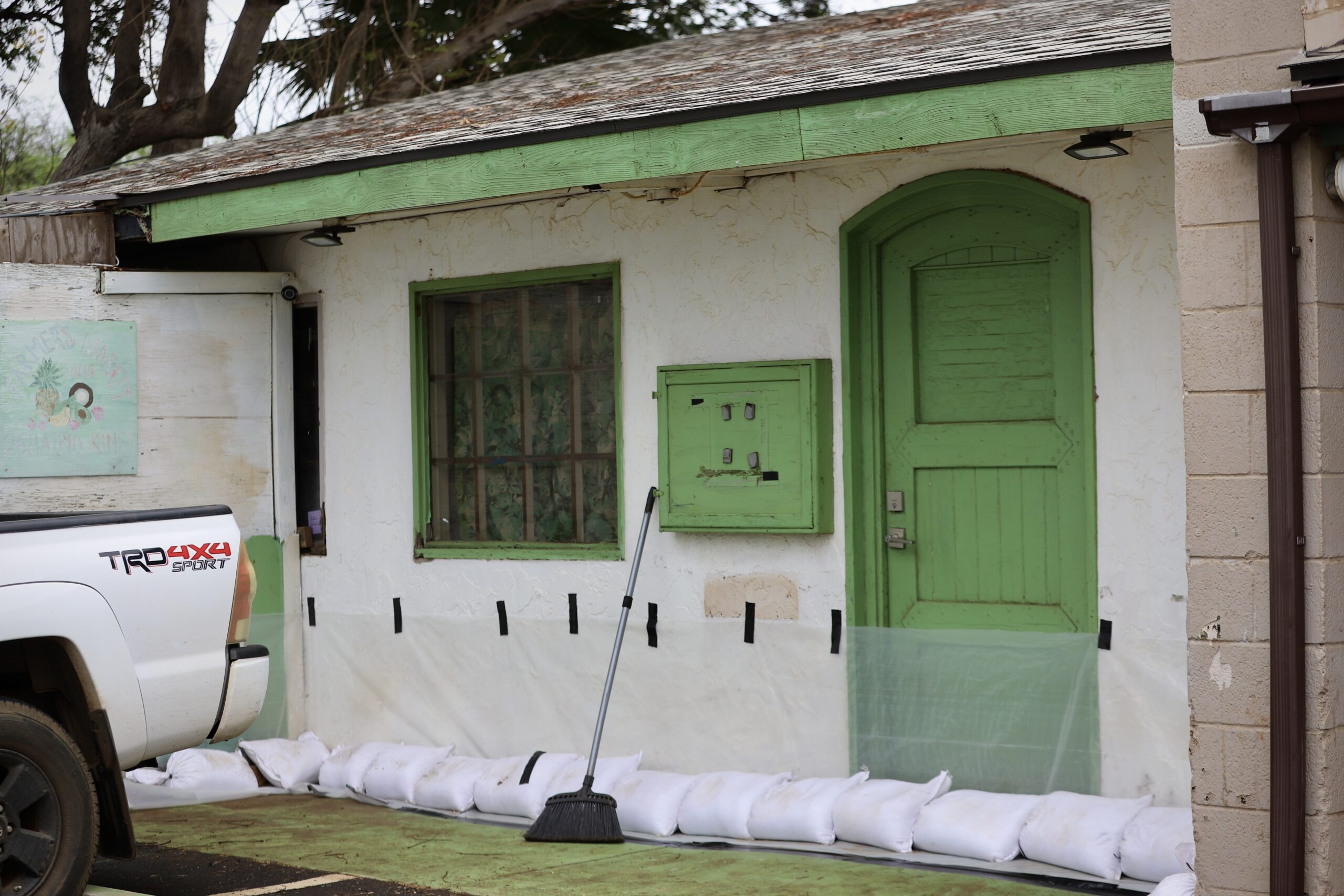
The recent weather woes in Hawaiʻi exposed many things, one big one being that there wasn’t widespread just-in-case thinking. There was some, for sure. Preppers gonna prep, and lots of people who had the means to help their neighbors showed up as true heroes in the flood waters and morning-after mud. They had thought ahead. But not everyone was in that habit, particularly those in government agencies.
Things were different this time around though, huh? Everybody got on TV before there were even clouds in the sky and bragged about how ready they were going to be. Some of the storm prep this week had that unctuous sheen of make-good publicity for city and state leaders who should have been doing all that worst-case scenario thinking during the first rounds of rainstorms.
Officials helped us prepare for the storms, but the “the just-in-case generation” back in the day showed us how to prepare for just about anything. Pictured are Gov. Josh Green, state transportation director Ed Sniffen and Maj. Gen. Stephen Logan at a press conference about one of the storms. (Matthew Leonard/Civil Beat/2026)
I mean, it was great to hear there would be a team of spotters with eyes on Wahiawā Dam and all the waterways coming from that area as this most recent storm approached Oʻahu, but there should have been someone with eyes on Wahiawā Dam during the last rainstorm and the one before that.
Part of that just-in-case mindset was the all-important practice of checking. Places that hold water need to be checked, not just when it’s raining really hard.
And they need to be checked in person, with human eyes, boots on the ground, hands on a rain gauge, not just on a phone or computer screen. Uncle Jacinth used to jump in his Jeep and head up mauka to check the auwai every time it rained for more than five minutes at a time.
Back in the day, there were people who watched every reservoir and major waterway as a matter of course. Some areas had houses built near the body of water for the person whose job it was to keep an eye on the water level all day, every day, rain or shine.
The passing of the dam’s ownership from Dole to the state shouldn’t elevate anyone’s confidence in the safety of that situation. When it isn’t raining, government predictably turns its attention to other things, like approving developments in flood-prone areas, meddling with UH sports or debating the potential of the Hawaiʻi film industry.
What we saw in this season of rainstorms was just-in-time thinking. It is a miracle that no one died on Oʻahu, and that is largely due to the heroics of civilians who went house to house helping their neighbors.
When Honolulu Mayor Rick Blangiardi restarts his community meetings, he will no doubt hear much more about the lack of foresight exposed by what transpired during the March floods, and that’s totally fair. But one important thing the just-in-case generation took into consideration was preparing for the worst just in case nobody from the state or the county was there to help. It’s not a happy thought, but it might be the safest assumption.
Sign up for our FREE morning newsletter and face each day more informed.
Sign Up
Sorry. That’s an invalid e-mail.
Thanks! We’ll send you a confirmation e-mail shortly.