Let us read it for you. Listen now.
Your browser does not support the audio element.
A lawsuit filed Wednesday is attempting to overturn Arkansas’ near-total ban on abortion, asserting the law is unconstitutionally vague and denies pregnant women access to “fundamental healthcare.”
The lawsuit argues state law, which bans abortion except in a medical emergency to save the life of the mother, has subjected the four female plaintiffs to unnecessary medical and emotional trauma, as they sought to terminate their pregnancies either because of a fatal fetal anomaly or sexual assault, but were prevented from doing so in Arkansas.
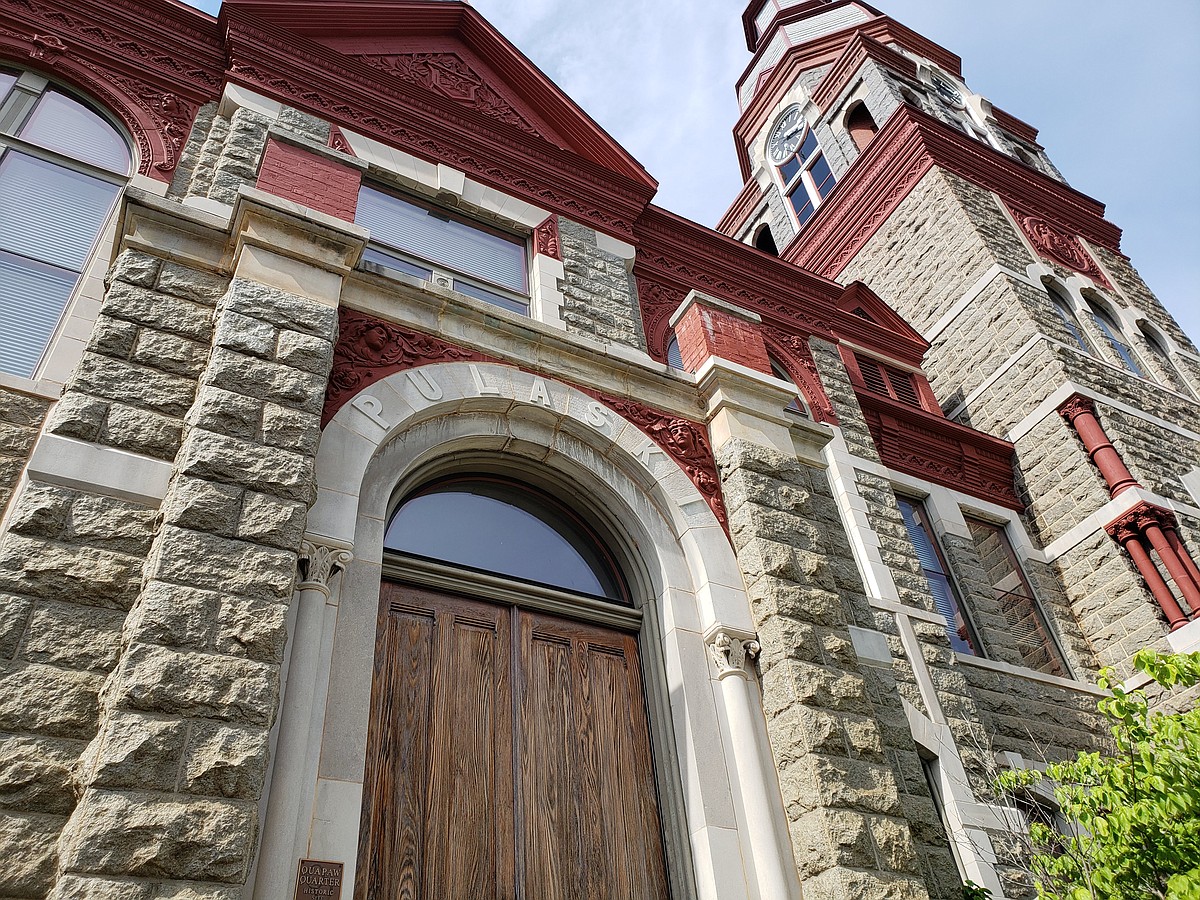
Amplify Legal, the litigation wing of Abortion in America, a group that advocates for legal access to abortion, announced news of the lawsuit Wednesday, saying it filed the complaint in Pulaski County Circuit Court.
In addition to suing the state, the lawsuit names Gov. Sarah Huckabee Sanders, Attorney General Tim Griffin and various county prosecutors and state medical officials as defendants.
“Arkansas’s Constitution contains strong protections for life, liberty, equality, and the pursuit of happiness, and prohibits criminal laws that are so vague that patients and doctors are left guessing about what care is legal,” Molly Duane, litigation director for Amplify Legal, said in a statement. “This case is about enforcing those fundamental protections for all Arkansans.”
The lawsuit takes aim at the state abortion law, Act 180, which was passed in 2019 but didn’t take effect until after the U.S. Supreme Court’s June 2022 landmark ruling in Dobbs v. Jackson Women’s Health Organization, allowing states to ban abortion.
Leslie Rutledge, then the attorney general, implemented the law the same day as the Dobbs ruling.
Act 180, also known as the Arkansas Human Life Protection Act, specifically prohibits abortion “except to save the life of a pregnant woman in a medical emergency.”
Those who perform or attempt to perform an abortion face an unclassified felony charge, up to 10 years in prison and a fine of up to $100,000.
The lawsuit also seeks to challenge another state law, Act 309 of 2021, which uses the same language as the 2019 banning abortions except to save the life of the mother during a medical emergency.
In a statement, Griffin said, “We are still reviewing this lawsuit, but on its face it appears to have little legal merit.”
Sam Dubke, a spokesman for the governor’s office, said in a statement, “Arkansas was named the most pro-life state in the country for the sixth year in a row not just because the Sanders Administration offers complete protection for the unborn but also because Governor Sanders has made needed investments in foster care and adoption, maternal health, and childhood wellbeing.”
The lawsuit argues the state’s abortion laws violate the constitutional rights of life, liberty, happiness and equality for women in the state, while also asserting they are “unconstitutionally vague.”
While Arkansas’ abortion law does allow for a medical emergency exception, “The trouble is, in practice, no one knows what that means,” the lawsuit argues.
The state’s abortion law defines medical emergency as “a condition in which an abortion is necessary to preserve the life of a pregnant woman whose life is endangered by a physical disorder, physical illness, or physical injury, including a life-endangering physical condition caused by or arising from the pregnancy itself.”
Jason Rapert, the former state senator who was the lead sponsor of the state’s abortion law, said in a statement, “This lawsuit is not about confusion in the law; it is about an ideological effort to resurrect abortion through the courts after the people and their elected representatives have spoken.”
“Arkansas’ Constitution does not protect abortion. It protects life,” said Rapert, a Republican from Conway and now the founder and president of the National Association of Christian Lawmakers.
Arkansas’ abortion law easily passed the Republican-controlled General Assembly in 2019 and was signed into law by former Gov. Asa Hutchinson, also a Republican.
The 64-page complaint states Arkansas’ abortion law has subjected plaintiffs Emily Waldorf, Theresa Van, Chelsea Stovall and Allison Howland to trauma as they were denied abortion in Arkansas violating constitutional rights to life, liberty, happiness and equality guaranteed to them by the state constitution.
Waldorf, Van and Stovall had been diagnosed with fetal abnormalities that meant their pregnancies were not viable, but despite that, medical providers in the the state told them they could not terminate their pregnancies, according to the complaint.
Waldorf, a physical therapist and mother of one from Fayetteville, was diagnosed with cervical insufficiency, a condition that often leads to a premature birth or miscarriage, 17 weeks into her pregnancy. She had sought treatment at Washington Regional Medical Center, where medical professionals concluded that she was not a good candidate for an emergency procedure because “the advanced stage of her condition and the high risk of infection from the procedure.”
Despite being told she would lose the pregnancy, the hospital could not induce labor as it would be contrary to the state’s abortion law.
An attorney for her arguing “the grave risks to Ms. Waldorf’s health if she continued to be denied a labor induction abortion,” and that she should have been allowed to have an abortion under the state’s medical exception.
But instead, Waldorf left Washington Regional Medical Center to be transported to a hospital in Kansas, where an abortion was performed.
“Arkansas’s abortion ban took away my ability to make decisions about my own life,” Waldorf said in a statement. “Abortion is health care, and yet I had to travel across three states by ambulance just to get the care I needed.”
Van, a mother of one from Fort Smith, was diagnosed with oligohydramnios, a condition that meant her unborn daughter’s organs would not fully develop and that her baby would not survive delivery, according to the lawsuit.
Because she couldn’t afford to travel out of state, Van remained in Arkansas for weeks until her unborn daughter’s heartbeat stopped. Due to the risk of hemorrhage, she was transported to a hospital in Little Rock, where her unborn child was stillborn.
A mother of two from Fayetteville, Stovall was diagnosed with congenital diaphragmatic hernia while she was pregnant with her third child and “many of the baby’s organs, including the stomach and bowels, had moved into the chest cavity, compressing the lungs and heart,” according to the lawsuit.
The condition meant Stovall’s daughter would not survive the pregnancy, a doctor told her, according to the complaint. A specialist explained that there was less than a 1% chance Stovall’s daughter would make it to term “and that while there were operations they could attempt, there was also less than a 1% chance of the baby surviving each successive surgery.” Stovall traveled to Illinois for an abortion.
Howland, a mother of one from Little Rock, had become pregnant after a sexual assault while traveling for work in 2024, the lawsuit stated. Since Arkansas’ near-total ban on abortion has no exceptions for sexual assault, Howland traveled to Illinois for an abortion.