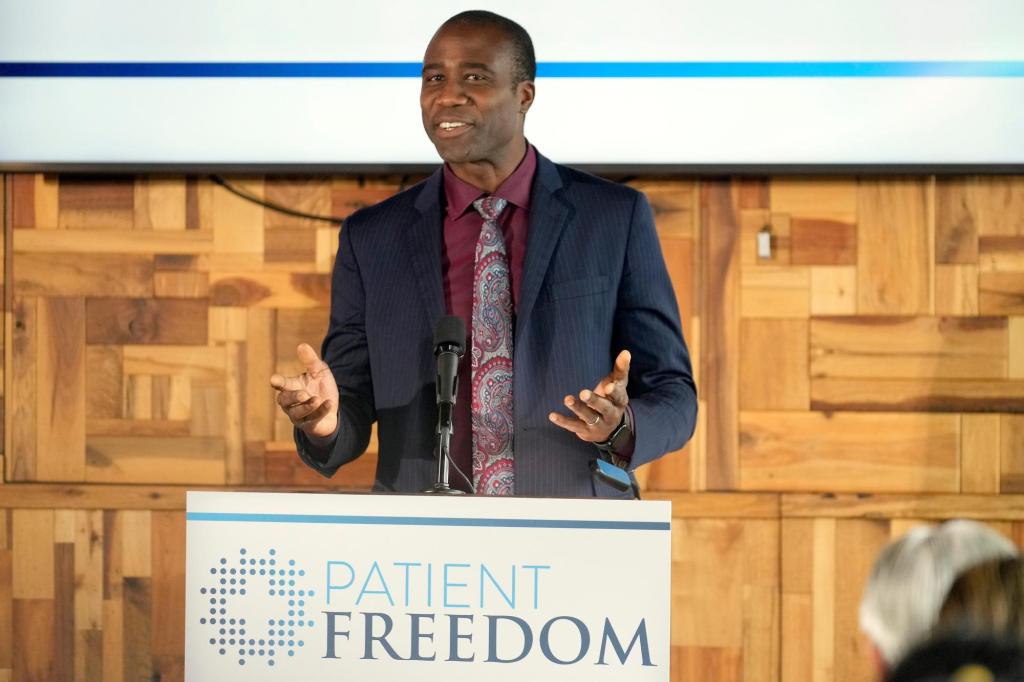
Though Florida’s top medical official proclaimed last fall that the state would end all vaccine mandates for school children, six months later the Florida Legislature looks unlikely to take the drastic, first-in-the-nation action.
Some lawmakers proposed bills this year that would tweak current vaccine laws, but their legislation wouldn’t change the shots children need to enroll in school. Nor does even that adjustment seem likely to pass the full Legislature.
The Senate is to vote on its vaccine bill (SB 1756) Friday, but the House never considered its version and won’t take it up now, House Speaker Daniel Perez told reporters Wednesday. That all but kills efforts to change current vaccine rules for this year, although the DeSantis administration may still cut some vaccine requirements not enshrined in state law.
“A bill that hasn’t moved in the House is not going to be brought up at this time,” Perez said.
At a September press conference at a private Christian school, Surgeon General Joseph Ladapo declared Florida would end all vaccine mandates, a radical departure from decades of public health practices.
“Every last one of them is wrong and drips with disdain and slavery,” Ladapo said in an announcement that made national news.
He and Gov. Ron DeSantis also wanted to prevent pediatricians from refusing to see patients whose parents choose not follow recommended shot schedules for their young children. The House version of the bill, which is not expected to get a vote, would have required doctors to accept all patients regardless of immunization status.
Florida law requires students to be vaccinated against a number of contagious diseases, including diphtheria, measles and polio, before they enroll in school. However, the law also allows exemptions for medical or religious reasons, and those have been used more frequently in recent years as vaccine skepticism has increased.
The percentage of fully vaccinated Florida kindergarteners has decreased every year since 2020, when debate surrounding the COVID-19 pandemic heightened many Americans’ distrust of mainstream medical advice.
Prior to the pandemic, Florida’s kindergarten vaccination rate was nearly 94%. Last year, that figure was just under 89%. Orange County’s pre-COVID kindergarten vaccination rate was 91.5%, a figure that has since dropped to nearly 85% last year.
Ladapo’s September announcement was met with loud applause from a crowd at the Hillsborough County campus and praise from anti-vaccine groups online — but it was also condemned by medical experts from across Florida for risking the health of children.
Vaccines that prevent dangerous childhood diseases are a key medical success story, many doctors say, and recent outbreaks of measles show the dangers of fewer vaccinated children.
Measles cases now are on the rise across the United States, and Florida has the third-most measles cases of any state, according to U.S. Measles Tracker, a dashboard hosted by the Johns Hopkins Bloomberg School of Public Health.
At his press conference, Ladapo noted that most of the changes he wanted would require Legislative approval, but he has the authority to roll back four vaccine mandates that were put in place by Florida Department of Health rule rather than state law. The health department looks likely to end the requirement that students get chickenpox, Hepatitis B, Haemophilus influenzae type b and Pneumococcal conjugate vaccines.
On the federal level, the Trump administration is also easing some vaccine requirements, although it is doing less than many of its anti-vaccine supporters sought.
The state Senate bill under consideration would make it easier for families to get exemptions, creating a new category for “conscience” exemptions. Vaccine exemptions, however, are not hard to obtain now, requiring nothing more than filling out a short form.
During a committee meeting on that bill, a bipartisan group of senators said rolling back the state’s vaccine requirements would be dangerous.
Sen. Gayle Harrell, R-Stewart, said her primary care doctor told her, “I don’t want to go back to medical school to learn how to treat polio.”
“We don’t want to teach medical students how to deal with so many of these diseases that we’ve essentially eradicated. We’re going backwards,” Harrell said, voting against the bill.
Michael Muszynski, a pediatric infectious disease expert and professor emeritus at Florida State University’s College of Medicine, was appalled at Ladapo’s announcement. But now, he’s “pleased” to hear the Legislature wouldn’t take up such a drastic change to required vaccines.
“Every year, we physicians who are trying to protect the health of children have to beat back these efforts, or try to stop these efforts. And so it’s worked again, evidently, which is good,” he said.
But Muszynski, who practiced at Orlando Health and Nemours Hospital for over 20 years, said he still worried about the shots that Ladapo could eliminate through the health department.
Having more kids unvaccinated against disease is “unconscionable”, he said, given the shots are proven to be safe and effective. Hesitations driven by anti-vaccine rhetoric are “not founded in science or any other reasoning,” he said.
“It’s not playing to the science, it’s playing to the political atmosphere,” Muszynski added.
The health department did not immediately respond to a request for comment.